
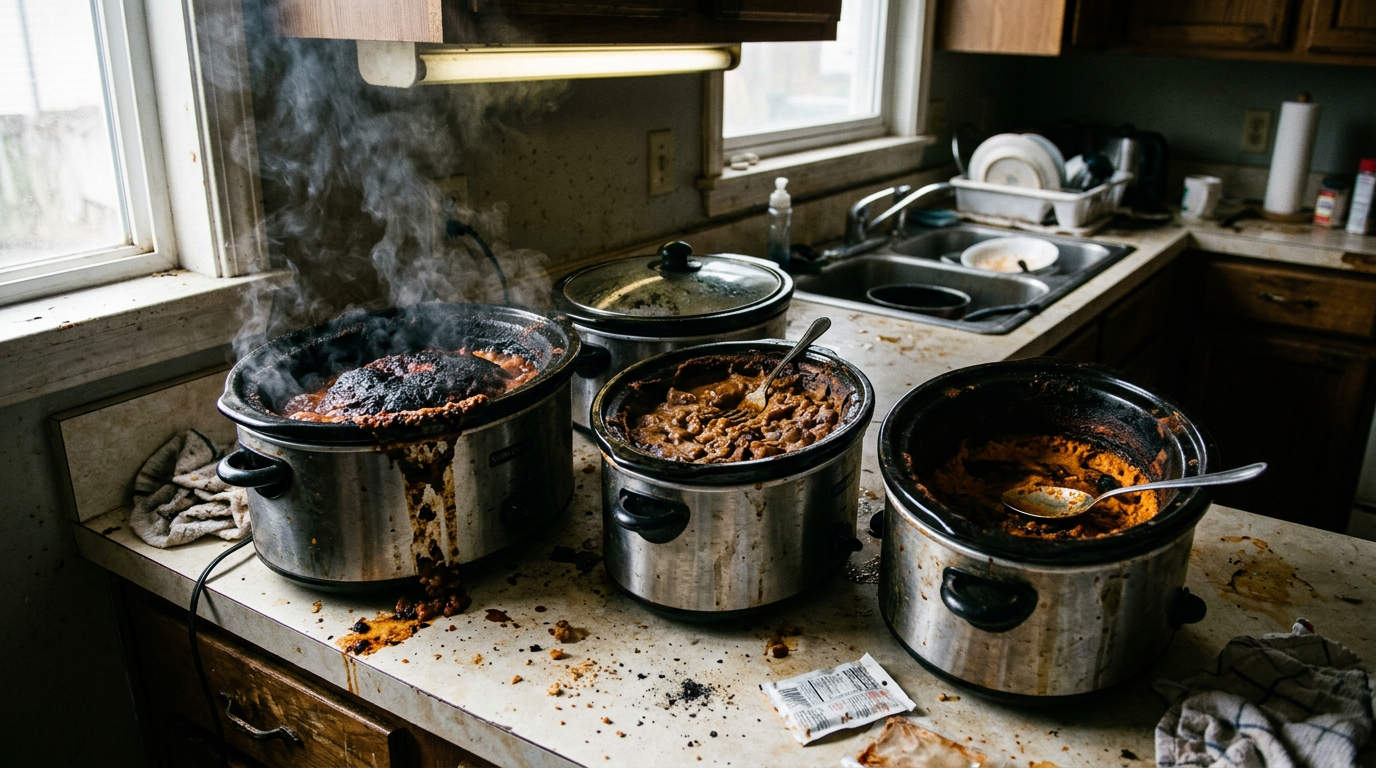
Slow cookers are beloved for their convenience, turning tough cuts of meat and hearty ingredients into tender, flavorful meals. However, not every food is suited for low, slow heat over several hours. Some ingredients lose texture, flavor, or even become unappetizing when cooked this way. Knowing what to avoid can make a big difference in your results. Here are seven foods you should never cook in a slow cooker.
Pasta
Pasta tends to absorb too much liquid during long cooking times. This often leads to a mushy, overcooked texture.
Even sturdier shapes can break down after hours of heat. The result is far from the firm bite most people expect.
It’s better to cook pasta separately. Adding it at the end helps maintain proper texture.
Rice
Rice can be tricky in a slow cooker due to inconsistent moisture levels. It may turn gummy or unevenly cooked.
Different varieties require precise water ratios. Slow cookers don’t always provide that control.
For best results, cook rice separately. Then combine it with your dish before serving.
Seafood
Seafood cooks very quickly compared to other proteins. Extended heat can make it rubbery and dry.
Delicate fish can even fall apart completely. This ruins both texture and presentation.
If using seafood, add it near the end of cooking. This helps preserve its quality.
Dairy Products
Dairy Products like milk, cream, and cheese can curdle under prolonged heat. This affects both taste and appearance.
The slow cooker’s steady temperature isn’t ideal for maintaining smooth consistency. Sauces can separate and become grainy.
It’s best to stir dairy in at the end. This keeps the texture creamy and appealing.
Leafy Greens
Leafy Greens such as spinach or kale cook very quickly. In a slow cooker, they can become overly wilted and lose their structure.
They may also lose color and flavor. This makes them less enjoyable to eat.
Adding them in the final minutes works better. That way, they retain some freshness.
Boneless Chicken Breasts
Boneless Chicken Breasts are lean and cook faster than tougher cuts. In a slow cooker, they often become dry and stringy.
The lack of fat makes them less forgiving over long cooking times. They can lose moisture quickly.
Using bone-in or fattier cuts works better. These hold up well during slow cooking.
Fried Foods
Fried Foods lose their crisp texture when placed in a slow cooker. The moist environment softens any crunchy coating.
This results in soggy, unappealing food. It defeats the purpose of frying in the first place.
If you want to combine fried elements, add them just before serving. This helps maintain some texture.
Why Some Foods Don’t Work in Slow Cookers
Slow cookers rely on low, steady heat and moisture, which isn’t suitable for every ingredient. Foods that require quick cooking or precise timing often suffer.
Common issues include:
- Overcooking delicate ingredients
- Loss of texture and structure
- Separation of sauces or dairy
- Excess moisture affecting consistency
Understanding these limitations can improve your results. Choosing the right ingredients is key.
Conclusion
Slow cookers are incredibly useful, but they’re not a one-size-fits-all solution. Some foods simply don’t respond well to long, slow cooking.
By avoiding these ingredients or adjusting when you add them, you can get better results from your meals. Smart preparation makes all the difference.
Leave a Reply