
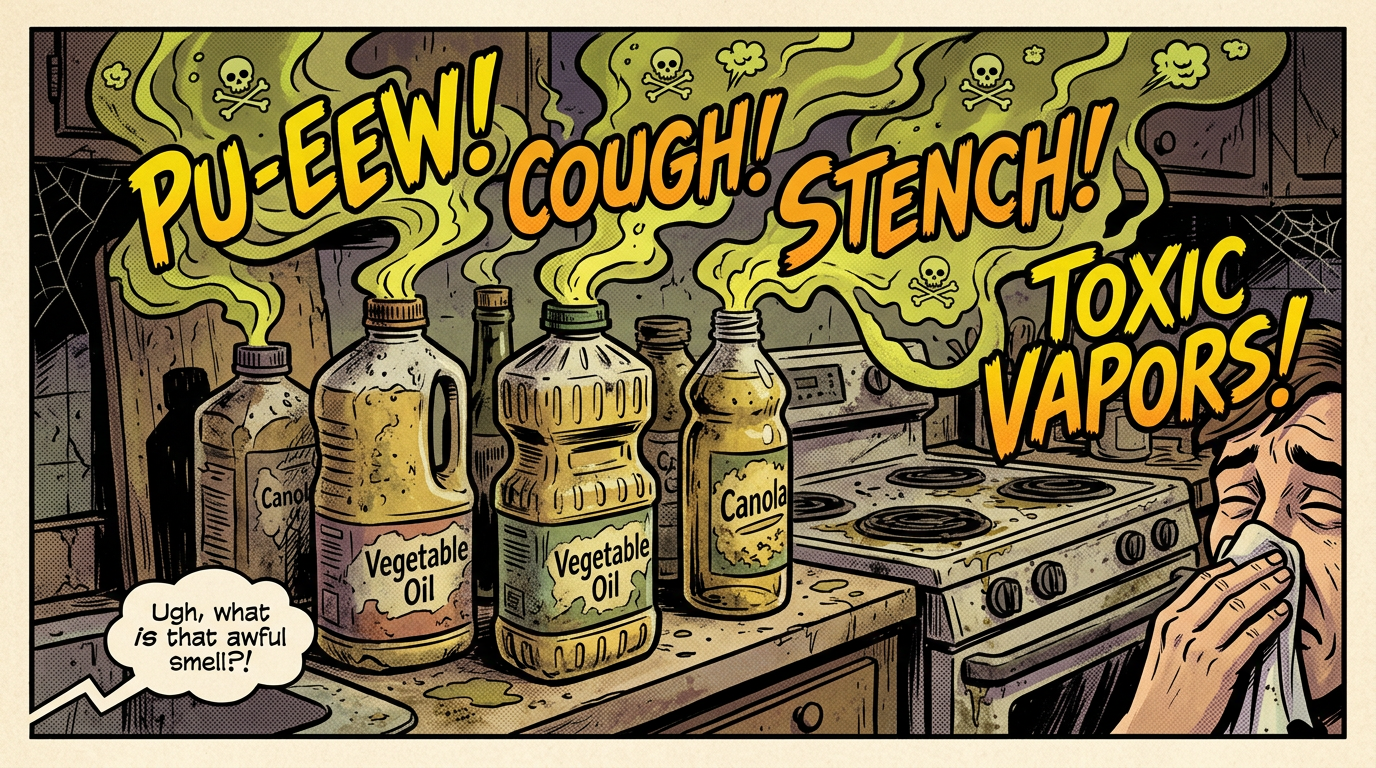
Cooking oils are pantry staples, but they don’t last forever. Over time, exposure to heat, light, and oxygen can cause oils to oxidize and break down. When this happens, they can develop rancid flavors and potentially harmful compounds that affect both taste and safety.
Understanding how different oils degrade can help you store them properly and avoid using oils that have passed their best quality.
Olive oil
Olive oil is widely used for cooking and dressings, but it is sensitive to oxidation over time. When it becomes rancid, it develops a sharp, unpleasant smell and bitter taste.
Expired or poorly stored olive oil can lose its beneficial antioxidants. While not instantly dangerous, degraded oil may contain compounds formed through oxidation that are not ideal for consumption.
Canola oil
Canola oil is commonly used for frying and baking due to its neutral flavor. However, like many refined oils, it can break down when exposed to heat, light, and air.
Once oxidized, it may produce free radicals and off-flavors. Using old canola oil repeatedly for frying can accelerate this breakdown process.
Vegetable oil
Vegetable oil is often a blend of different plant-based oils. Because of this, its stability can vary depending on the specific mix.
When it expires, it may become rancid and develop a stale smell. This is especially common if the oil is stored in warm or poorly sealed conditions.
Coconut oil
Coconut oil is more stable than many other oils due to its high saturated fat content. However, it can still degrade over time, especially if exposed to moisture or heat.
When it goes bad, it may develop a soapy or sour odor. While less prone to rapid oxidation, it is not immune to spoilage.
Sunflower oil
Sunflower oil is often used for frying and cooking at high temperatures. Despite its popularity, it can oxidize relatively quickly when exposed to heat and air.
Rancid sunflower oil may develop a strong, unpleasant smell and taste. Repeated heating, especially in frying, can accelerate chemical breakdown.
What Happens When Cooking Oils Expire
When cooking oils expire or become rancid, they undergo oxidation. This process breaks down fats and can lead to the formation of compounds that affect flavor and quality.
Common signs of degraded oil include:
- Sour, metallic, or paint-like smell
- Bitter or stale taste
- Darkened or cloudy appearance
- Thickened or sticky texture
- Smoke forming at lower cooking temperatures
These changes indicate the oil is no longer at its best quality. In some cases, it may also contribute to unwanted compounds during cooking.
How to Store Cooking Oils Properly
Proper storage can significantly extend the shelf life of cooking oils. Simple habits can help slow oxidation and preserve freshness.
Best practices include:
- Keeping oils in a cool, dark place
- Sealing bottles tightly after each use
- Avoiding storage near heat sources like stoves
- Using opaque containers when possible
- Buying smaller quantities to ensure freshness
These steps help maintain flavor and quality. Good storage habits reduce the risk of using degraded oils.
Conclusion
Cooking oils are essential in everyday cooking, but they can lose quality over time if not stored properly. While not all expired oils are immediately harmful, oxidation can affect both taste and nutritional value.
By recognizing the signs of spoilage and storing oils correctly, you can ensure safer and better-tasting meals. A little attention goes a long way in maintaining kitchen staples.


Leave a Reply