
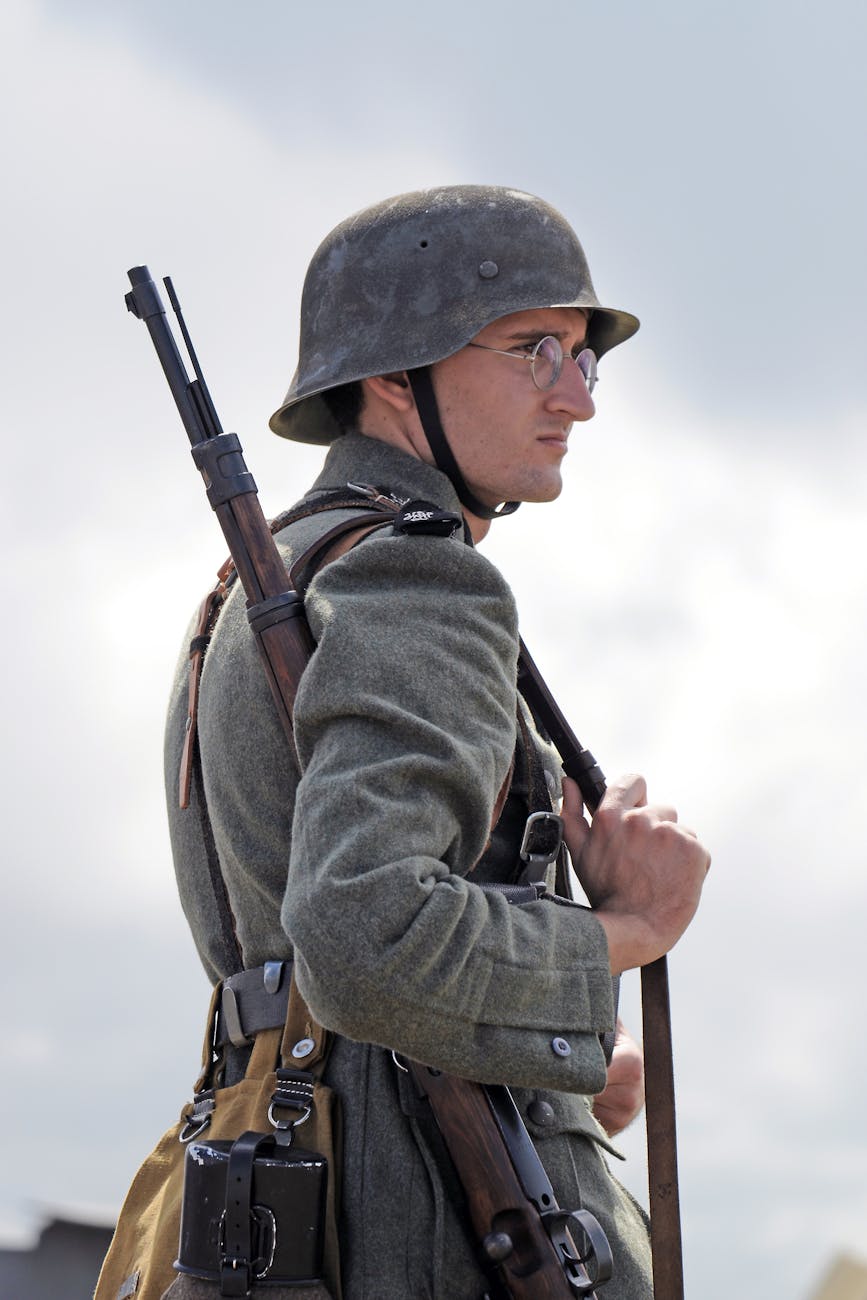
The leadership of Nazi Germany’s military played a central role in shaping the course of World War II. Many of its top generals were deeply involved in strategic decisions, war crimes, and the broader machinery of the regime. After the war, their fates varied widely—from execution to suicide to imprisonment.
Hermann Göring
Hermann Göring was one of the most powerful figures in Nazi Germany, serving as head of the Luftwaffe and a key political leader. He was captured by Allied forces at the end of the war.
He stood trial at the Nuremberg Trials and was sentenced to death. However, he died by suicide using cyanide the night before his scheduled execution.
Heinrich Himmler
Heinrich Himmler oversaw the SS and played a major role in orchestrating the Holocaust. As Allied forces closed in, he attempted to evade capture.
He was eventually detained by British forces. Shortly after his arrest, he committed suicide by ingesting cyanide.
Erwin Rommel
Erwin Rommel, often called the “Desert Fox,” was one of Germany’s most respected commanders. He gained fame for his leadership in North Africa.
After being implicated in a plot against Adolf Hitler, he was forced to take his own life. The regime publicly claimed he died from injuries to preserve morale.
Karl Dönitz
Karl Dönitz led Germany’s U-boat fleet and was later named Hitler’s successor. He briefly served as head of state after Hitler’s death.
He was tried at Nuremberg and sentenced to 10 years in prison. After his release, he lived relatively quietly until his death.
Wilhelm Keitel
Wilhelm Keitel served as Chief of the Armed Forces High Command. He was known for signing off on numerous orders tied to war crimes.
At the Nuremberg Trials, he was found guilty on multiple counts. He was executed by hanging in 1946.
Alfred Jodl
Alfred Jodl was a senior military officer involved in operational planning. He signed Germany’s unconditional surrender in 1945.
He was later tried and convicted at Nuremberg. Like Keitel, he was executed by hanging.
Friedrich Paulus
Friedrich Paulus commanded German forces during the Battle of Stalingrad. He ultimately surrendered to Soviet forces in a major turning point of the war.
He spent years as a prisoner of war in the Soviet Union. After his release, he lived in East Germany until his death.
Albert Kesselring
Albert Kesselring commanded German forces in Italy and was known for defensive operations. His leadership prolonged fighting in the region.
He was convicted of war crimes after the war and initially sentenced to death. His sentence was later commuted, and he was released after serving several years.
Heinz Guderian
Heinz Guderian was a pioneer of blitzkrieg tactics and played a major role in early German successes. He later served as Chief of the General Staff.
After the war, he was held by Allied forces but was not convicted of major war crimes. He was eventually released and lived out his remaining years in Germany.
Common Outcomes for Nazi Military Leaders
The fate of these figures reflects broader patterns seen among high-ranking Nazi officials. Many were held accountable through trials, while others avoided formal justice.
Here are some of the most common outcomes:
- Execution following conviction for war crimes
- Suicide to avoid capture or sentencing
- Long-term imprisonment after international trials
- Detention without conviction followed by release
- Postwar life under reduced public visibility
These outcomes were shaped by evidence, political considerations, and the scale of each individual’s involvement in the regime.
Conclusion
The top generals of Nazi Germany were central to both its military campaigns and its atrocities. Their fates after the war highlight the global effort to bring accountability following one of history’s darkest periods.
While some faced justice through trials and execution, others escaped harsher punishment. Together, their stories remain a lasting reminder of the consequences of leadership under a destructive regime.



Leave a Reply