
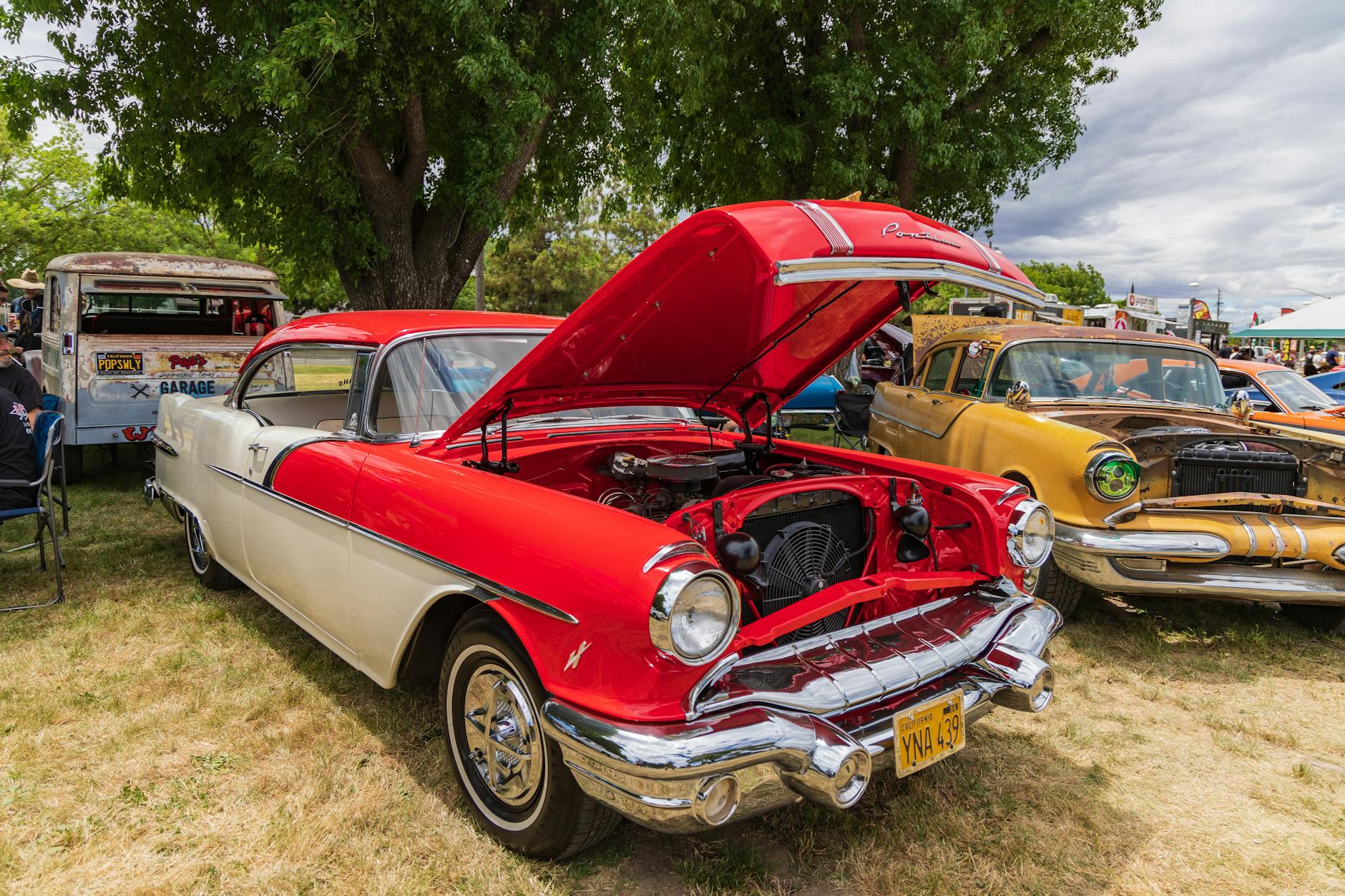
Many classic cars from the Baby Boomer era came with features that were considered normal at the time but would not meet modern safety or environmental regulations. As automotive standards evolved, governments introduced stricter rules to improve driver safety, reduce emissions, and protect passengers. Some once-popular features are now banned, heavily restricted, or completely phased out in new vehicles.
Bench seats (front-row full-width seating)
Front bench seats were common in older American cars, allowing three passengers to sit across the front row. This design was practical for larger families but offered limited individual restraint.
Modern safety standards favor individual bucket seats with proper seatbelt positioning. Bench-style front seating is now largely eliminated in new passenger vehicles due to airbag and restraint system requirements.
Lap belts without shoulder harnesses
Early vehicles often used simple lap belts without shoulder restraints. While they provided some protection, they did not adequately secure the upper body during collisions.
Today, most regions require three-point seatbelts that include both lap and shoulder components. Pure lap belts in front seats are no longer considered sufficient for safety compliance in modern vehicles.
Non-collapsible steering columns
Older cars frequently featured rigid steering columns that did not collapse during a crash. In a frontal collision, this design could cause severe injury to the driver.
Modern vehicles are required to include collapsible or energy-absorbing steering columns. These systems reduce the risk of injury by absorbing impact forces during accidents.
Rear-facing jump seats
Some station wagons from the mid-20th century included rear-facing “jump seats” in the cargo area. These seats allowed additional passengers but offered minimal protection in a crash.
Today, such seating configurations are not permitted in modern passenger vehicles due to safety regulations. All seating positions must meet strict crash protection standards.
Pop-up headlights (certain designs)
Pop-up headlights were once a popular design feature in sports cars and luxury vehicles. While not inherently unsafe, some mechanical designs failed to meet modern pedestrian safety standards.
Many countries now restrict or prohibit certain retractable headlight systems that can pose risks during pedestrian impact testing. As a result, most manufacturers have moved away from this design.
Carburetors in modern road vehicles
Carburetors were widely used in older cars to mix air and fuel before combustion. While effective at the time, they were less efficient and produced higher emissions than modern systems.
Today, most vehicles are required to use electronic fuel injection systems to meet emissions standards. Carburetors are now largely restricted to classic or off-road applications.
Why These Features Were Phased Out
Automotive regulations have evolved significantly since the mid-20th century. Many older features were replaced due to safety concerns, environmental impact, or advances in engineering.
Key reasons these features were removed include:
- Improved crash safety standards and testing
- Introduction of modern seatbelt and airbag systems
- Stricter emissions and fuel efficiency regulations
- Advances in electronic and mechanical reliability
- Increased focus on pedestrian and passenger protection
These changes reflect a broader shift toward safer and more efficient vehicles. What once seemed innovative is now often considered outdated or unsafe.
Conclusion
Many Baby Boomer-era car features were once common but no longer meet today’s safety and environmental standards. As automotive technology advanced, regulations adapted to prioritize occupant protection and efficiency.
While these features remain part of automotive history, they highlight how far vehicle design has come. Modern cars are significantly safer and more regulated, reflecting decades of engineering progress.




Leave a Reply