
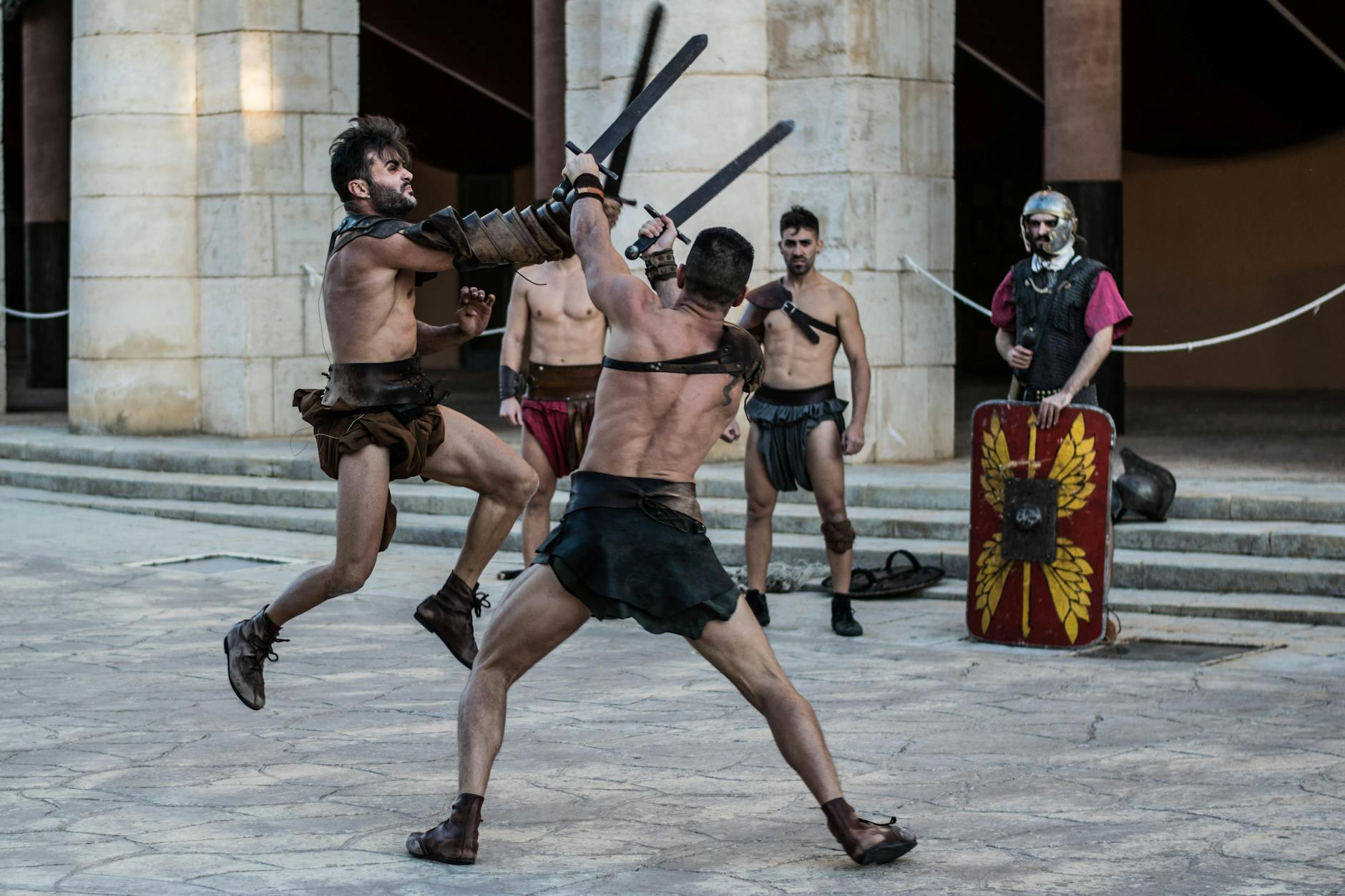
Gladiators of ancient Rome lived brutal lives, often fighting in arenas for public entertainment under the authority of the Roman state. Yet, despite the violence they endured, a small number managed to earn their freedom through skill, popularity, or imperial favor. These rare cases stood out in the history of the arena, where survival alone was already an achievement.
Flamma
Flamma was one of the most famous gladiators known for being offered freedom multiple times. According to historical accounts, he fought bravely as a secutor and became highly respected in the arena.
Despite being granted the wooden sword of freedom on several occasions, he chose to remain a gladiator. His loyalty to the arena made him a legendary figure among Roman spectators.
Spartacus
Spartacus is perhaps the most famous gladiator in history. He initially fought in the arena after being enslaved, but his story took a dramatic turn.
He led a massive slave uprising known as the Third Servile War. Although he did not live to see freedom in the traditional sense, his rebellion symbolized a powerful break from enslavement.
Priscus
Priscus became notable during a famous match recorded by the poet Martial. He fought in a highly publicized bout during the inauguration of the Colosseum.
After a long and evenly matched fight, both he and his opponent were granted freedom. This rare double victory was celebrated by Emperor Titus himself.
Verus
Verus fought alongside Priscus in the same historic match. The two men were evenly matched, creating one of the most legendary duels in gladiatorial history.
Their endurance impressed the crowd and the emperor. As a result, both fighters were granted their freedom at the same time.
Spiculus
Spiculus was a favored gladiator during the reign of Emperor Nero. His skill in the arena earned him fame and imperial attention.
Nero reportedly rewarded him with wealth and possibly freedom due to his popularity. His close connection to the emperor set him apart from many of his peers.
Commodus (as participant in arena culture)
While not a traditional enslaved gladiator, Commodus played a unique role in arena combat. As emperor, he famously fought as a gladiator for spectacle.
He granted freedom and rewards to some fighters who entertained him. His involvement blurred the line between ruler and combatant in Roman society.
How Gladiators Earned Their Freedom
Freedom for gladiators was rare and usually required exceptional circumstances. Most fighters lived and died in service of the arena, but a few earned release through extraordinary performance.
Common ways freedom was granted included:
- Winning multiple high-profile matches
- Surviving years of combat service
- Receiving imperial favor or reward
- Public acclaim and crowd support
- Formal granting of the wooden sword (rudis)
These pathways were unpredictable and highly selective. Freedom was often more exception than rule.
Conclusion
The stories of gladiators who won their freedom highlight both the brutality and complexity of Roman entertainment culture. While most fighters remained trapped in the arena system, a few managed to escape through skill, reputation, or extraordinary circumstances.
Their legacies continue to shape how we understand ancient Rome today. They serve as reminders of both human resilience and the harsh realities of gladiatorial life.




Leave a Reply