
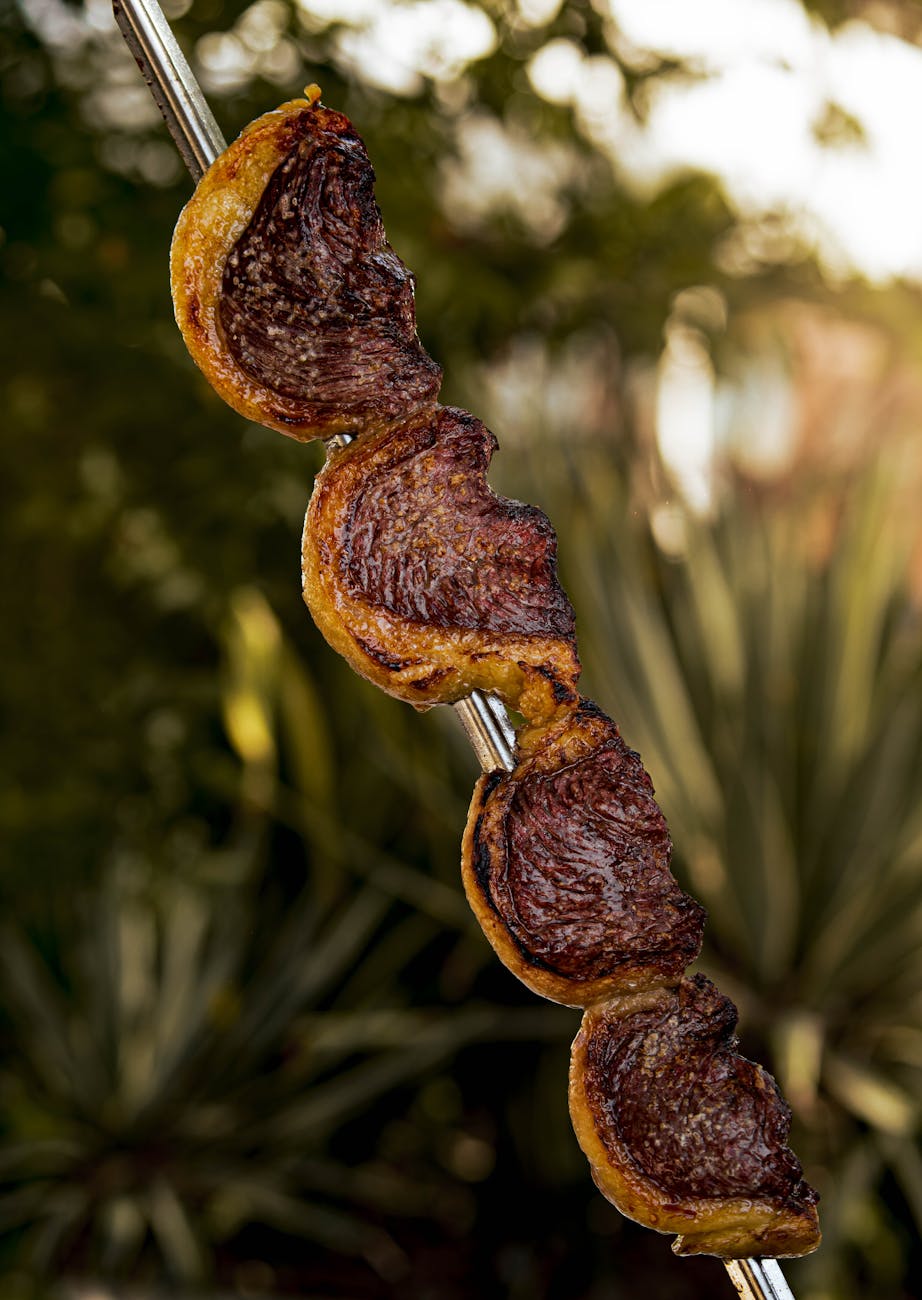
Brazilian steakhouses, also known as churrascarias, offer a dining experience unlike almost anything else in the restaurant world. Servers walk from table to table carrying skewers loaded with freshly grilled meats, slicing portions directly onto diners’ plates. While many people recognize staples like filet mignon or ribeye, Brazilian steakhouses are famous for showcasing cuts rarely highlighted in traditional American restaurants.
These specialty cuts often emphasize texture, fat content, and bold grilling flavors rather than pure tenderness alone. Many are cooked over open flames with little more than coarse salt, allowing the meat’s natural flavor to stand out.
Picanha
Picanha is arguably the signature meat of the Brazilian steakhouse experience.
Cut from the top sirloin cap, picanha features a thick fat cap that bastes the meat as it cooks over open flames.
Unlike heavily marbled American steaks, picanha relies more on its outer fat layer for flavor and juiciness.
The meat is typically folded into a horseshoe shape on long skewers before grilling.
When sliced properly, it delivers a rich beef flavor with a slightly chewy texture that many churrascaria fans consider unmatched.
Fraldinha
Fraldinha comes from the lower sirloin and is somewhat similar to flank steak or skirt steak.
It is prized for its intense beefy flavor rather than extreme tenderness.
Brazilian steakhouses often cook fraldinha over high heat to create a smoky crust while keeping the interior juicy.
The cut absorbs seasoning exceptionally well and develops deep charred edges.
Its loose grain structure gives it a hearty texture that stands up beautifully to open-fire cooking.
Alcatra
Alcatra is a popular churrascaria cut that comes from the top sirloin region.
It is leaner than picanha but still tender enough to serve in thick slices.
Brazilian steakhouses frequently season it very simply with rock salt before grilling.
Because it lacks excessive fat, alcatra develops a cleaner beef flavor.
Many diners appreciate it as a lighter alternative among richer cuts.
Coração De Frango
Coração de frango may surprise first-time visitors, but they are a staple at many authentic Brazilian steakhouses.
These small chicken hearts are skewered and grilled until slightly crisp on the outside.
Their flavor is rich, savory, and surprisingly steak-like for poultry.
The texture is firmer than traditional chicken meat but not unpleasantly chewy.
For adventurous diners, they often become one of the most memorable parts of the meal.
Costela
Costela refers to large beef ribs slow-cooked or flame-roasted for extended periods.
Unlike standard barbecue ribs, Brazilian costela focuses more on beef flavor than heavy sauce.
The long cooking process allows connective tissue and fat to break down gradually.
This creates tender meat with deep smoky richness.
The ribs are often served in massive portions carved directly from towering skewers.
Several Brazilian steakhouse cuts stand out because they:
- Emphasize fire-grilled flavor
- Use less common butcher cuts
- Feature unique textures
- Rely on simple seasoning methods
The preparation style highlights the meat itself rather than heavy sauces.
Why Brazilian Steakhouses Use Different Cuts
Brazilian churrasco traditions developed around:
- Open-fire cooking methods
- Whole-animal butchering practices
- Simple seasoning techniques
- Maximizing flavor from varied cuts
This creates a much broader meat experience than many traditional steakhouses.
Conclusion
Picanha, fraldinha, alcatra, coração de frango, and costela all represent the bold flavors and traditional grilling methods that define Brazilian steakhouses. These cuts showcase how churrascarias celebrate texture, smoke, fat, and open-fire cooking in ways rarely seen at conventional steak restaurants.



Leave a Reply