
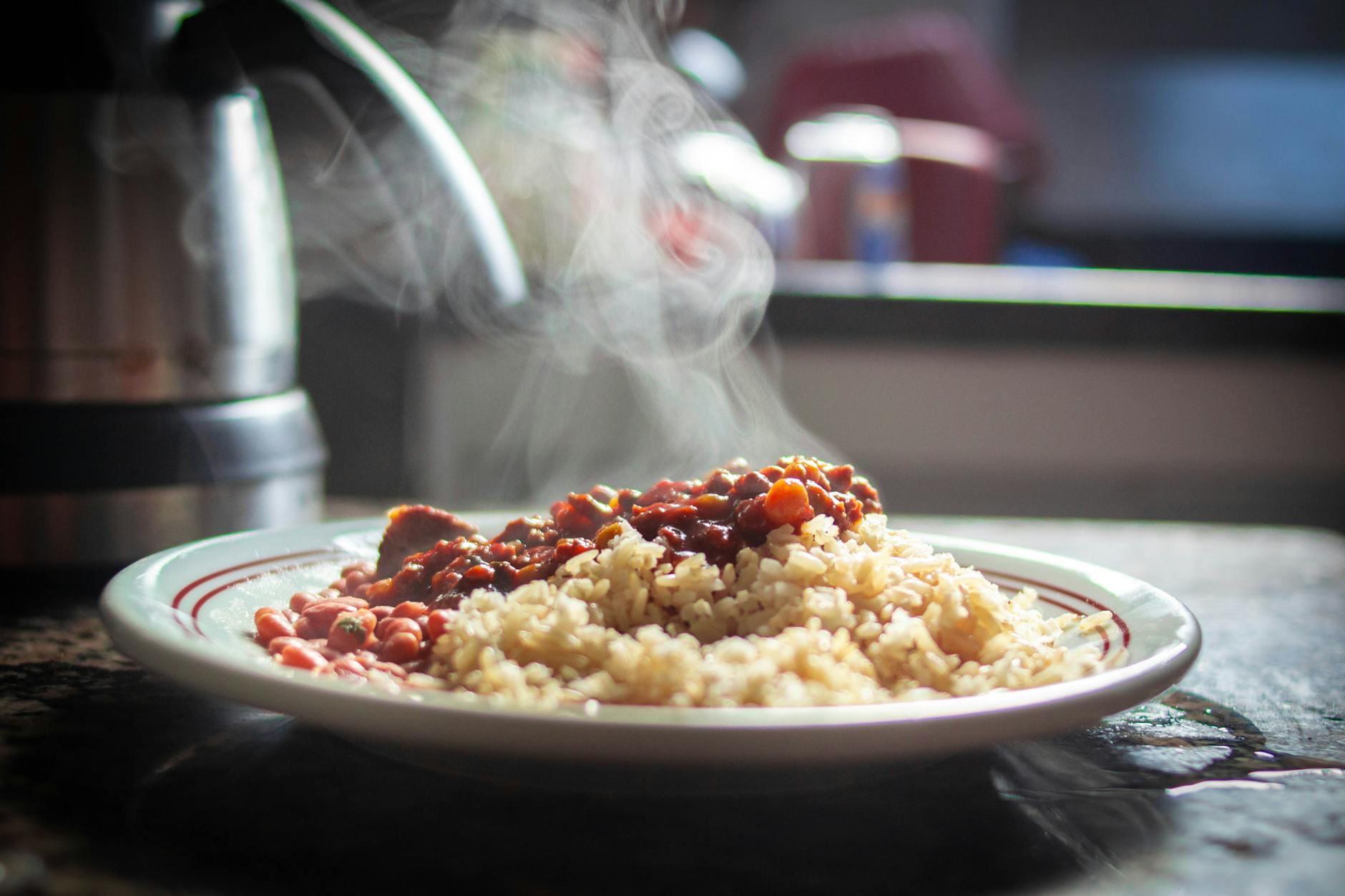
Reheating leftovers is a normal part of daily life, but not all foods respond safely to being warmed up again. In some cases, reheating can change the chemical structure of certain ingredients or allow harmful bacteria to grow if food is stored improperly.
The idea of “toxic reheating” is often overstated online, but there are legitimate food safety concerns with specific foods if they are cooled, stored, or reheated incorrectly.
Understanding which foods are more sensitive to heat and time can help reduce the risk of foodborne illness and preserve nutritional quality.
Rice
Cooked rice is one of the most commonly misunderstood leftover foods. The issue is not reheating itself, but how rice is stored after cooking.
Rice can contain spores from bacteria like Bacillus cereus, which survive cooking and can multiply if rice is left at room temperature too long.
When rice is improperly stored and then reheated, toxins produced by these bacteria may still remain and can cause food poisoning.
To reduce risk, rice should be cooled quickly and refrigerated within an hour of cooking.
Potatoes
Cooked potatoes can become problematic when left out for extended periods before reheating. Like rice, they are susceptible to bacterial growth if stored improperly at room temperature.
If potatoes are wrapped in foil and left to cool slowly, they can create an oxygen-free environment where bacteria thrive.
Reheating does not always eliminate toxins that may have formed during improper storage.
For safety, potatoes should be refrigerated quickly and reheated thoroughly rather than left sitting out for long periods.
Spinach
Spinach and other leafy greens contain naturally occurring nitrates, which can convert into nitrites under certain conditions.
When cooked spinach is stored improperly and reheated multiple times, these compounds may change in ways that raise safety concerns, especially for infants.
While the risk for healthy adults is generally low, repeated reheating can reduce nutritional quality and increase unwanted chemical changes.
It is best to reheat spinach only once and avoid prolonged storage at warm temperatures.
Mushrooms
Mushrooms are highly perishable and have a delicate protein structure that breaks down quickly after cooking.
If cooked mushrooms are left at room temperature and then reheated, they can develop harmful bacteria more easily than many other vegetables.
Repeated reheating can also degrade their nutritional value and alter their texture significantly.
To stay safe, mushrooms should be refrigerated promptly and consumed within a short time frame after cooking.
Chicken
Chicken is one of the highest-risk foods when it comes to improper reheating and storage. Like all poultry, it must be handled carefully to prevent bacterial growth.
If cooked chicken is left out too long before refrigeration, bacteria such as Salmonella or Clostridium perfringens can multiply rapidly.
Reheating may kill some bacteria, but toxins produced during improper storage can remain.
Safe handling includes refrigerating chicken within two hours of cooking and reheating it to a high internal temperature before eating.
Eggs
Egg-based dishes, such as scrambled eggs or casseroles, can become unsafe if not stored and reheated properly.
Eggs are sensitive to temperature changes and can support bacterial growth if left out for extended periods.
Repeated reheating can also affect texture and increase the risk of uneven heating, which allows bacteria to survive.
For safety, egg dishes should be cooled quickly, stored in shallow containers, and reheated only once.
How To Safely Handle Leftovers
Most food safety risks from reheating come from improper storage rather than the reheating process itself. Cooling food quickly, refrigerating promptly, and reheating thoroughly are the most important steps.
Single reheating cycles are generally safest, and foods should not be repeatedly warmed and cooled over several days.
Good food handling practices dramatically reduce the risk of illness and help maintain both flavor and nutritional value.

Leave a Reply