
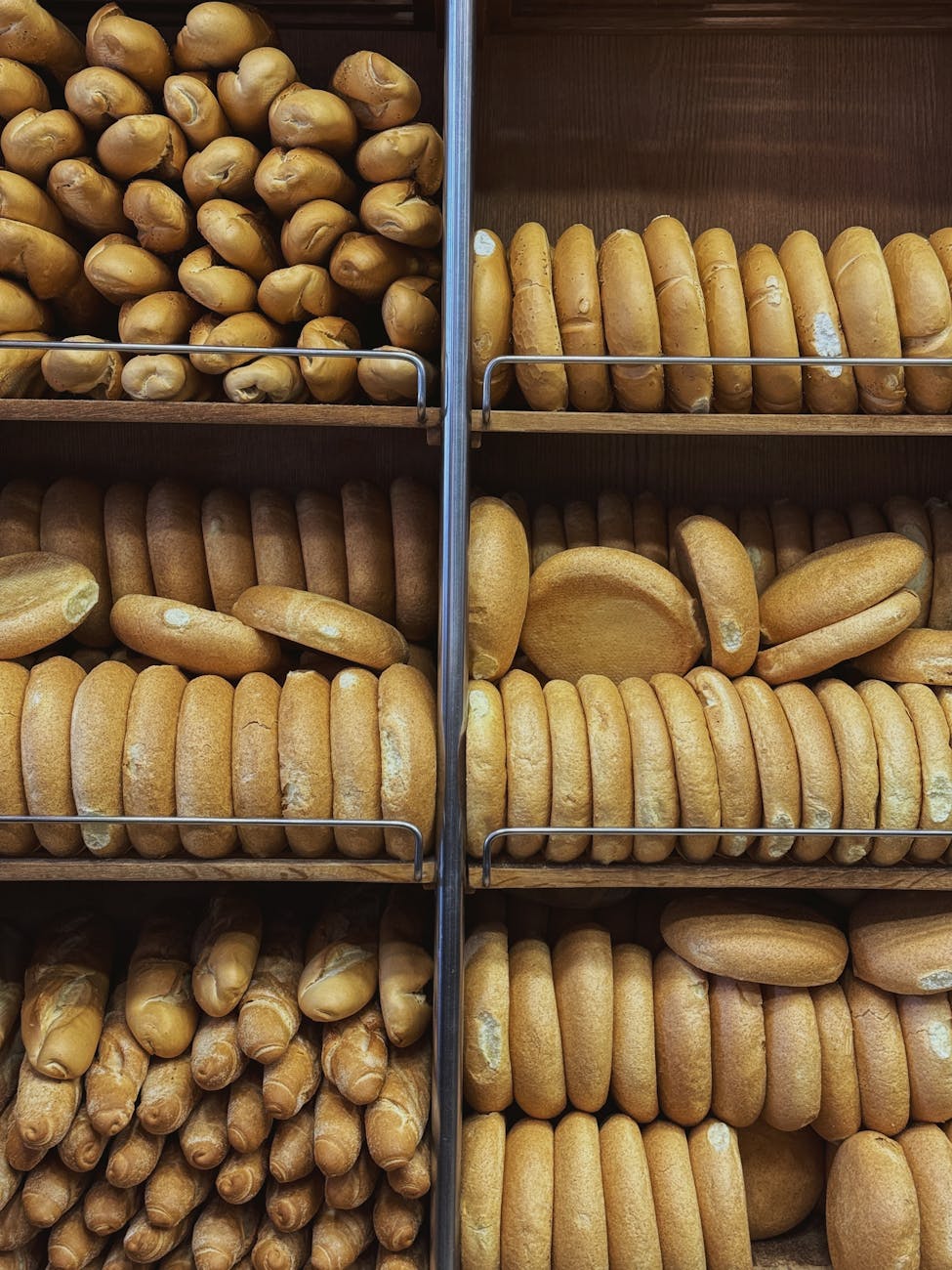
Bakery bread has a reputation for being fresher and higher quality than store-bought loaves, but that is not always the case. Many bakery items are made in bulk, pre-prepared off-site, or loaded with inexpensive fillers that prioritize appearance and shelf life over nutrition or flavor.
Some breads also look artisanal but are actually highly processed, overly sweetened, or nutritionally poor. Knowing which bakery breads to avoid can help you make better choices and get more value from your purchases.
Pre-Sliced White Sandwich Bread Loaves
Pre-sliced white sandwich bread is one of the most common bakery items, but it is also one of the least nutritious. These loaves are typically made with refined flour that has been stripped of fiber and nutrients during processing.
Many versions also contain added sugars, emulsifiers, and preservatives designed to extend shelf life and improve texture consistency. While convenient, this type of bread offers little satiety and can cause rapid blood sugar spikes.
A better alternative is whole grain or sprouted grain bread, which contains more fiber and keeps you fuller for longer.
Overly Glossy Brioche Buns
Brioche buns are often marketed as premium bakery items due to their rich, buttery texture. However, many commercial bakery versions are extremely high in refined flour, sugar, and butter, making them more similar to dessert items than everyday bread.
Their soft texture and shiny exterior can be appealing, but they often lack fiber and nutritional balance. In many cases, they are designed to enhance burgers or sandwiches rather than serve as a healthy bread option.
These buns can quickly add unnecessary calories without providing lasting fullness.
Garlic Bread Loaded With Butter And Oils
Bakery garlic bread is a popular side item, but it is frequently one of the most calorie-dense choices available. Many versions are soaked in butter, oil, and salt, then baked again to enhance flavor and texture.
Some bakeries also use processed garlic spreads that contain additives and preservatives rather than fresh ingredients. The result is a product that tastes rich but offers very little nutritional value.
Better alternatives include lightly toasted whole grain bread with fresh garlic, olive oil, and herbs added at home.
Sweet Breakfast Breads And Coffee Cakes
Sweet bakery breads such as coffee cakes, cinnamon swirl loaves, and iced breakfast breads often appear harmless but are essentially desserts in bread form. These products typically contain high amounts of sugar, refined flour, and glaze toppings.
While they are popular for breakfast or brunch, they can cause energy crashes shortly after eating due to rapid blood sugar spikes.
Common characteristics of these breads include:
- Thick sugary glazes or icing
- Refined white flour bases
- Artificial flavoring or fillings
- Low fiber content
Although delicious, they are best treated as occasional treats rather than daily staples.
Frozen Dough Breads Baked In-Store
Many bakeries use pre-made frozen dough that is simply baked on-site rather than prepared from scratch. While this process ensures consistency, it often means the bread is highly processed before it even reaches the oven.
These breads can contain stabilizers, preservatives, and conditioning agents that improve texture but reduce overall quality. Customers often assume “fresh baked” means handmade, but that is not always the case.
The flavor and texture may still be pleasant, but the nutritional and artisanal value is often lower than expected.
Why Some Bakery Breads Are Less Healthy Than They Seem
Not all bakery bread is created equal. While some bakeries focus on traditional methods and simple ingredients, others rely heavily on industrial preparation techniques to reduce costs and increase shelf life.
This often leads to breads that are high in refined carbohydrates, added sugars, and sodium while being low in fiber and nutrients.
Several factors influence bread quality:
- Use of refined vs whole grain flour
- Presence of added sugars and fats
- Level of processing or pre-preparation
- Fiber and protein content
Understanding these differences can help shoppers make more informed choices.
Healthier Bakery Bread Choices
Choosing better bakery bread often comes down to simplicity. The fewer ingredients and the more recognizable they are, the better the bread is likely to be nutritionally.
Healthier options usually include:
- Whole grain or seeded loaves
- Sourdough with natural fermentation
- Sprouted grain bread
- Breads made with minimal additives
These choices tend to provide more fiber, better digestion support, and longer-lasting energy.
Conclusion
Bakery bread is not automatically healthier or higher quality than packaged alternatives. Many popular bakery items are highly processed or loaded with sugar, butter, and refined flour. Being selective about which breads you buy can help you enjoy better nutrition without sacrificing flavor.



Leave a Reply