
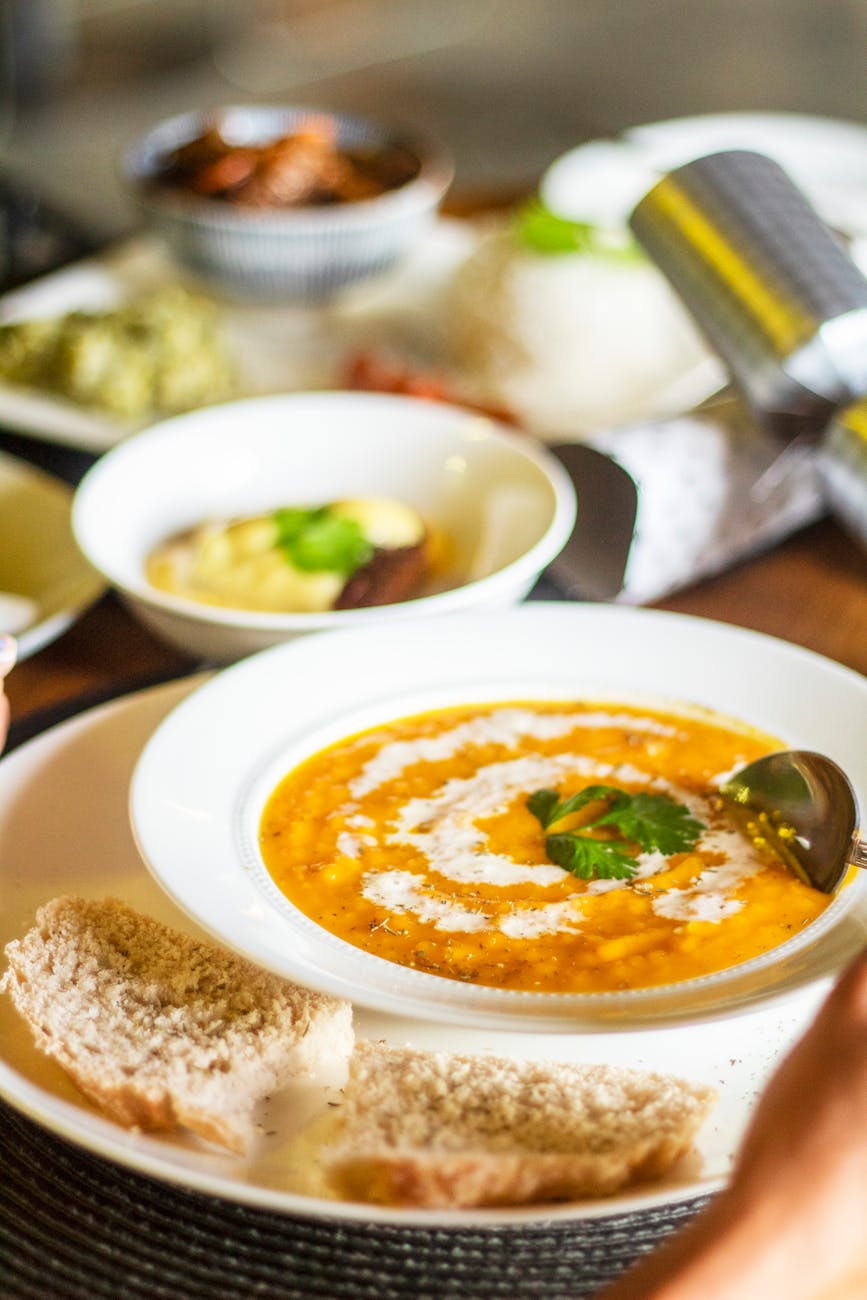
Soup often has a healthy reputation, but restaurant versions can sometimes be surprisingly high in sodium, saturated fat, and calories. Cream-based recipes, oversized portions, and processed ingredients can quickly turn a simple starter into one of the heaviest items on the menu.
That does not mean you need to avoid soup entirely. Many restaurants also offer lighter broth-based options or vegetable-focused alternatives that provide more balanced nutrition without sacrificing flavor.
Clam Chowder And Broth-Based Seafood Soup Instead
Clam chowder is one of the richest soups commonly served in restaurants. Traditional versions are loaded with cream, butter, potatoes, and salty pork ingredients, creating a dish that can become extremely high in sodium and saturated fat.
Many restaurant chowders are also served in oversized bread bowls, adding even more refined carbohydrates and calories to the meal.
A better alternative is a lighter seafood soup with a broth base instead of heavy cream. Tomato-based fish soups or simple seafood stews often provide plenty of flavor while containing less saturated fat.
These soups still offer seafood protein without the heaviness that makes chowder feel more like a full entrée than a starter.
Loaded Baked Potato Soup And Chicken Vegetable Soup Instead
Loaded baked potato soup is another restaurant favorite that often contains large amounts of cream, cheese, bacon, and butter. While comforting, it can become one of the most calorie-dense soup options available.
The toppings are usually what push it into unhealthy territory. Bacon crumbles, shredded cheese, and sour cream add significant sodium and fat while reducing the nutritional balance of the dish.
A better option is chicken vegetable soup, which usually contains lean protein, broth, and a wider variety of vegetables. It delivers warmth and fullness without relying heavily on cream or processed toppings.
Broccoli Cheddar Soup And Lentil Soup Instead
Broccoli cheddar soup sounds healthy because it contains vegetables, but many restaurant versions contain far more cheese and cream than broccoli. The vegetable often becomes secondary to the thick dairy-heavy base.
This type of soup may also contain surprisingly high sodium levels due to processed cheese ingredients and concentrated soup bases used in restaurants.
Lentil soup is often a much more balanced alternative. Lentils provide fiber and plant-based protein while broth-based preparation keeps the soup lighter overall.
Common warning signs of heavier restaurant soups include:
- Thick cream-based consistency
- Large amounts of cheese or butter
- Processed meat toppings
- Extremely large serving portions
These ingredients can quickly increase sodium and calorie levels.
French Onion Soup And Minestrone Instead
French onion soup may appear simple, but restaurant versions often include large amounts of melted cheese and buttery bread floating on top. The broth itself is also frequently very high in sodium because of concentrated beef stock reductions.
While flavorful, the combination of cheese, bread, and salty broth can create a surprisingly heavy appetizer.
Minestrone soup is often a smarter alternative because it typically includes beans, vegetables, tomatoes, and broth rather than heavy dairy ingredients.
The fiber from vegetables and legumes can also help make the meal feel more balanced and satisfying.
Creamy Tortilla Soup And Black Bean Soup Instead
Creamy tortilla soups can become unhealthy quickly when loaded with cheese, sour cream, fried tortilla strips, and creamy broth bases. Some restaurant versions are closer to queso dip than traditional soup.
The sodium content may also rise significantly because of seasoned broths and processed toppings. While flavorful, these soups often contain more fat than diners expect.
Black bean soup is usually a better choice because it provides fiber and protein without depending heavily on cream or cheese for texture.
Many broth-based bean soups are filling while still feeling lighter than cream-heavy alternatives.
Why Restaurant Soups Are Often So Heavy
Restaurants frequently design soups to maximize richness and flavor, which often means adding cream, butter, cheese, and salt. These ingredients improve taste and texture but can dramatically increase calorie and sodium content.
Portion sizes also play a major role. A cup of soup may seem reasonable, but restaurant bowls are often much larger than standard servings.
Healthier restaurant soup choices usually include:
- Broth-based recipes
- Bean or lentil ingredients
- Lean proteins
- Larger amounts of vegetables
These options tend to provide more balanced nutrition without sacrificing comfort or flavor.
Conclusion
Restaurant soups are not always as healthy as their reputation suggests. Cream-heavy recipes and oversized portions can turn simple appetizers into high-calorie meals packed with sodium and saturated fat. Choosing broth-based or vegetable-focused alternatives is often a smarter and more balanced option.



Leave a Reply