
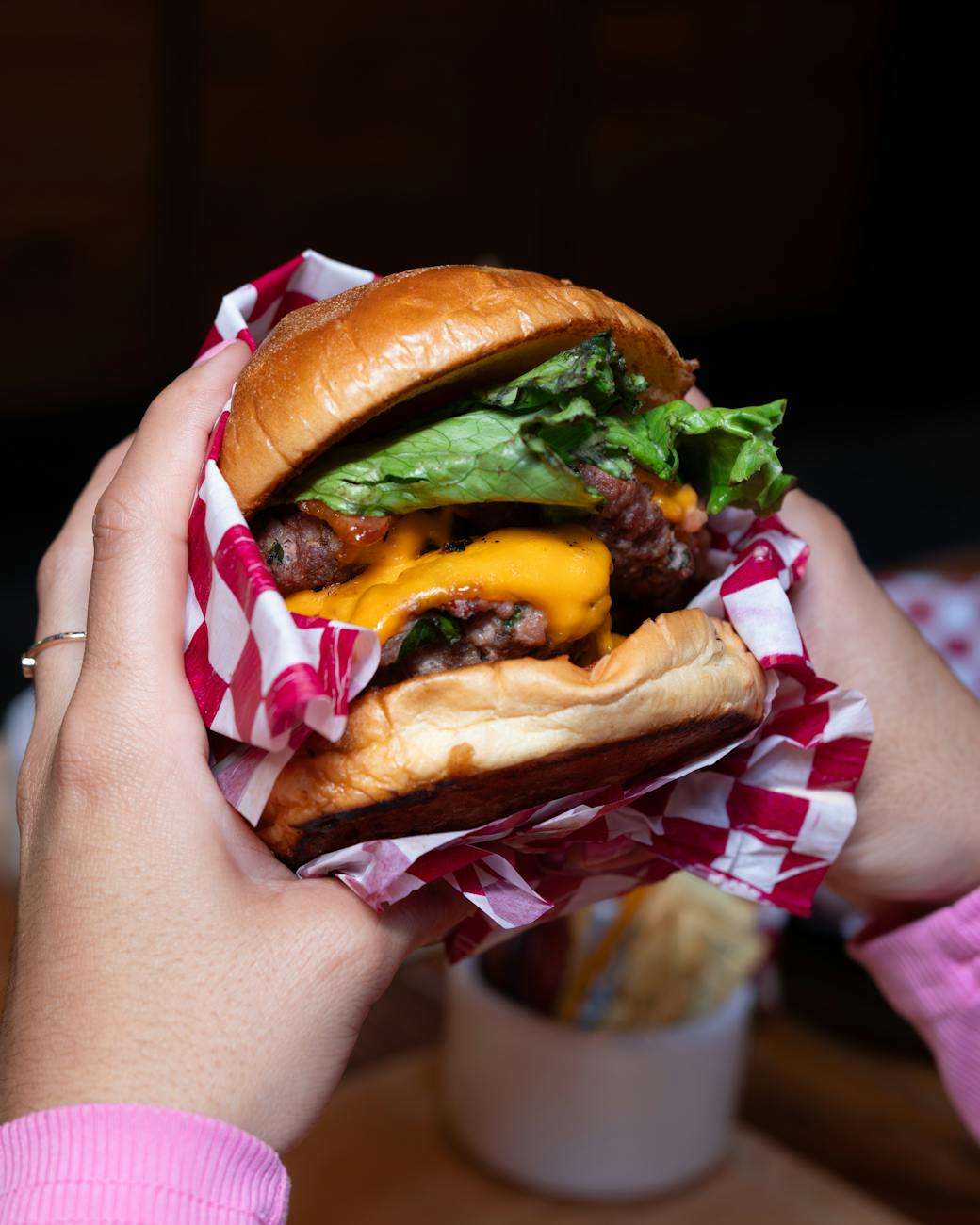
A great burger depends on balance. The beef, bun, toppings, and cheese all need to work together to create the perfect bite. While many cheeses can elevate a burger, others completely overpower the meat or create unpleasant texture problems.
The best burger cheeses melt smoothly, complement the beef, and add richness without becoming distracting. Some cheeses may taste excellent on a charcuterie board or salad but simply fail when placed on a hot burger.
Feta
Feta cheese has a salty, tangy flavor that works beautifully in salads and Mediterranean dishes. On burgers, however, it often creates more problems than benefits.
One major issue is that feta does not melt properly. Instead of turning creamy and smooth, it tends to soften slightly while remaining crumbly and dry.
The sharp saltiness can also overwhelm the flavor of the beef. Rather than complementing the burger, feta often dominates every bite and creates an unbalanced flavor profile.
Some specialty lamb burgers can handle feta better, but traditional beef burgers usually pair more naturally with milder melting cheeses.
Goat cheese
Goat cheese has become trendy on gourmet burgers, but it is not always a successful combination. Its creamy texture may sound appealing, yet the flavor can easily overpower the meat.
The tanginess of goat cheese often clashes with classic burger toppings like ketchup, pickles, and onions. Instead of blending into the burger, it creates a completely different flavor direction.
Another problem is consistency. Goat cheese can become overly soft and messy when heated, making burgers slippery and difficult to eat cleanly.
While goat cheese works wonderfully on crostini or salads, many burger fans prefer cheeses with a more balanced flavor and better melt quality.
Parmesan
Parmesan is one of the world’s most beloved cheeses, but it rarely belongs on a burger by itself. Its dry, granular texture makes it poorly suited for melting over beef patties.
Instead of forming a smooth layer, Parmesan tends to create oily clumps or crispy bits. While that texture may work in pasta dishes, it can feel awkward inside a burger.
The salty nuttiness of Parmesan can also become overwhelming when combined with heavily seasoned beef. Many chefs use Parmesan sparingly in burger blends or sauces rather than as the primary topping cheese.
A few qualities that make cheeses less ideal for burgers include:
- Poor melting ability
- Excessively salty flavor
- Dry or crumbly texture
- Overpowering sharpness
- Greasy consistency when heated
Burger-friendly cheeses usually need a smoother and creamier melt.
Blue cheese
Blue cheese has passionate fans, but it remains one of the most divisive burger toppings. Its pungent aroma and strong flavor can completely dominate the burger experience.
For some diners, blue cheese adds bold richness that pairs well with bacon or steakhouse-style burgers. For others, it overwhelms the beef so heavily that the burger itself becomes secondary.
The creamy yet crumbly texture can also create uneven bites. Some mouthfuls may contain too much blue cheese while others contain almost none, leading to an inconsistent eating experience.
Because of its intense profile, blue cheese is often better used in moderation as part of a sauce rather than piled directly onto a burger.
Ricotta
Ricotta is excellent in lasagna, stuffed pasta, and desserts, but it struggles badly as a burger cheese. Its soft, grainy texture lacks the structure needed for hot sandwiches.
When heated, ricotta can become watery and messy instead of creamy. This extra moisture may soak into the bun and make the burger fall apart quickly.
The mild flavor is another issue. Unlike cheddar, Swiss, or American cheese, ricotta contributes very little richness or savory depth to the burger itself.
Many cooks who experiment with ricotta burgers eventually realize that traditional melting cheeses simply deliver better texture, flavor, and consistency.
What Makes the Perfect Burger Cheese
The best burger cheeses melt evenly, complement beef flavor, and create a creamy texture without overpowering the sandwich. Classic choices like cheddar, American, Swiss, and pepper jack remain popular because they consistently deliver balance.
Experimenting with cheese can still be fun, but not every gourmet option works well on a burger. Texture, meltability, and flavor intensity all play major roles in creating a satisfying final result.
Understanding which cheeses clash with burgers can help home cooks avoid disappointing combinations and build better burgers every time.



Leave a Reply