
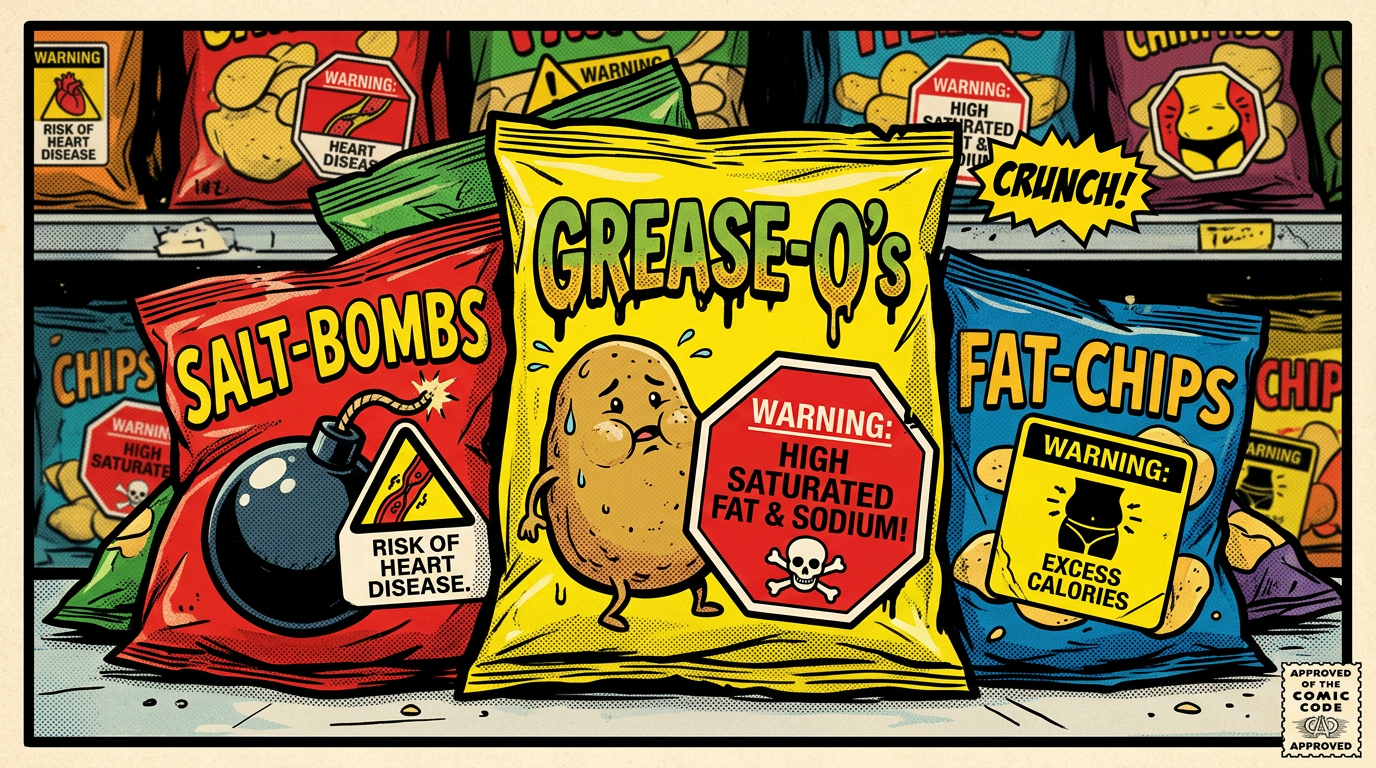
Potato chips are a go-to snack for many people, but not all varieties are created equal when it comes to health. While no single chip flavor directly causes disease, certain ingredients and cooking methods have been studied for their potential long-term effects when consumed in excess. Factors like high sodium, processed flavorings, and compounds formed during frying can all play a role in overall dietary risk.
Understanding how specific chip styles are made can help you make more informed choices about how often and how much you consume.
Barbecue potato chips
Barbecue potato chips often contain a mix of sugar, smoke flavoring, and seasoning blends. These ingredients can create complex compounds when exposed to high heat during processing.
Some studies have focused on substances formed during frying that may be concerning in large amounts. Moderation is key when consuming heavily seasoned, fried snacks.
Sour cream and onion potato chips
Sour cream and onion potato chips typically include dairy-based powders and flavor enhancers. These processed additives can increase sodium levels significantly.
High sodium diets are often discussed in relation to broader health concerns. Pairing these snacks with a balanced diet can help offset potential risks.
Cheddar and cheese potato chips
Cheddar and cheese potato chips rely on powdered cheese and artificial flavorings. These ingredients can be highly processed and calorie-dense.
When combined with frying oils, they create a snack that is easy to overconsume. Limiting portion size can help reduce overall intake of processed components.
Salt and vinegar potato chips
Salt and vinegar potato chips are known for their sharp taste and high acidity. They also tend to have elevated sodium content compared to simpler varieties.
Frequent consumption of high-sodium snacks may contribute to dietary imbalance. Balance with fresh foods is important for overall health.
Spicy chili potato chips
Spicy chili potato chips often include artificial colors, flavorings, and spice blends. These additives are designed to intensify flavor but can increase processing levels.
Highly processed snacks are often discussed in nutrition research for their cumulative effects. Eating them occasionally rather than daily can help maintain balance.
Why Some Chip Flavors Raise Concerns
The concern with certain chip flavors is not just the flavor itself, but how the chips are prepared and seasoned. Frying at high temperatures can create compounds that are being studied for potential health effects.
Other contributing factors include:
- High sodium levels in seasoning blends
- Use of artificial flavorings and additives
- Formation of compounds during frying
- High fat content from oils
- Easy overconsumption due to strong flavors
These elements can add up over time. Moderation plays an important role in reducing potential risks.
How to Enjoy Chips More Responsibly
You don’t have to eliminate chips entirely to make healthier choices. Adjusting how and when you eat them can make a difference.
Consider these tips:
- Choose smaller portion sizes
- Look for baked or lower-sodium options
- Pair chips with fiber-rich foods like vegetables
- Avoid eating directly from large bags
- Limit frequency rather than completely avoiding
These strategies can help reduce overall intake. They also support better long-term habits.
Conclusion
Potato chips are a popular snack, but some flavored varieties involve higher levels of processing, sodium, and frying-related compounds. While they can still be enjoyed, frequent consumption may not align with balanced dietary habits.
By being mindful of ingredients and portion sizes, you can continue to enjoy chips while minimizing potential concerns. Small adjustments can lead to better overall choices.




Leave a Reply