
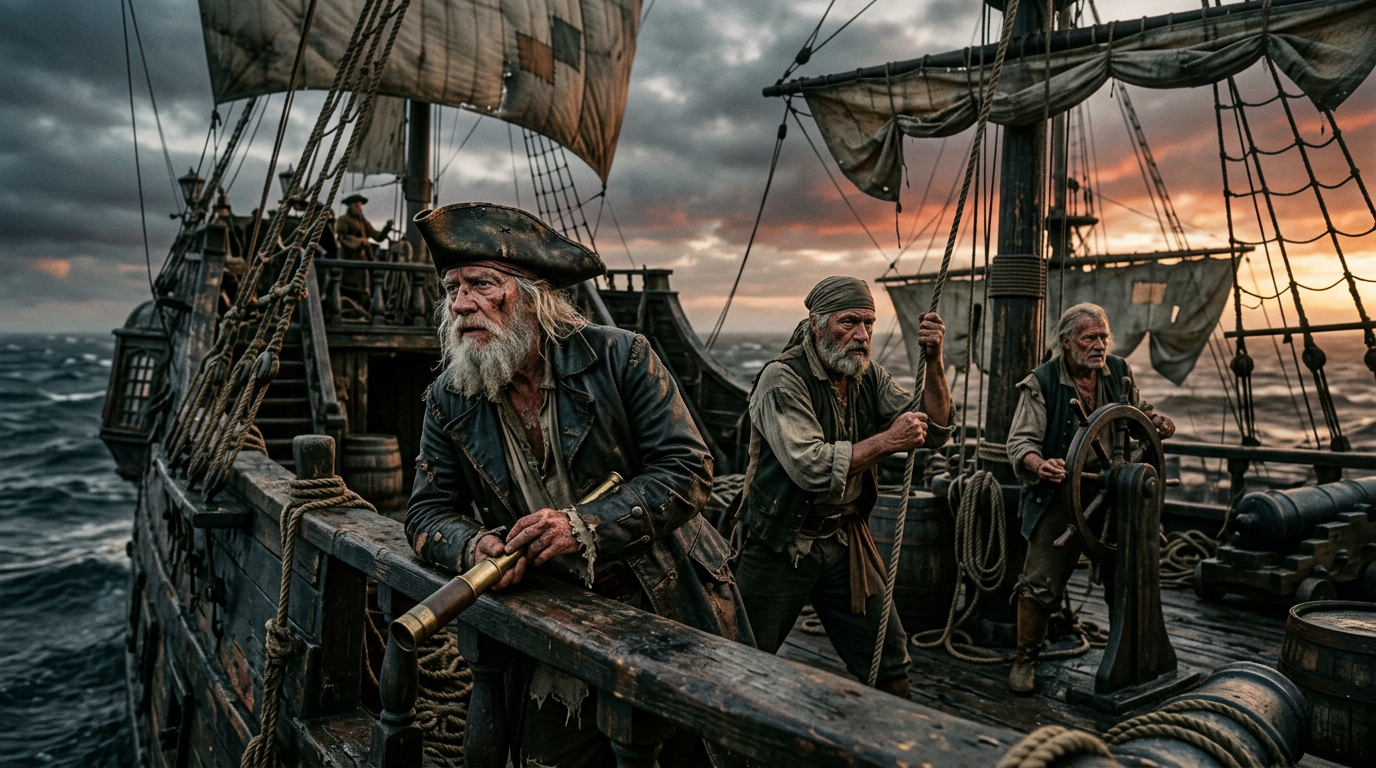
Pirates are usually remembered for violent ends at sea—battle, execution, or shipwreck. But not every figure from the so-called “Golden Age of Piracy” died in combat. A small number left piracy behind, lived quieter lives, and eventually died of natural causes after years of travel, trade, or colonial service.
William Dampier
William Dampier was a rare blend of pirate, scientist, and explorer. He made multiple voyages across the world, some involving privateering and piracy in the Pacific.
After his seafaring years, he focused on writing and exploration. He died in 1715 in England of natural causes after a long career at sea, making him one of the few pirate-adjacent figures to live to an older age for his time.
Dampier’s detailed travel writings influenced later explorers and even scientists like Charles Darwin. His legacy is more scholarly than criminal, despite his early pirate associations.
Henry Morgan
Henry Morgan was one of the most famous privateers in the Caribbean, often associated with piracy during his raids on Spanish territories. He later transitioned into colonial leadership under the English crown.
After his military and political career, he retired in Jamaica. He died in 1688, reportedly from illness, after years of wealth and influence rather than a violent end at sea.
Morgan’s life shows how some privateers were absorbed into official colonial systems. His later years were far removed from the raiding campaigns that made him famous.
Woodes Rogers
Woodes Rogers began his career as a privateer, commanding expeditions against Spanish shipping in the early 1700s. He is also known for his role in suppressing piracy in the Bahamas.
After his maritime career, Rogers served as a colonial governor. He died in 1732 of illness, having moved from privateering into administrative leadership.
His life illustrates the transition from piracy-era privateering to formal colonial governance. He ultimately helped reduce piracy in regions where he once operated.
Edward England
Edward England was active during the early 18th century and operated mainly around the Indian Ocean and Atlantic. Unlike many of his contemporaries, he was not executed by authorities.
After being marooned by his own crew, he reportedly survived for a time in poverty. Historical accounts suggest he died in Mauritius around 1720, likely from illness and hardship rather than violence.
His story is often used to show how pirate careers could end in obscurity rather than dramatic capture.
Laurens de Graaf
Laurens de Graaf was a Dutch buccaneer who operated in the Caribbean during the late 1600s. He was known for both naval skill and successful raids against Spanish ships.
After accepting a pardon, he appears to have settled in colonial territories such as Louisiana. He is believed to have died in the early 1700s, likely from natural causes after retiring from piracy.
De Graaf’s later life reflects a common pattern where skilled pirates transitioned into legitimacy once opportunities for pardon arose.
Why Some Pirates Survived to Old Age
While most pirates met violent ends, a small number avoided execution or battlefield death by leaving piracy behind or accepting pardons. Their survival often depended on timing, political shifts, and personal connections.
- Accepting royal pardons or switching allegiance to colonial powers
- Retiring with accumulated wealth in remote settlements
- Transitioning into trade, exploration, or governance
- Avoiding capture during major anti-piracy crackdowns
- Disappearing from records after leaving active piracy
The Less Violent Side of Pirate History
Pirate history is often told through dramatic battles and executions, but it also includes quieter endings. Some figures faded into civilian life or colonial administration, living out their remaining years far from the chaos of the high seas.
These stories highlight that piracy, for some, was a phase rather than a lifelong identity. Their later years offer a more complex picture of life during the Golden Age of Piracy.




Leave a Reply