
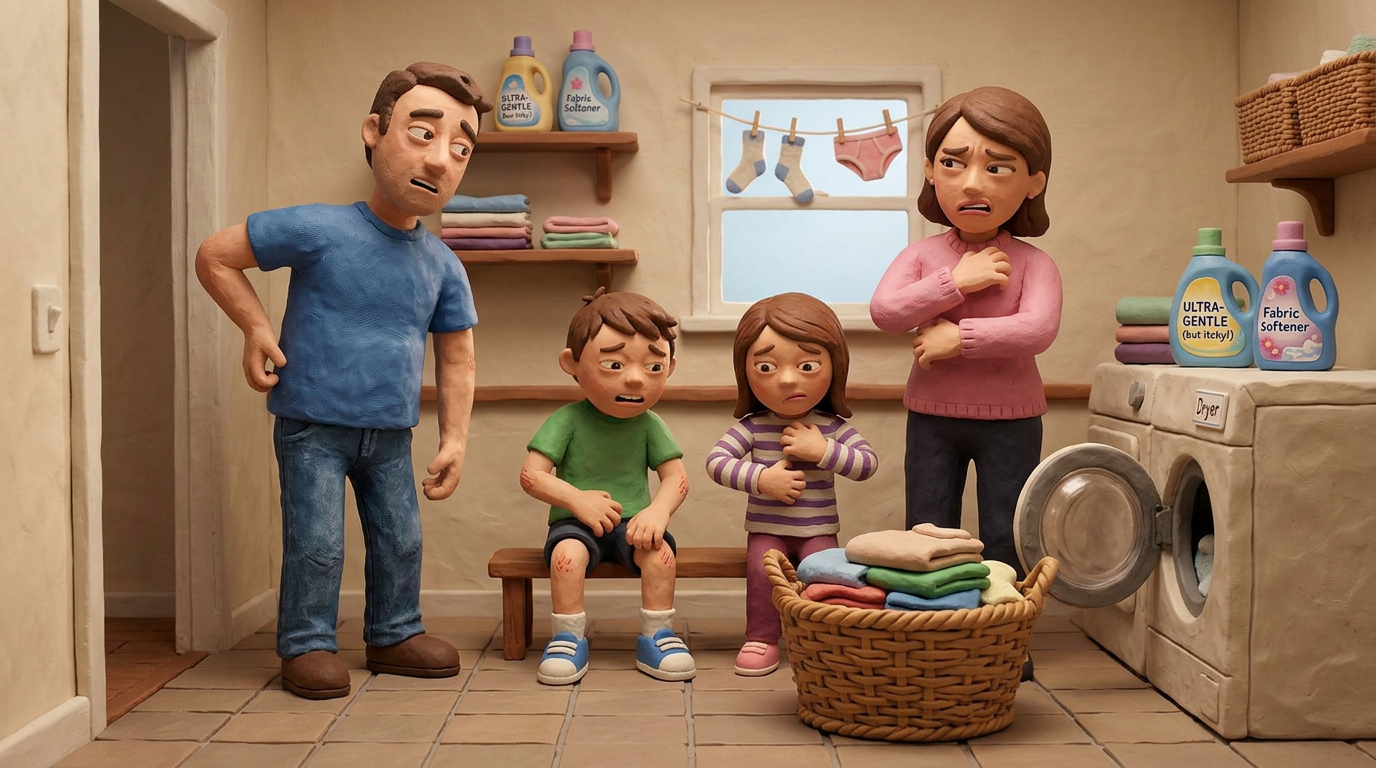
Fabric softeners are designed to make clothes feel softer and smell fresher, but not all formulations have stood the test of time. Over the years, certain products have been reformulated, discontinued, or quietly pulled after concerns about specific ingredients surfaced. While most modern options meet safety standards, older versions and some recalled batches highlight how ingredient choices can matter.
Downy Fabric Softener (older formulations)
Downy Fabric Softener (older formulations) has been a household staple for decades. Earlier formulations contained higher levels of synthetic fragrances and quaternary ammonium compounds, which raised concerns about skin irritation and environmental impact.
While not “banned,” some versions were reformulated over time to reduce potential irritants. This reflects a broader shift toward milder ingredients and more transparency in labeling.
Snuggle Liquid Fabric Softener (select recalled batches)
Snuggle Liquid Fabric Softener (select recalled batches) has faced limited recalls in the past due to contamination concerns during manufacturing. These situations were not widespread but highlighted the importance of quality control.
In some cases, microbial contamination was the issue rather than the formula itself. The affected batches were removed from shelves as a precaution to maintain consumer safety.
Gain Fabric Softener (fragrance-heavy formulas)
Gain Fabric Softener (fragrance-heavy formulas) is known for its strong scent, but that intensity has also led to scrutiny. Certain fragrance compounds used in older blends were flagged for potential irritation or sensitivity in some users.
As a result, some formulations were adjusted or phased out. The changes aimed to reduce complaints related to skin reactions and overpowering scent profiles.
Suavitel Fabric Conditioner (imported variants)
Suavitel Fabric Conditioner (imported variants) has occasionally been subject to review when imported versions did not align with updated ingredient standards. Differences in regulations between countries can lead to reformulations or product withdrawals.
In these cases, the concern is typically about ingredient compliance rather than immediate danger. Products are often adjusted before being reintroduced to the market.
Generic Store-Brand Fabric Softeners (older formulas)
Generic Store-Brand Fabric Softeners (older formulas) have historically varied widely in quality and ingredient transparency. Some older versions contained higher concentrations of harsh softening agents and artificial fragrances.
Over time, many of these products were reformulated or discontinued as standards improved. Retailers have increasingly shifted toward safer, more clearly labeled alternatives.
Common Ingredient Concerns in Fabric Softeners
When products are pulled or reformulated, it’s usually due to evolving safety standards rather than a single dangerous event. Some commonly discussed concerns include:
- Strong synthetic fragrances that may cause irritation
- Quaternary ammonium compounds linked to skin sensitivity
- Preservatives that can degrade or become contaminated
- Lack of ingredient transparency in older formulations
- Environmental concerns related to wastewater impact
Why Formulations Continue to Change
Consumer awareness has played a major role in how fabric softeners are developed today. People are paying closer attention to ingredients, especially those that come into contact with skin through clothing and bedding.
As a result, companies have shifted toward gentler formulas, reduced fragrance intensity, and clearer labeling. These changes help improve both safety perception and overall product performance.


Leave a Reply