
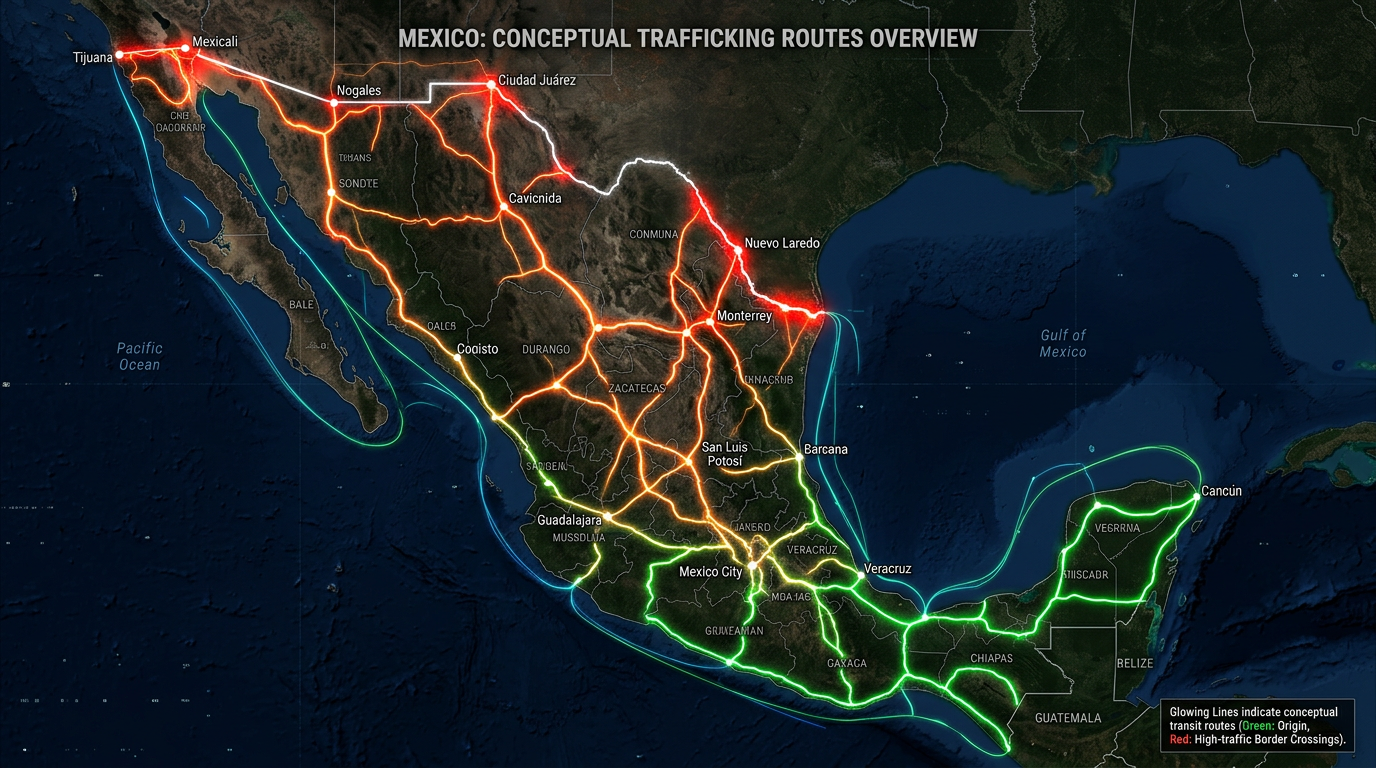
The history of organized crime in Mexico is complex, shaped by shifting alliances, law enforcement pressure, and competition over trafficking routes. Several groups have risen to prominence over the past few decades, often expanding far beyond regional control into international networks. While their influence has fluctuated due to arrests and internal conflict, a few organizations are frequently identified as among the most powerful.
Understanding these groups is less about glamorization and more about recognizing how illicit networks can impact security, economics, and public safety in affected regions.
Sinaloa Cartel
Sinaloa Cartel is often described as one of the most established and globally connected criminal organizations in Mexico. It has operated for decades and is known for its extensive international trafficking networks.
Despite leadership arrests and internal fractures, the group has shown resilience through decentralized cells. Its long-standing influence has made it a central focus of international law enforcement efforts.
Jalisco New Generation Cartel
Jalisco New Generation Cartel (often abbreviated as CJNG) is one of the fastest-growing criminal groups in recent years. It has expanded rapidly by absorbing rival territories and exploiting power vacuums.
The organization is known for its aggressive expansion strategies and territorial disputes with other groups. Its rise has significantly altered the balance of power within Mexico’s criminal landscape.
Gulf Cartel
Gulf Cartel is one of the older criminal organizations in Mexico, with roots tracing back several decades. It has historically operated in northeastern regions of the country.
Over time, internal divisions and rival factions have weakened its unified control. However, it still maintains influence in certain areas and continues to be active in illicit trafficking networks.
Los Zetas
Los Zetas originated as a breakaway group and became known for its militarized structure. It gained notoriety for its discipline and organizational tactics compared to earlier groups.
Following internal splits, the organization fragmented into smaller factions. Despite this, its legacy continues to influence other criminal structures in the region.
La Familia Michoacana
La Familia Michoacana emerged with a unique ideological framing compared to other groups. It has operated primarily in central Mexico, particularly in Michoacán.
The organization has experienced cycles of dissolution and reformation over time. Splinter groups have continued to carry elements of its original structure and operations.
Key Factors Behind Cartel Power
The influence of these organizations is shaped by a combination of geography, economics, and enforcement pressure. Their power often shifts as alliances change and leadership structures evolve.
Common factors contributing to their persistence include:
- Control of strategic trafficking routes
- Fragmented law enforcement environments
- Access to international demand networks
- Internal decentralization into smaller cells
- Competition-driven territorial expansion
These elements create a constantly shifting landscape. No single organization maintains stable dominance for long periods.
Broader Impact on Society and Security
The presence of powerful criminal organizations affects more than just law enforcement operations. It also influences local economies, migration patterns, and public safety conditions in affected regions.
Governments and international agencies continue to adapt strategies to address these challenges. Efforts often focus on disrupting financial networks and strengthening institutional stability.
Conclusion
The most influential criminal organizations in Mexico have evolved significantly over time, shaped by fragmentation, competition, and enforcement pressure. While their structures and leadership change frequently, their impact on regional security remains significant.
Understanding their development helps provide context for broader discussions about crime, policy, and international cooperation. These groups are part of a complex and ongoing security landscape.




Leave a Reply