
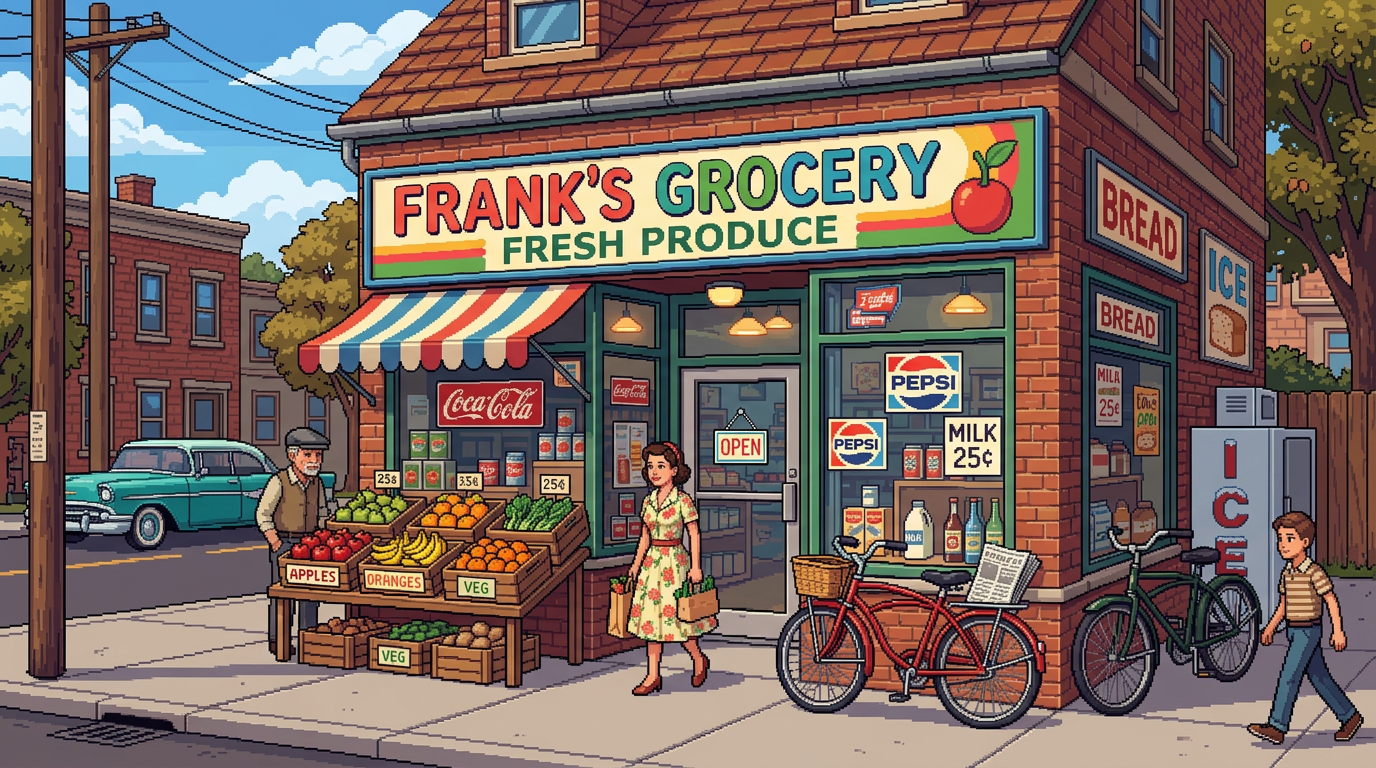
For Baby Boomers, neighborhood shopping was once a daily part of life. Long before supercenters and online retailers became the norm, every community had a collection of small, independently owned stores where customers knew the owners by name. These businesses weren’t just places to shop—they were gathering spots where neighbors caught up on local news, children spent their allowance, and families relied on friendly service. While many of these stores have disappeared, they remain cherished memories for those who grew up visiting them.
Corner Grocery Stores
Before large supermarket chains dominated the landscape, neighborhood grocery stores were the heart of many communities. Families often stopped in several times a week for fresh bread, milk, eggs, and other essentials instead of making one massive shopping trip.
Store owners frequently knew every customer by name and sometimes even allowed trusted families to buy groceries on credit until payday. That personal relationship created a level of community that’s difficult to replicate today.
Children often visited with a short shopping list and returned home with a piece of candy handed to them by the owner. These simple moments became lasting memories for countless Baby Boomers.
Local Butcher Shops
The neighborhood butcher was once the go-to expert for fresh meat. Rather than purchasing prepackaged cuts from refrigerated cases, customers spoke directly with the butcher, who trimmed steaks, ground hamburger, or prepared custom cuts on request.
Many butchers offered cooking advice and recommended the best cuts for family dinners, holidays, or backyard barbecues. Their knowledge made them trusted members of the community.
As supermarkets expanded their meat departments, many independent butcher shops gradually disappeared, leaving behind fond memories of personalized service and exceptional quality.
Family-Owned Bakeries
The aroma of fresh bread drifting down the sidewalk is something many Baby Boomers still remember. Local bakeries produced bread, donuts, cookies, pies, and cakes fresh each morning, often selling out before the day ended.
Birthday cakes were frequently custom decorated by hand, and many families had favorite recipes that only their neighborhood bakery seemed able to perfect.
Popular reasons people visited neighborhood bakeries included:
- Fresh bread every morning
- Homemade pastries
- Custom birthday cakes
- Holiday desserts
- Friendly neighborhood service
Although artisan bakeries still exist in some communities, the neighborhood bakery was once a nearly universal fixture.
Five-And-Dime Stores
Five-and-dime stores offered an incredible variety of affordable merchandise under one roof. Everything from school supplies and toys to sewing notions and kitchen gadgets could be found for just a few cents or dollars.
Many Baby Boomers remember spending hours browsing aisles filled with inexpensive treasures, carefully deciding how to spend their allowance. Some stores even featured lunch counters where shoppers could enjoy a sandwich or milkshake before heading home.
These stores made everyday shopping feel like an adventure, especially for children.
Neighborhood Drugstores
Long before national pharmacy chains became widespread, neighborhood drugstores served as community gathering places. In addition to filling prescriptions, they often sold magazines, greeting cards, toiletries, toys, and household essentials.
Perhaps the most memorable feature was the soda fountain. Families and teenagers gathered for ice cream sundaes, cherry phosphates, hamburgers, and milkshakes while chatting with friends after school.
The combination of pharmacy, lunch counter, and general store made these businesses a central part of everyday neighborhood life.
Local Hardware Stores
Independent hardware stores were invaluable resources for homeowners and do-it-yourself enthusiasts. Employees often had years of experience and could recommend exactly the right nail, screw, paint, or plumbing part for nearly any household repair.
Unlike today’s massive warehouse stores, neighborhood hardware stores emphasized personal service. If customers weren’t sure how to fix something, someone behind the counter usually had practical advice.
Many Baby Boomers remember accompanying their parents on weekend trips to pick up supplies for home improvement projects, often leaving with far more knowledge than they expected.
Conclusion
Neighborhood stores once formed the backbone of communities across America. Whether buying groceries, picking up fresh bread, enjoying an ice cream soda, or getting expert advice at the hardware store, these businesses created personal connections that extended far beyond simple transactions.
Although many have disappeared or been replaced by larger retailers, the memories remain vivid for Baby Boomers who experienced an era when shopping meant seeing familiar faces, supporting local businesses, and feeling like part of a close-knit neighborhood.

Leave a Reply