
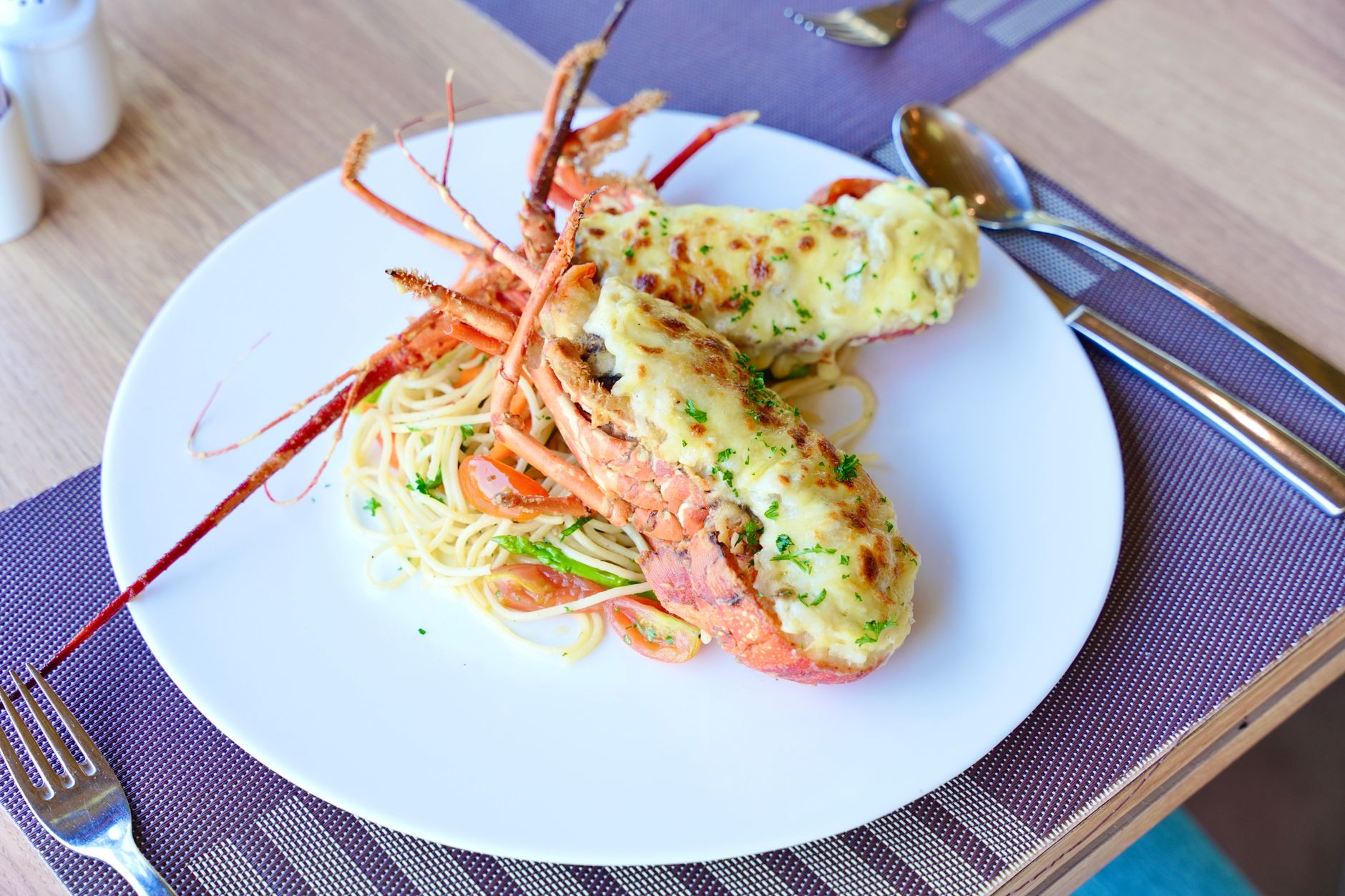
Seafood is often marketed as a luxury dining experience, with premium pricing tied to freshness, rarity, or preparation style. While some dishes truly deliver exceptional flavor and value, others rely more on reputation, presentation, or exclusivity than actual culinary payoff.
In many cases, diners pay inflated prices for seafood dishes that could be prepared more simply at home or found elsewhere at a fraction of the cost. Rising restaurant markups and trend-driven menus have only amplified this issue.
Lobster Mac And Cheese
Lobster mac and cheese is frequently found on upscale restaurant menus with a steep price tag.
Despite the “luxury” label, the dish often contains small portions of lobster mixed into a heavy, cheese-based pasta.
The strong flavors of cheese and sauce can overpower the delicate taste of lobster, making it difficult to appreciate the seafood itself.
Many diners end up paying premium prices for what is essentially mac and cheese with limited seafood presence.
In many cases, the value does not match the cost.
Seafood Tower Platters
Seafood tower platters are visually impressive appetizer arrangements featuring oysters, shrimp, crab, and sometimes lobster.
While the presentation is dramatic, the cost is often significantly higher than the combined retail price of the individual ingredients.
Much of the markup comes from presentation, ice display, and restaurant ambiance rather than preparation complexity.
The experience can be enjoyable for special occasions, but the value-per-dollar is often questioned.
For many diners, it is more spectacle than substance.
Fried Calamari Appetizers
Fried calamari appetizers are a common restaurant starter that can carry surprisingly high prices.
Squid is generally inexpensive in wholesale markets, but restaurants often charge premium rates for small portions.
The preparation is relatively simple, involving battering and frying, which adds to the perception of inflated pricing.
Many diners find that similar versions can be made at home for a fraction of the cost.
The markup often reflects restaurant branding rather than ingredient value.
Crab Legs At Upscale Buffets
Crab legs at upscale buffets are frequently featured in high-end buffet settings with elevated pricing.
While crab legs are naturally more expensive than some seafood options, buffet pricing often exaggerates their perceived exclusivity.
Portion control and demand also drive up the cost per serving.
In many cases, diners pay more for access to unlimited servings rather than actual culinary enhancement.
The experience can feel costly compared to the edible yield of the shellfish.
Several seafood dishes tend to carry inflated pricing due to presentation or branding:
- Decorative plating and upscale ambiance
- Imported or “market price” labeling
- Small portions with high garnish value
- Association with luxury dining culture
These factors often influence perception more than actual food cost.
Seared Scallops With Minimal Sides
Seared scallops are often presented as a high-end entrée in fine dining restaurants.
While scallops can be delicious when prepared well, the portion sizes are typically small relative to the price.
Restaurants often charge premium prices based on the “luxury” reputation of scallops rather than ingredient cost.
The dish is frequently served with minimal sides, which can make the plate feel underwhelming for the price point.
Many diners leave feeling satisfied with flavor but not value.
Oysters On The Half Shell
Oysters on the half shell are often priced individually, which can quickly add up in restaurants.
Although oysters are relatively simple to serve raw, their pricing is heavily influenced by origin, branding, and perceived freshness.
High-end establishments may charge several dollars per oyster, even though wholesale costs are significantly lower.
While the experience is considered a delicacy, the value proposition is debatable for many diners.
The cost often reflects exclusivity rather than preparation effort.
Why Seafood Pricing Feels So Inflated
Seafood dishes are often expensive due to:
- Perceived luxury status of shellfish
- Restaurant markup on premium ingredients
- Presentation and plating expectations
- Limited portion sizes in fine dining
These factors combine to create dishes that may not always match their price in perceived value.
Conclusion
Lobster mac and cheese, seafood towers, fried calamari, crab legs, seared scallops, and oysters on the half shell are all popular seafood dishes that often come with high price tags. While many of them can be enjoyable dining experiences, their cost is frequently driven by presentation, branding, and restaurant markup rather than ingredient value alone.


Leave a Reply