
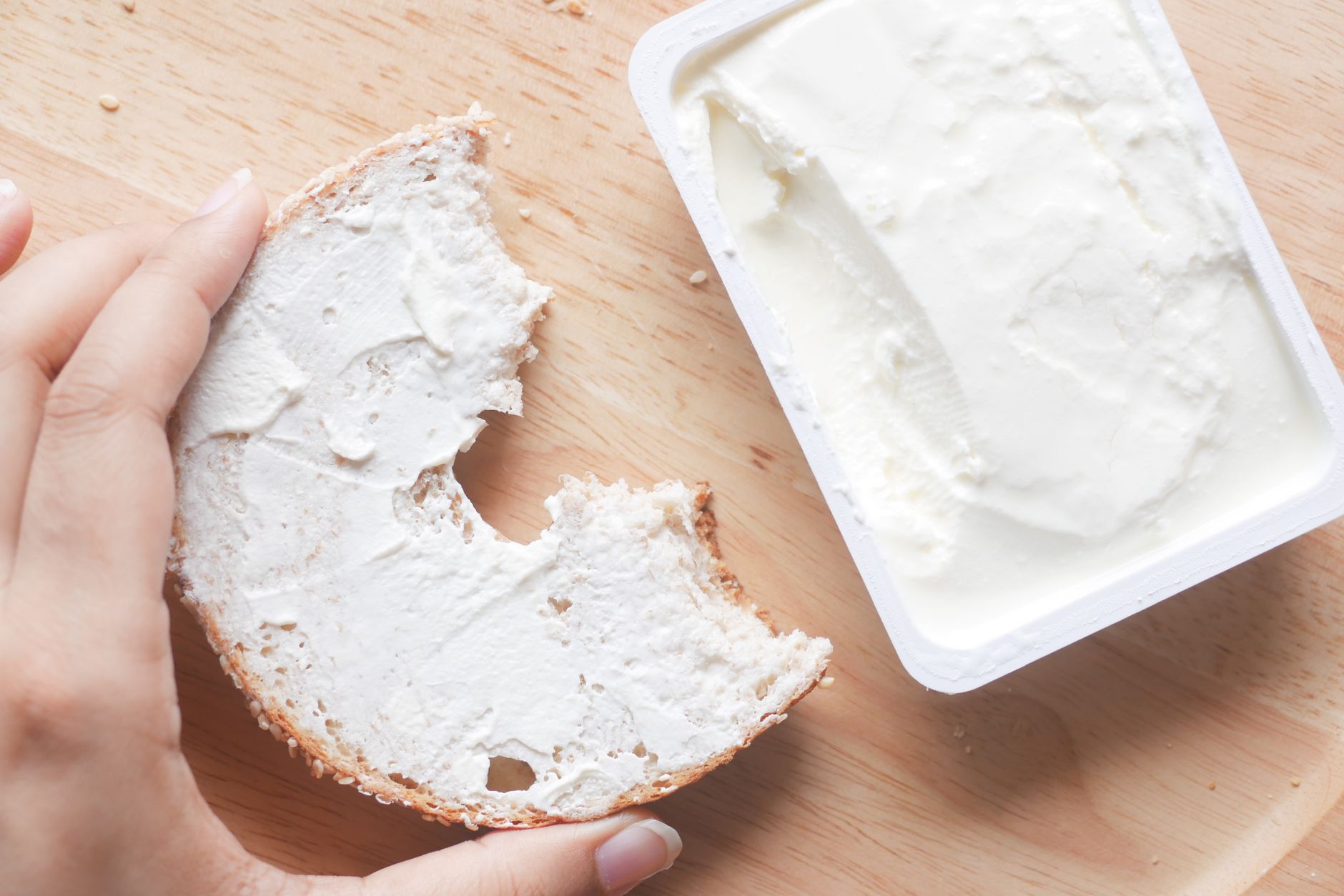
Cream cheese is a popular spread used in breakfasts, desserts, dips, and savory dishes. While it is enjoyed for its smooth texture and mild flavor, not all cream cheese products are created equally from a nutritional standpoint.
Some varieties are highly processed, high in saturated fat, and contain additives or stabilizers that may contribute to dietary patterns associated with increased colon cancer risk when consumed frequently. It is important to understand that no single food directly causes cancer, but overall dietary habits—especially those high in processed fats and low in fiber—can influence long-term risk.
Philadelphia Original Cream Cheese
Philadelphia is one of the most recognized cream cheese brands in the world. While it is creamy and versatile, it is also high in saturated fat and relatively low in beneficial nutrients like fiber or protein diversity.
Frequent consumption of high-fat dairy products as part of a low-fiber diet may contribute to inflammation-related dietary patterns. This is especially relevant when cream cheese is used heavily in bagels, desserts, and dips.
The product is also calorie-dense, meaning it is easy to overconsume without feeling full.
Great Value Cream Cheese
Store-brand options like Great Value cream cheese are widely used due to their affordability. However, these products often rely more heavily on stabilizers and emulsifiers to maintain texture and shelf life.
While still safe to eat in moderation, highly processed dairy spreads can contribute to diets high in saturated fats and additives when consumed frequently.
The concern is not the brand itself, but the pattern of regular intake of processed, low-fiber foods.
Kraft Cream Cheese Spread
Kraft cream cheese spreads are designed for convenience and smooth consistency, often containing additional stabilizers and emulsifying ingredients.
These spreads tend to be softer and more processed than traditional block cream cheese, making them easier to spread but also more processed in formulation.
Diets high in ultra-processed foods—including processed dairy spreads—have been associated in research with less favorable gut health profiles when consumed regularly.
Daisy Cream Cheese
Daisy cream cheese is marketed as having a simpler ingredient list compared to some competitors. However, it is still a high-fat dairy product with significant saturated fat content.
While it may contain fewer additives, its nutritional profile remains similar to other traditional cream cheeses in terms of fat density.
When paired with refined carbohydrates like white bagels or crackers, it can contribute to low-fiber eating patterns that are not ideal for long-term colon health.
Organic Valley Cream Cheese
Organic Valley offers cream cheese made from organic milk, which appeals to consumers seeking fewer pesticides and more natural sourcing. However, “organic” does not necessarily mean low-fat or low-calorie.
The saturated fat content remains comparable to conventional cream cheese products.
Even high-quality dairy products can contribute to excessive saturated fat intake if consumed frequently, especially when replacing fiber-rich foods like fruits, vegetables, and whole grains.
Why Dietary Patterns Matter More Than Single Foods
It is important to emphasize that cream cheese alone does not determine cancer risk. Instead, overall dietary patterns play a much larger role.
Common dietary concerns linked to higher risk patterns include:
- High intake of saturated fats
- Low fiber consumption
- Excess ultra-processed foods
- Frequent refined carbohydrate pairing
When cream cheese is consumed alongside nutrient-poor foods, it becomes part of a less balanced diet.
Healthier Ways To Enjoy Cream Cheese
Cream cheese can still be enjoyed in moderation when balanced with healthier choices.
Better approaches include:
- Using smaller portions
- Pairing with whole grain bread or vegetables
- Choosing whipped versions for lower calorie density
- Adding fiber-rich toppings like fruit or herbs
These adjustments help improve overall nutritional balance.
Conclusion
Cream cheese products like Philadelphia, Kraft, Great Value, Daisy, and Organic Valley are widely consumed and generally safe in moderation. However, their high saturated fat content and common use in low-fiber meals can contribute to dietary patterns associated with increased colon cancer risk. Focusing on balance, portion control, and fiber-rich foods is key to maintaining a healthier diet while still enjoying these spreads.




Leave a Reply