
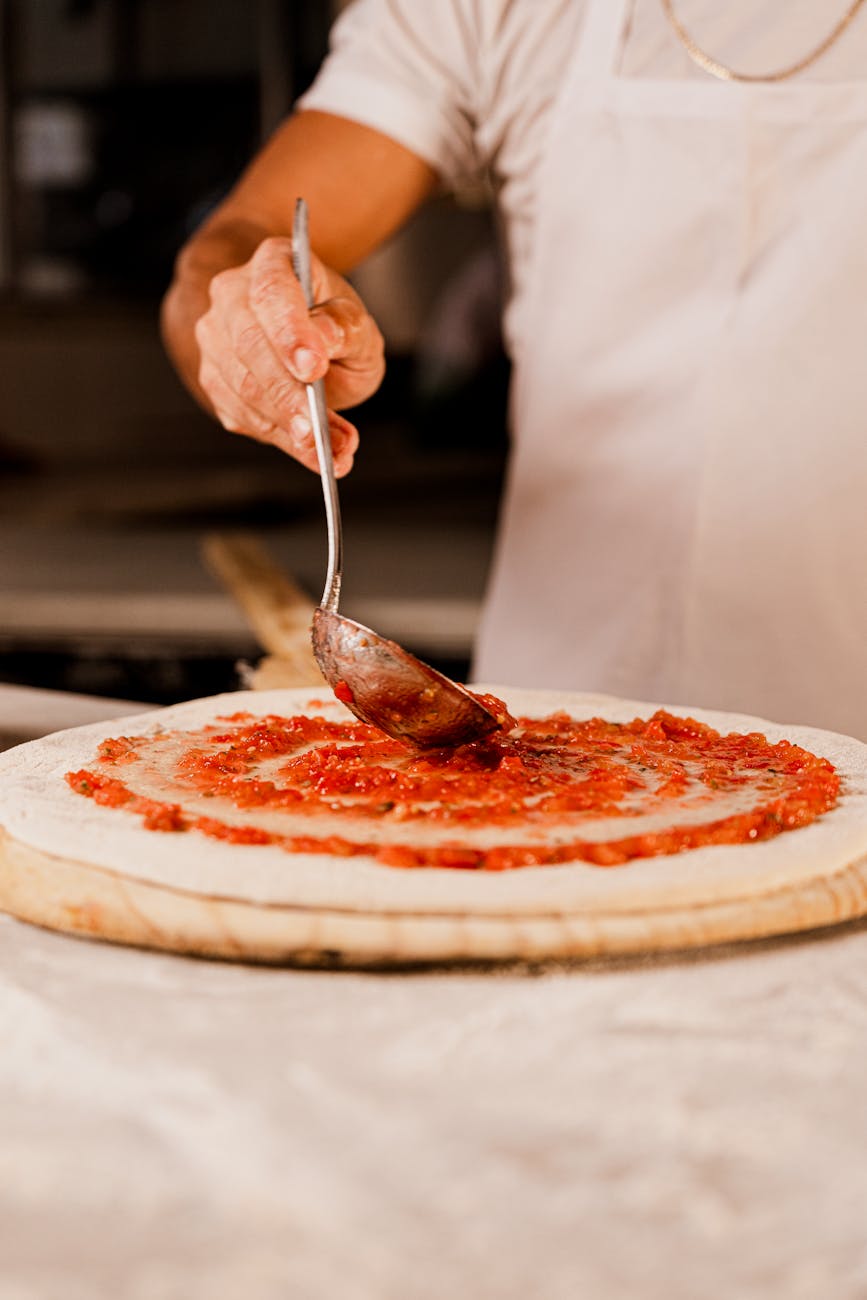
Pizza is one of the most customizable foods in the world, and while tomato sauce remains the classic base, chefs and home cooks alike have expanded far beyond tradition. Unusual pizza sauces can completely change the flavor profile, turning a familiar dish into something entirely new.
From creamy bases to spicy global influences, alternative sauces allow pizza to reflect different cuisines and ingredient combinations. These creative foundations often highlight toppings in unexpected ways and introduce new textures and flavor balances.
Exploring unconventional pizza sauces is one of the easiest ways to upgrade homemade pizza nights.
Pesto Sauce
Pesto is a vibrant green sauce made from basil, garlic, olive oil, nuts, and cheese. When used as a pizza base, it replaces the acidity of tomato sauce with a rich, herb-forward flavor.
The oily texture of pesto pairs especially well with mozzarella, grilled chicken, cherry tomatoes, and roasted vegetables. It also works beautifully with white cheeses like ricotta or goat cheese.
Because pesto is naturally intense, a thin layer is usually enough to flavor an entire pizza without overpowering other ingredients.
White Garlic Cream Sauce
White garlic sauce, often made from butter, cream, and roasted garlic, creates a rich and indulgent pizza base. It is commonly used in “white pizzas,” which skip tomato sauce entirely.
This sauce brings a smooth, savory flavor that pairs well with mushrooms, spinach, chicken, and caramelized onions. The creaminess helps balance stronger toppings while adding a luxurious texture.
Many pizzerias use variations of this sauce as a foundation for gourmet-style pizzas.
BBQ Sauce
Barbecue sauce transforms pizza into something smoky, sweet, and tangy. It is especially popular in American-style specialty pizzas and works well as a base for grilled meats.
The bold flavor of BBQ sauce pairs perfectly with chicken, red onions, cheddar cheese, and bacon. Its sweetness contrasts with savory toppings, creating a layered flavor experience.
Because BBQ sauce varies widely in sweetness and spice, different brands can dramatically change the final pizza profile.
Hummus Spread
Hummus is an unexpected but highly effective pizza base made from blended chickpeas, tahini, lemon juice, and garlic. It provides a creamy texture while keeping the pizza plant-based and nutrient-rich.
This sauce works especially well with Mediterranean toppings such as olives, roasted peppers, spinach, feta cheese, and artichokes.
Hummus-based pizzas are often lighter than traditional versions, making them popular among those looking for alternative dietary options.
Several characteristics make alternative pizza sauces appealing:
- Unique flavor combinations
- Lighter or creamier textures
- Ability to complement diverse toppings
- Inspiration from global cuisines
These qualities help expand pizza beyond traditional Italian-style preparation.
Buffalo Sauce
Buffalo sauce brings heat, tang, and buttery richness to pizza. It is commonly used in chicken-based pizzas and adds a bold, spicy kick that stands out from traditional tomato-based flavors.
Buffalo sauce pairs especially well with grilled chicken, blue cheese, celery, and mozzarella. The combination creates a balance of heat and creaminess that many spice lovers enjoy.
Because buffalo sauce is naturally intense, it is often combined with ranch or cheese drizzle after baking to mellow the heat slightly.
Why Unusual Pizza Sauces Work
Alternative pizza sauces succeed because they shift the focus from tradition to creativity. By changing the base, the entire flavor structure of the pizza changes, allowing for more diverse ingredient pairings.
These sauces also reflect global culinary influences, incorporating elements from Mediterranean, American, and fusion cuisines.
Common benefits of experimenting with pizza sauces include:
- Expanded flavor variety
- Better customization options
- New dietary possibilities
- Creative cooking experiences
This flexibility is one reason modern pizza culture continues to evolve.
How to Choose the Right Sauce
Selecting the right sauce depends on balancing flavor intensity with toppings. Strong sauces like buffalo or BBQ work best with bold ingredients, while lighter sauces like pesto or hummus pair well with fresh vegetables.
Tips for better results include:
- Matching sauce strength with topping richness
- Avoiding overly wet combinations
- Using thin layers to prevent sogginess
- Experimenting with complementary cheeses
These adjustments help maintain structure while maximizing flavor.
Conclusion
Unusual pizza sauces offer a simple way to completely reinvent a familiar dish. Whether it’s creamy garlic sauce, herb-packed pesto, or spicy buffalo base, each option opens the door to new flavor combinations and creative cooking possibilities.


Leave a Reply