
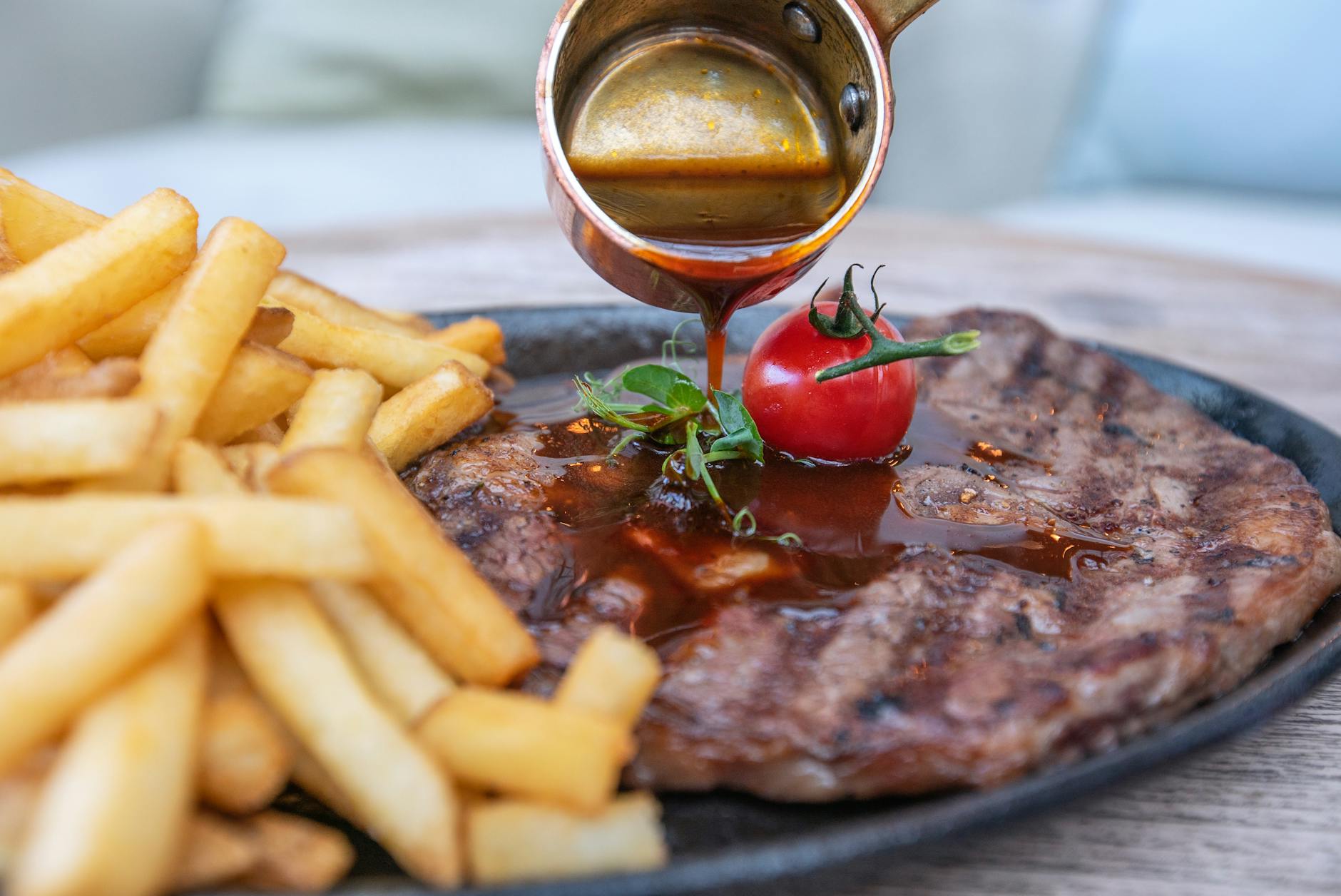
Steak sauce can add bold flavor to grilled meats, but many popular varieties are loaded with ingredients that nutrition experts frequently warn consumers to limit. High sodium content, added sugars, preservatives, and heavily processed additives have all contributed to growing scrutiny surrounding certain condiments.
Diets high in processed meats, excess sodium, added sugars, and heavily processed foods have been associated with elevated colorectal health concerns in some research. Certain steak sauces may contribute to those broader dietary patterns when consumed frequently.
A.1. Original Sauce Contains Heavy Sodium Levels
A.1. Sauce remains one of the most iconic steak sauces sold in grocery stores.
Its bold flavor comes partly from concentrated sodium and processed ingredients designed to create a powerful savory profile. Excess sodium intake has long been associated with broader health concerns when consumed regularly in large amounts.
Many consumers also use far more sauce per serving than recommended, especially when pairing it with heavily processed meats.
Heinz 57 Includes Added Sugars And Preservatives
Heinz 57 combines sweetness, acidity, and seasoning into a sauce that has remained popular for decades.
However, the formula contains added sugars and preservatives that some nutrition-conscious consumers try to limit. Sweetened sauces may encourage overconsumption while adding extra calories and processed ingredients to meals already centered around red meat.
Highly processed condiments can contribute to overall dietary patterns linked to poorer long-term health outcomes.
Sweet Baby Ray’s Steakhouse Sauce Is Extremely Sugary
Sweet Baby Ray’s products are known for rich, sweet flavor profiles that appeal to barbecue fans.
Its steakhouse-style sauces often contain substantial amounts of sugar alongside sodium-heavy seasoning blends. Frequent consumption of highly sweetened sauces may contribute to unhealthy dietary habits when paired with fatty or processed meats.
Some varieties also contain artificial flavoring compounds and stabilizers commonly found in mass-produced condiments.
- Ingredients consumers often monitor in steak sauces:
- Excess sodium
- Added sugars
- Artificial flavors
- Preservatives
- Corn syrup
Jack Daniel’s Steak Sauce Relies On Processed Flavor Additives
Jack Daniel’s licensed steak sauces emphasize smoky sweetness and bold seasoning.
Many versions contain concentrated sweeteners, caramel coloring, and processed smoke flavor additives designed to mimic slow-cooked barbecue flavor. While flavorful, these sauces are often highly processed compared to homemade alternatives.
Consumers may also underestimate how quickly calories and sodium accumulate when using large portions during grilling season.
Generic Store-Brand Steak Sauces Can Be Highly Processed
Store-brand steak sauces frequently imitate major national brands while using lower-cost ingredient blends.
Some generic sauces rely heavily on high-fructose corn syrup, artificial coloring, and concentrated sodium to replicate stronger flavor profiles cheaply. Ingredient quality can vary significantly depending on the retailer and manufacturer.
Budget sauces may also contain more stabilizers and preservatives to maximize shelf life and consistency.
Processed Meat Consumption Is The Bigger Concern
Health experts generally focus more heavily on processed and heavily charred meats than steak sauce alone when discussing colorectal health risks.
Frequent consumption of processed beef products, excessive grilling temperatures, and diets low in fiber have all been discussed far more extensively in colon health research. Steak sauces simply become part of that broader dietary picture when used excessively.
That means occasional steak sauce use is far different from routinely consuming highly processed meals loaded with sodium, sugar, and charred meats.
Homemade Sauces Often Offer Simpler Ingredients
One way consumers reduce processed ingredient exposure is by making homemade steak sauces using tomatoes, vinegar, garlic, mustard, and spices.
Homemade recipes allow better control over sodium and sugar levels while avoiding some preservatives and artificial additives found in commercial products. Many people are surprised how easy it is to create flavorful sauces with relatively simple ingredients.
Fresh chimichurri, peppercorn sauces, or herb-based blends also provide alternatives that rely less heavily on processed sweeteners.
Moderation Matters More Than Any Single Sauce
No individual steak sauce determines someone’s long-term health outcomes by itself. Overall diet quality, exercise, smoking habits, alcohol intake, and processed food consumption play much larger roles in colorectal health.
Still, awareness around sodium, sugar, and processed additives continues growing as consumers read labels more carefully. Choosing simpler sauces and using them in moderation may help support a more balanced diet overall.




Leave a Reply