
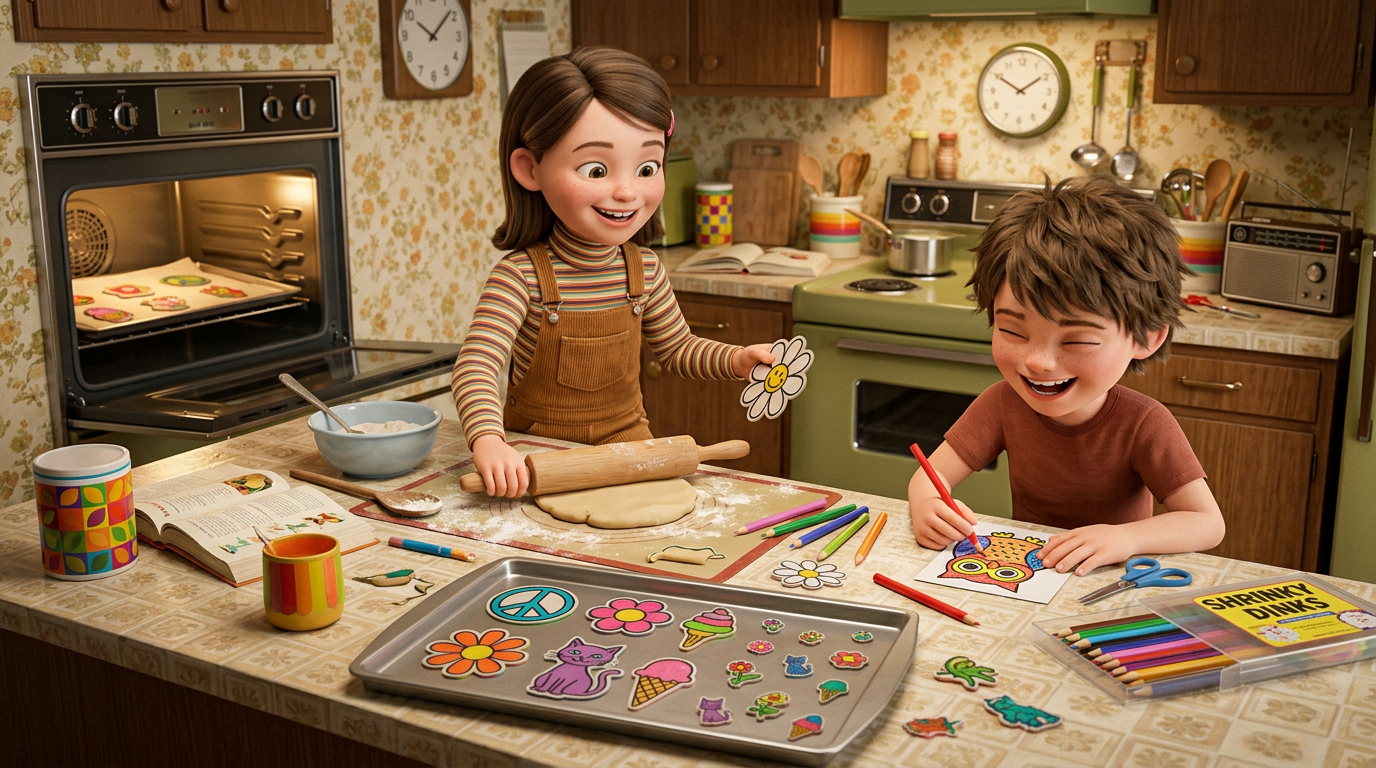
Before digital gadgets took over childhood entertainment, many toys required patience, creativity, and sometimes even an oven. During the Baby Boomer era, hands-on crafting kits were a popular way for kids to make their own playthings from scratch.
These “bake-it-yourself” toys were part science experiment, part art project, and part snack-adjacent curiosity. While some became cherished keepsakes, others were strange, messy, or outright puzzling in hindsight. Here are five of the strangest Baby Boomer toys you had to bake.
SHRINKY DINKS
Shrinky Dinks were one of the most iconic bake-to-finish toys of the era. Kids would draw on thin plastic sheets, cut out their designs, and then watch them shrink in the oven into thick, glossy charms.
The transformation process felt almost magical. A flat drawing would curl, twist, and then settle into a tiny hardened version of itself, often about one-third of its original size.
While incredibly popular, the unpredictability of the shrinking process sometimes led to warped shapes or distorted artwork, which only added to their quirky charm.
CLAY OVEN CRAFT SETS
Many children experimented with small clay baking kits designed to create miniature figurines. These sets included soft modeling clay that hardened when baked in a home oven.
The idea was simple: sculpt, bake, and play. However, the results often depended heavily on baking time and temperature, which could lead to cracked or overly brittle creations.
Despite their imperfections, these kits helped kids learn basic sculpting techniques and encouraged creativity through hands-on experimentation.
COOKIE BAKE-AND-PAINT KITS
Some of the strangest hybrid toys combined baking with edible crafts. Cookie kits allowed children to bake simple sugar cookies and then decorate them using colored icing and edible paints.
While technically food, they were often treated like toys because of the creative decorating process involved. The results were usually more artistic than appetizing.
Common features of these kits included:
- Pre-measured cookie dough mix
- Small plastic baking trays
- Food coloring pens or edible paint
- Tiny decorating brushes
Although fun, the novelty sometimes wore off after realizing the cookies rarely looked like the box illustrations.
OVEN-BAKED CERAMIC MINIATURES
Small ceramic figure kits allowed children to mold clay characters and bake them into hardened collectibles. These were often sold as themed sets, such as animals, fairy tale figures, or tiny household objects.
The baking process required careful attention, as overheating could crack the figurines or cause uneven textures.
Once cooled, kids would paint the miniatures with enamel paints, turning them into personalized display pieces. Many families still have surviving examples tucked away in storage boxes.
CANDY MELTING MOLD SETS
One of the strangest hybrid toys involved edible candy molds that required heating in an oven or under a heat lamp. Kids would melt flavored sugar mixtures and pour them into shaped trays.
Once cooled, the candy hardened into colorful, often oddly textured sweets. The process was part chemistry experiment, part snack creation.
These kits were unpredictable—sometimes producing glossy candies, and other times yielding sticky or burnt results that were less than appetizing.
Despite the inconsistency, children loved the hands-on creativity and the thrill of turning raw ingredients into edible shapes.
CONCLUSION
Bake-it-yourself toys from the Baby Boomer era were a unique blend of creativity, experimentation, and occasional chaos. They encouraged kids to transform simple materials into something new, even if the results were not always perfect.
While many of these toys have disappeared from store shelves, they remain a nostalgic reminder of a time when playtime often meant getting your hands—and sometimes your kitchen—messy.


Leave a Reply