
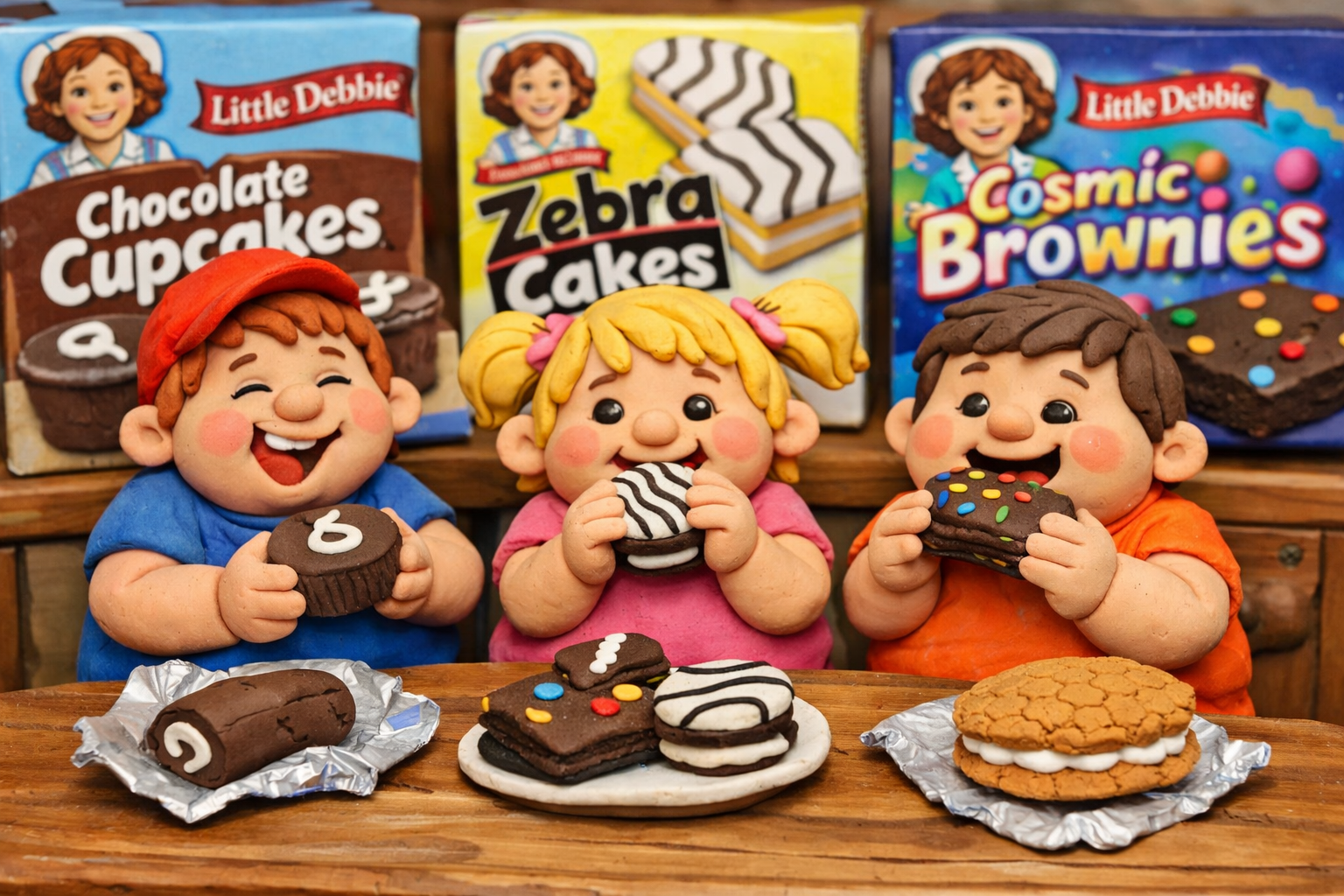
Packaged snack cakes have been a familiar part of American convenience foods for decades, especially those produced by Little Debbie. They are widely available, inexpensive, and designed for long shelf life, which often involves a mix of refined ingredients and preservatives.
In recent years, discussions around ultra-processed foods have increased, with researchers examining how frequent consumption may relate to long-term health outcomes. Rather than focusing on alarmist claims, it is more useful to understand what ingredients are commonly found in these snacks and why they are often debated in nutrition science.
Swiss Rolls
Swiss Rolls are a chocolate sponge cake filled with cream and coated in a chocolate-flavored shell. Like many packaged desserts, they rely on refined flour, added sugars, and stabilizers to maintain texture and shelf stability.
These ingredients are not unusual in processed foods, but they are often discussed in the context of highly processed diets. Nutrition researchers frequently note that diets high in added sugars and low in fiber-rich foods may contribute to overall health concerns when consumed in excess.
Swiss Rolls also contain emulsifiers and preservatives that help maintain freshness over time. These additives are considered safe in regulated amounts, but they are still part of broader conversations about processed food consumption.
Cosmic Brownies
Cosmic Brownies are dense, fudgy snack cakes topped with icing and candy pieces. They are known for their high sugar content and rich texture, which comes from a combination of fats, cocoa, and refined sweeteners.
One key discussion point around products like these is their concentration of added sugars. Excessive intake of added sugar has been widely studied in relation to metabolic health and overall diet quality.
- Common components often discussed in nutrition studies include:
- Refined sugar and corn syrup
- Palm oil or hydrogenated fats
- Artificial colors in candy toppings
- Enriched wheat flour
These ingredients are not unique to Cosmic Brownies, but they highlight how many packaged desserts are formulated for taste and shelf stability rather than nutritional density.
Zebra Cakes
Zebra Cakes feature vanilla-flavored cake layers with cream filling and a white icing coating striped with chocolate. Their texture and appearance are achieved through processed ingredients designed for consistency and long shelf life.
The use of refined flour and added sugars is typical in snack cakes, and these ingredients are often discussed in relation to overall dietary balance. While they are safe for consumption, they are considered low in fiber and micronutrients.
Artificial flavors and emulsifiers help maintain the product’s soft texture over time. These additives are commonly used in packaged baked goods to ensure uniform taste and appearance across batches.
Oatmeal Creme Pies
Despite the name, Oatmeal Creme Pies are closer to soft cookies with a sweet cream filling than traditional oatmeal-based foods. They contain oats, but also significant amounts of sugar and processed fats.
The combination of oats with refined ingredients creates a sweet, soft texture that differs from homemade versions of similar treats. This blend is part of what makes them shelf-stable and widely distributed.
Many nutrition discussions focus on the contrast between whole-food ingredients like oats and the added sugars that dominate the overall composition. This balance is a common theme in evaluating packaged snacks.
Honey Buns
Honey Buns are sweet, glazed pastries often eaten as a quick breakfast or snack. They are typically made with refined flour, sugar, and oils, giving them a dense and sticky texture.
Their glaze and softness come from added sweeteners and fats, which help preserve freshness over time. These characteristics make them convenient but also highly energy-dense.
Honey Buns are frequently discussed in the context of ultra-processed foods because they combine multiple refined ingredients in a single product. This makes them a common example in conversations about modern dietary patterns.
Conclusion
Snack cakes from brands like Little Debbie are widely enjoyed for their taste, convenience, and affordability, but they also reflect broader trends in highly processed foods. Understanding their ingredients helps place them in context without relying on exaggerated health claims.
Rather than focusing on fear-based messaging, nutrition research generally emphasizes overall dietary balance and moderation. These snacks can fit into a varied diet, but they are best understood as occasional treats rather than everyday staples.

Leave a Reply