
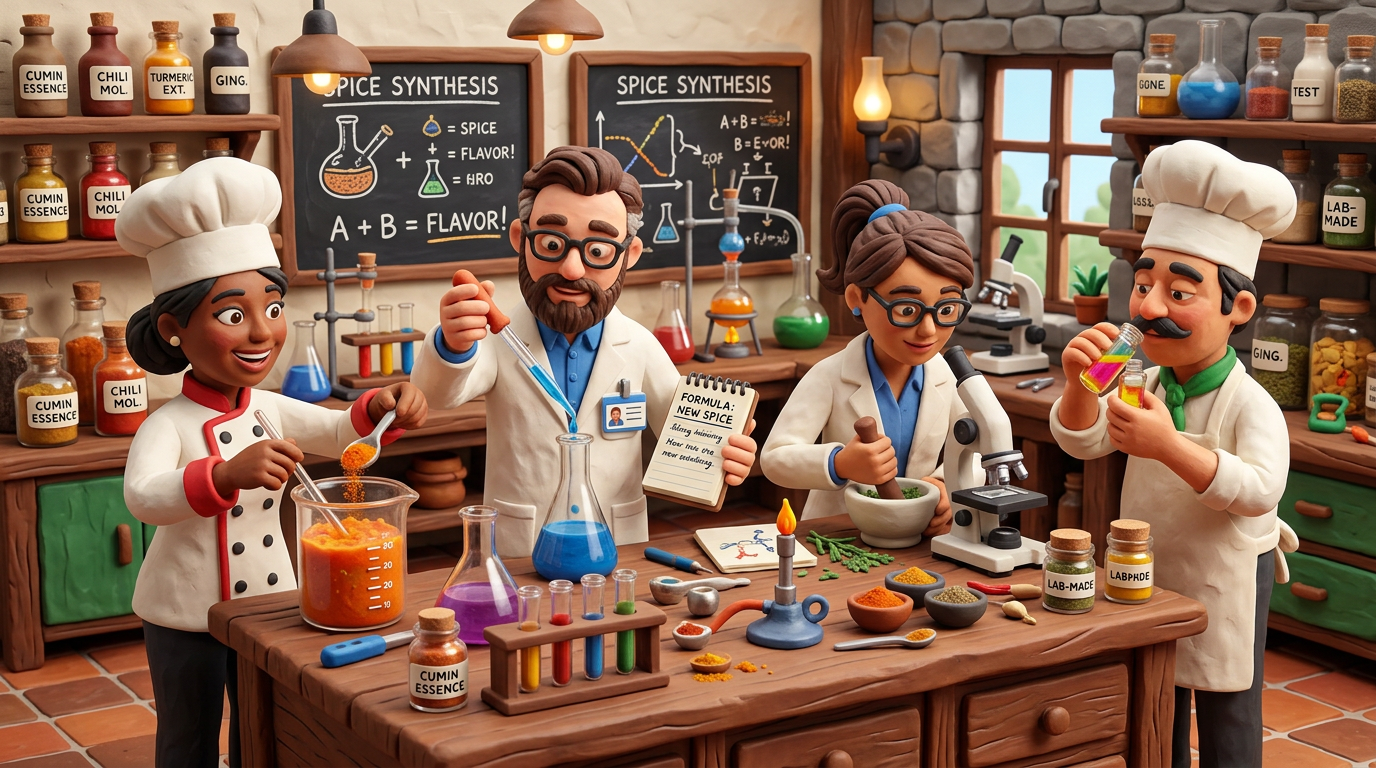
Modern food science has made it possible to recreate or intensify flavors without relying entirely on raw plant sources. These compounds are often used in packaged foods, restaurant seasonings, and spice blends to deliver consistent taste at scale.
While they aren’t spices in the traditional sense, they function similarly in cooking and food manufacturing.
Monosodium Glutamate (MSG)
Monosodium glutamate, often called MSG, is one of the most well-known lab-produced flavor enhancers. It provides a savory “umami” taste that deepens the flavor of many dishes.
Originally derived from seaweed, most modern MSG is produced through fermentation in controlled environments. It’s widely used in snacks, soups, and restaurant cooking.
Despite past controversy, scientific consensus generally considers MSG safe in normal amounts.
Artificial Vanilla (Vanillin)
Vanilla is one of the most popular flavors in the world, but natural vanilla beans are expensive and labor-intensive to produce. As a result, most vanilla flavoring used today is synthetic vanillin.
This compound is created in labs from sources like lignin or petrochemicals. It closely mimics the primary flavor molecule found in real vanilla.
You’ll commonly find it in baked goods, desserts, and flavored beverages.
Ethyl Vanillin
Ethyl vanillin is a stronger, more intense version of vanillin. It doesn’t occur naturally and is entirely synthesized in laboratories.
Because it’s more potent, manufacturers can use smaller amounts to achieve a bold vanilla-like flavor. This makes it popular in processed foods and confectionery products.
Its use helps reduce costs while maintaining a consistent taste profile.
Artificial Cinnamon Flavor (Cinnamaldehyde)
Cinnamaldehyde is the compound responsible for cinnamon’s signature flavor. While it naturally occurs in cinnamon bark, it can also be synthesized in labs.
Lab-produced cinnamaldehyde is commonly used in candies, gums, and baked goods. It provides a consistent flavor that doesn’t vary with crop conditions.
Some advantages of synthetic versions include:
- Lower cost compared to natural spices
- More consistent flavor intensity
- Longer shelf life
- Easier large-scale production
These factors make it a staple in mass-produced foods.
Artificial Smoke Flavor
Smoke flavoring is often used as a spice-like seasoning in sauces, meats, and snacks. While traditional smoke comes from burning wood, liquid smoke and artificial smoke flavorings are created through controlled processes.
These may involve capturing smoke particles or synthesizing key flavor compounds in labs. The result is a smoky taste without actual smoking.
This approach allows manufacturers to add depth of flavor quickly and efficiently.
Disodium Inosinate and Guanylate
These two compounds are often paired with MSG to amplify savory flavors. They are produced through fermentation or chemical processes and are widely used in processed foods.
Together, they enhance umami taste even more effectively than MSG alone. You’ll often see them in seasoning packets, instant noodles, and snack foods.
Though not spices themselves, they function as powerful flavor boosters in modern cuisine.
Conclusion
While traditional spices still come from plants, modern food production increasingly relies on lab-created compounds to replicate and enhance those flavors. These ingredients help ensure consistency, affordability, and scalability in a global food system.
Understanding the difference between natural spices and synthesized flavor agents can help you make more informed choices about what’s in your food. Both have their place, but they serve different purposes in today’s kitchens.



Leave a Reply