
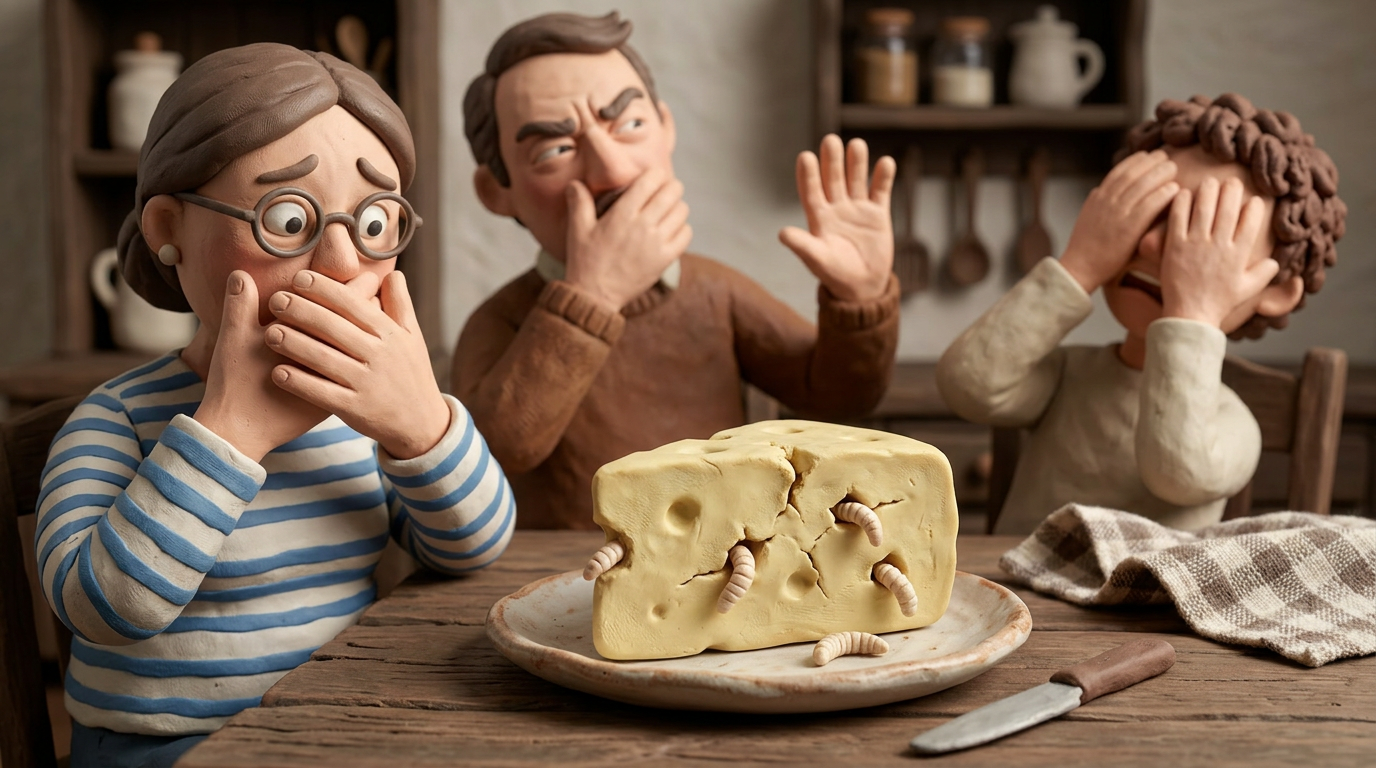
Cheese comes in an incredible range of styles, from mild and creamy to sharp and pungent. But a handful of traditional varieties push boundaries even further by intentionally involving insect larvae in the aging process.
While this might sound shocking, these cheeses are often rooted in centuries-old practices. In some regions, they’re considered delicacies with unique textures and intense flavors.
Casu Marzu
Casu marzu is perhaps the most famous example of maggot-containing cheese. Originating in Sardinia, it’s made by allowing flies to lay eggs in pecorino cheese.
As the larvae hatch, they break down the fats, creating a soft, almost creamy texture. The result is a very strong flavor that’s far more intense than typical aged cheeses.
Milbenkäse
Milbenkäse comes from Germany and uses cheese mites instead of fly larvae. These tiny creatures help age the cheese by digesting its surface.
Over time, the cheese develops a distinct taste and a brownish rind. It’s a rare specialty, often produced in small quantities and tied to local tradition.
Mimolette (Aged Version)
Mimolette is a hard cheese from France that, when aged, involves cheese mites in its rind development. Unlike other examples, the insects are part of the exterior aging process rather than the interior.
The mites help create the cheese’s signature rough, cratered surface. Inside, the cheese remains firm with a nutty, slightly sweet flavor.
Cacio Marcetto
Cacio marcetto is another traditional Italian cheese that incorporates larvae during fermentation. It’s typically made from sheep’s milk and left to develop a very soft consistency.
The breakdown caused by the larvae results in a spreadable texture and powerful aroma. It’s not widely available, but it holds cultural significance in certain regions.
- These cheeses rely on insects to accelerate fermentation or aging
- Texture often becomes softer or creamier due to breakdown of fats
- Flavors are typically much stronger than conventional cheeses
- Many are produced in small batches using traditional methods
- Availability can be limited due to regulations and niche demand
Cheeses like these highlight how diverse food traditions can be across cultures. What might seem unusual in one place can be a prized delicacy in another.
For curious eaters, they offer a glimpse into historic preservation techniques and bold flavor experimentation. Whether you’d try them or not, they certainly expand the definition of what cheese can be.



Leave a Reply