
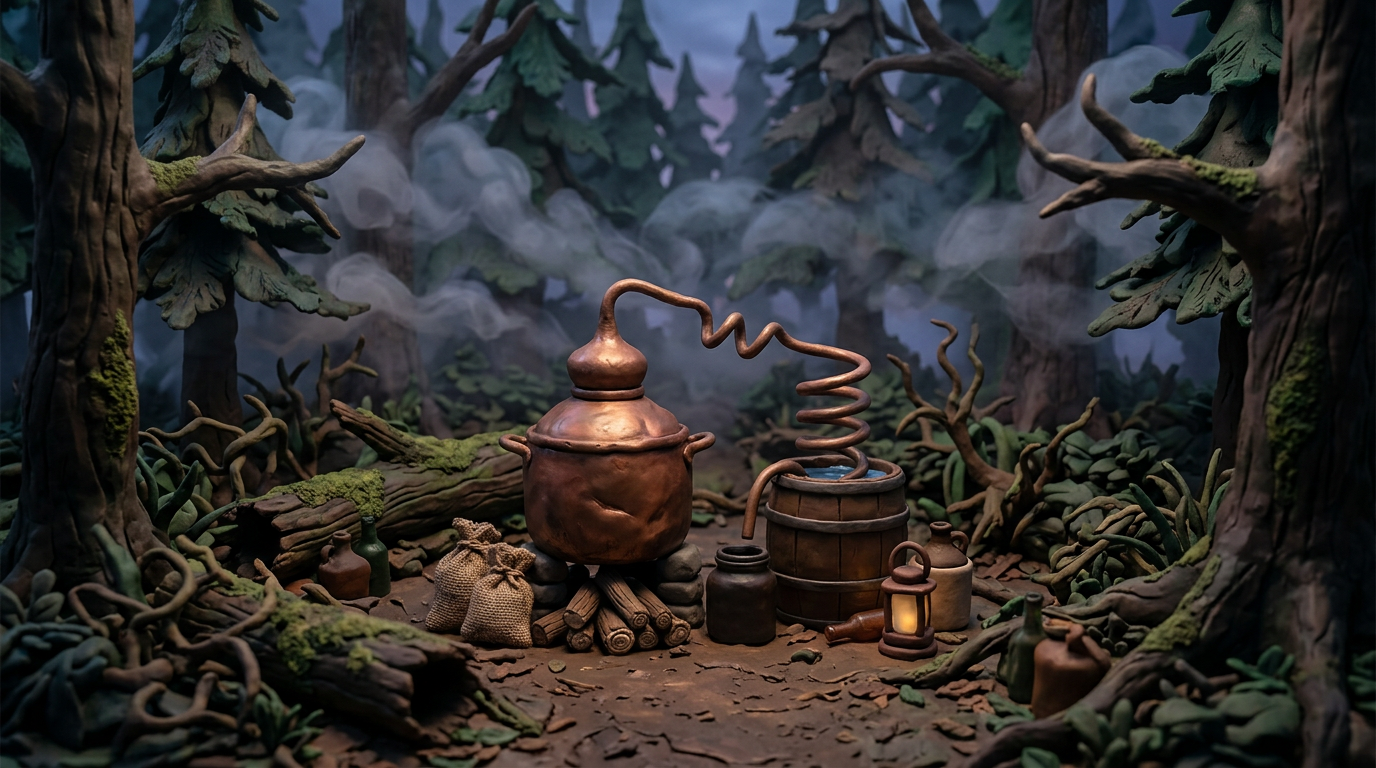
Buying alcohol in the United States is heavily regulated, and most commercial liquors are completely legal when properly produced and labeled. However, there are still certain types of spirits that are illegal to sell, distribute, or purchase through official channels. These usually involve unlicensed production, unsafe ingredients, or products that violate federal alcohol regulations. Here are five types of liquors that fall into that illegal or prohibited category in the U.S.
Illicit Moonshine
Illicit moonshine refers to unregulated, home-distilled spirits that are made without federal approval or taxation. While legal home brewing exists for beer and wine in limited forms, distilling alcohol at home without a permit is illegal in the United States.
This type of liquor is often associated with rural or underground production. The main concern is safety, as unregulated distillation can lead to harmful chemical contamination.
Because it bypasses quality control, illicit moonshine can contain dangerous levels of methanol. This is why it remains strictly prohibited for sale or distribution.
Counterfeit or Adulterated Vodka
Counterfeit vodka is illegally produced alcohol that is packaged to look like legitimate commercial brands. It is often sold through black market channels or unlicensed vendors.
These products can contain industrial alcohols or other unsafe additives. They are not tested or regulated, making them a serious health risk.
Authorities actively crack down on counterfeit spirits because of past cases involving poisoning. As a result, they are strictly illegal to buy or sell.
High-Thujone Absinthe (Unregulated Imports)
Absinthe has a complicated legal history in the United States. While modern Absinthe is legal when it meets federal thujone limits, unregulated or high-thujone versions are still prohibited.
In the past, absinthe was banned due to concerns about its supposed psychoactive effects. Today, only regulated versions are allowed for commercial sale.
Illegally imported absinthe that exceeds legal chemical limits cannot be sold in the U.S. market. These versions are typically seized by customs authorities.
Unlicensed Distilled Spirits
Unlicensed distilled spirits include any alcohol produced without proper federal permits, regardless of the ingredients used. This category overlaps with homemade or small-scale production that has not been approved for sale.
Even if the product is made from safe ingredients, it is still illegal to distribute. The law requires strict licensing for all distilled spirits sold commercially.
These products are often found in informal markets or private exchanges. Because they avoid regulation, they pose both legal and safety risks.
Methanol-Contaminated or Toxic Alcohols
Some illegal liquors are not just unregulated but actively dangerous due to contamination. Methanol-laced alcohol is one of the most serious examples.
These products are sometimes created when improper distillation processes are used or when industrial alcohol is substituted for ethanol. Consumption can lead to blindness, organ failure, or death.
Authorities classify these as illegal substances due to their extreme health risks. They are frequently associated with counterfeit or underground alcohol operations.
Why These Liquors Are Illegal
The main reason these types of alcohol are illegal in the United States is consumer safety. Without regulation, there is no guarantee of proper ingredients, sanitation, or production standards.
Common issues include:
- Lack of federal or state licensing
- Presence of toxic substances like methanol
- Mislabeling or counterfeit branding
- Unsafe or unsanitary production methods
These regulations exist to prevent harm and ensure that alcoholic beverages meet strict safety standards. Legal alcohol production is closely monitored for this reason.
Conclusion
While most alcohol sold in the U.S. is legal and regulated, certain types of liquor remain prohibited due to safety and legal concerns. These restrictions primarily target unlicensed production, counterfeit products, and toxic contaminants.
Understanding these categories helps consumers recognize the importance of regulation in protecting public health. When it comes to alcohol, legality and safety are closely connected.


Leave a Reply