
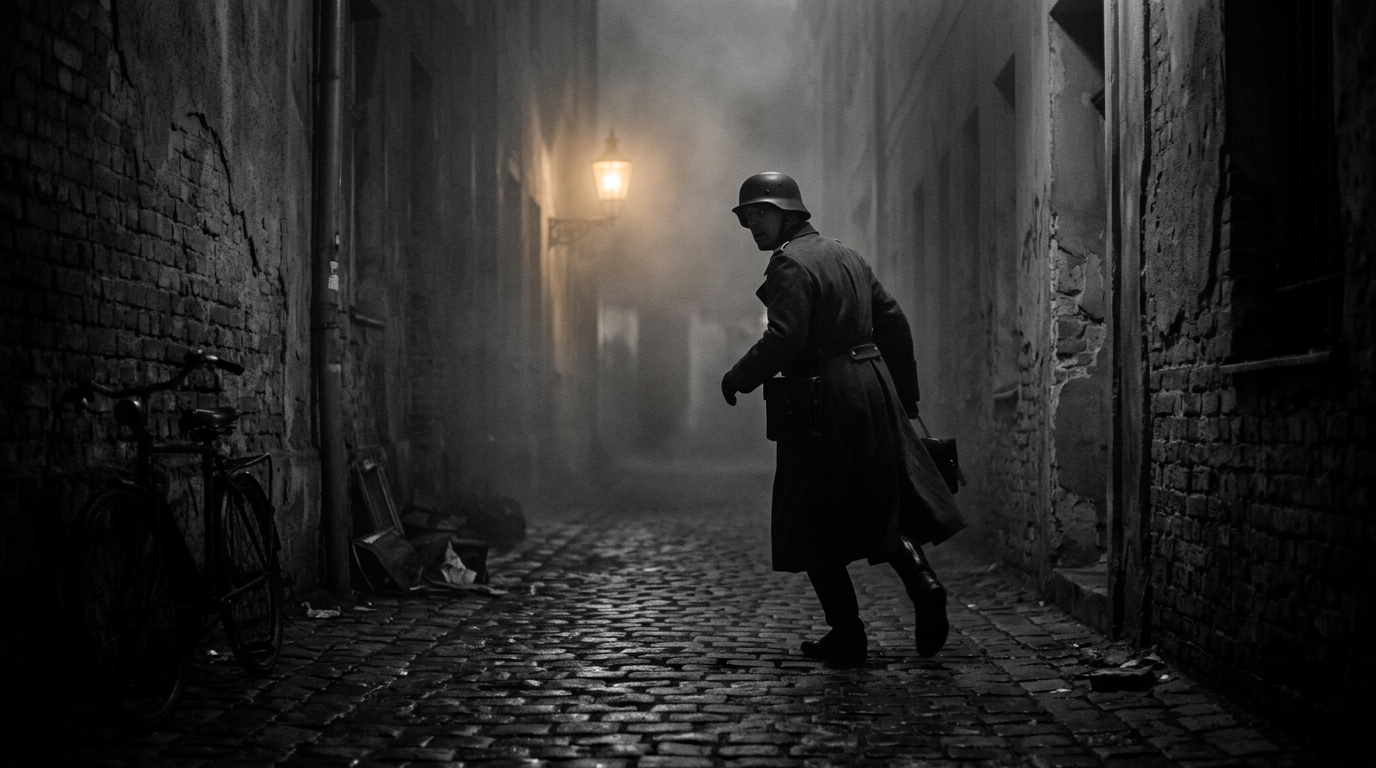
The aftermath of World War II led to one of the largest manhunts in history, as Allied forces attempted to bring Nazi leaders to justice. While many high-ranking officials were captured and tried during the Nuremberg Trials, others managed to evade capture entirely or avoid prosecution. Some disappeared into obscurity, while others lived under assumed identities for decades. Here are five high-ranking Nazi figures who were never formally brought to justice in a court of law.
Heinrich Müller
Heinrich Müller was one of the most powerful figures in Nazi Germany as head of the Gestapo. He played a central role in intelligence operations and internal security.
Müller vanished in the final days of the war in Berlin. Despite extensive investigations, no confirmed trace of his fate was ever found.
Various theories suggest escaped under a false identity. His disappearance remains one of the most enduring mysteries of the era.
Alois Brunner
Alois Brunner was a close associate of Adolf Eichmann and played a major role in deportation operations. After the war, he fled Europe and lived in the Middle East.
Brunner reportedly lived in Syria for decades under protection. Although pursued by multiple governments, he was never extradited or formally tried.
Reports of his death surfaced years later, but no definitive legal resolution was ever achieved. His case highlights the difficulty of post-war justice efforts.
Aribert Heim
Aribert Heim was known for his brutal actions as a concentration camp physician. He became one of the most wanted Nazi fugitives after the war.
He disappeared in the 1960s and was believed to have fled to North Africa. Later reports suggested he lived in Egypt under a different name.
Despite decades of searching, he was never captured or tried. Evidence suggests he died in hiding, avoiding justice entirely.
Walter Rauff
Walter Rauff was responsible for developing mobile gas vans used during the Holocaust. After the war, he escaped Europe and eventually settled in South America.
He lived openly in Chile for many years. Despite international pressure, extradition efforts were unsuccessful.
Rauff died in 1984 without ever facing trial. His case remains controversial due to the lack of legal accountability.
Josef Mengele
Josef Mengele became infamous for his role at Auschwitz, where he conducted inhumane experiments. After the war, he fled to South America.
He lived in Argentina, Paraguay, and Brazil under various aliases. Despite global efforts to locate him, he evaded capture for decades.
Mengele died in 1979 after a reported drowning incident. His identity was only confirmed years later, long after he had escaped justice.
Why Some War Criminals Were Never Caught
The failure to capture certain Nazi officials was due to a combination of logistical, political, and historical factors. The chaos following the war made tracking fugitives extremely difficult.
Key reasons include:
- Use of false identities and escape networks
- Limited international cooperation in early post-war years
- Political tensions during the Cold War
- Lack of reliable records or confirmed sightings
These challenges allowed some individuals to disappear completely. In many cases, time worked in their favor.
Conclusion
While many Nazi leaders were held accountable after World War II, others managed to evade justice entirely. Their stories reflect both the scale of post-war investigations and the limitations faced by authorities.
These cases remain a sobering reminder of unresolved history. They continue to be studied as part of broader efforts to understand accountability and justice in the aftermath of global conflict.




Leave a Reply