
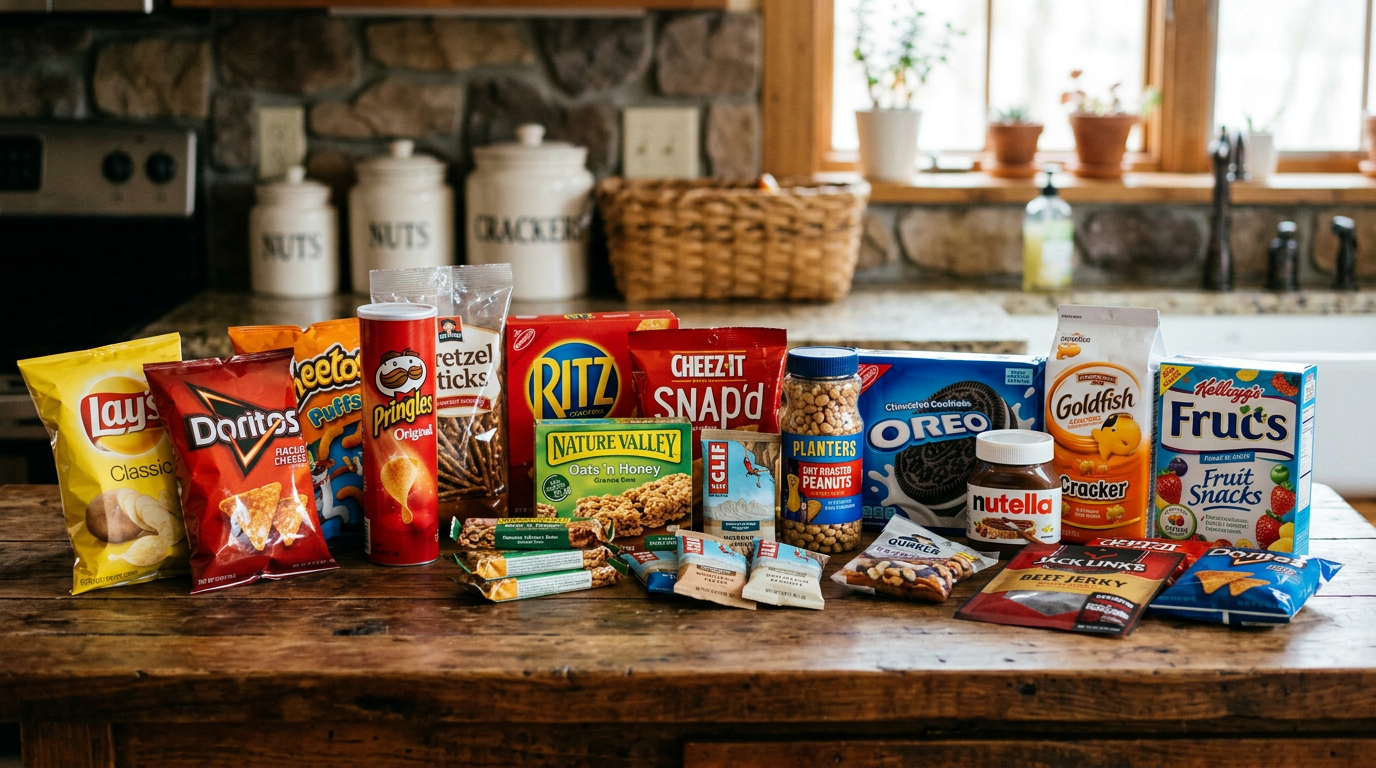
Snacks with long shelf lives are popular for emergency preparedness, travel, and everyday convenience. Their stability comes from low moisture content, preservatives, or specialized packaging designed to prevent spoilage. While freshness always matters for taste and texture, some snacks are engineered to stay safe and edible for months or even years.
Understanding why certain snacks last longer can help you stock your pantry more efficiently without frequent replacements.
Crackers
Crackers are one of the most shelf-stable snacks available. Their low moisture content helps prevent the growth of bacteria and mold.
When stored properly in airtight packaging, they can last for many months. Some varieties remain safe even longer, though texture and flavor may gradually decline.
Peanut butter
Peanut butter is known for its long shelf life due to its high fat content and low moisture. Commercial versions often include stabilizers that extend freshness even further.
Unopened jars can last for extended periods without refrigeration. Even after opening, it remains usable for weeks or months depending on storage conditions.
Jerky
Jerky is made by removing most of the moisture from meat. This drying process significantly slows bacterial growth.
Because of its low water content and seasoning, jerky can last for months at room temperature. Proper packaging further extends its usability.
Popcorn
Popcorn kernels have a long shelf life when stored in a dry environment. The lack of moisture inside the kernel helps preserve its structure.
When kept sealed, they can remain usable for a long time before popping quality declines. Once popped, however, freshness decreases quickly.
Granola bars
Granola bars are designed for portability and long-term storage. Ingredients like oats, sugars, and binders help maintain structure over time.
Many packaged versions include preservatives to extend shelf life. While texture may change slightly, they often remain safe to eat for months.
Canned nuts
Canned nuts or vacuum-sealed nut products are among the most durable snack options. The packaging protects them from air and moisture, two major causes of spoilage.
When stored in cool, dry conditions, they can last for a long time. However, oils in nuts may eventually turn rancid if exposed to heat.
What Makes These Snacks Last Longer
The shelf life of snacks depends largely on how much moisture and oxygen they contain. Removing or limiting these elements helps slow spoilage and maintain safety.
Key preservation factors include:
- Low moisture content
- Airtight or vacuum-sealed packaging
- Added preservatives or stabilizers
- High salt or sugar content
- Drying or dehydration processes
These methods work together to extend usability. They are commonly used in packaged and processed snacks.
How to Store Long-Lasting Snacks Properly
Even shelf-stable snacks can degrade if stored incorrectly. Proper storage helps maintain both safety and quality over time.
Best practices include:
- Keeping snacks in a cool, dry place
- Avoiding exposure to direct sunlight
- Sealing packages tightly after opening
- Using airtight containers for bulk storage
- Rotating older stock first (FIFO method)
These steps help maximize shelf life. They also preserve taste and texture for longer periods.
Conclusion
Many snacks are designed to last far longer than fresh foods due to specialized processing and packaging. Low moisture, preservatives, and airtight storage all contribute to their extended shelf life.
By understanding how these snacks are made and stored, you can build a pantry that stays reliable over time. Smart storage choices help reduce waste and ensure convenience when you need it most.


Leave a Reply