
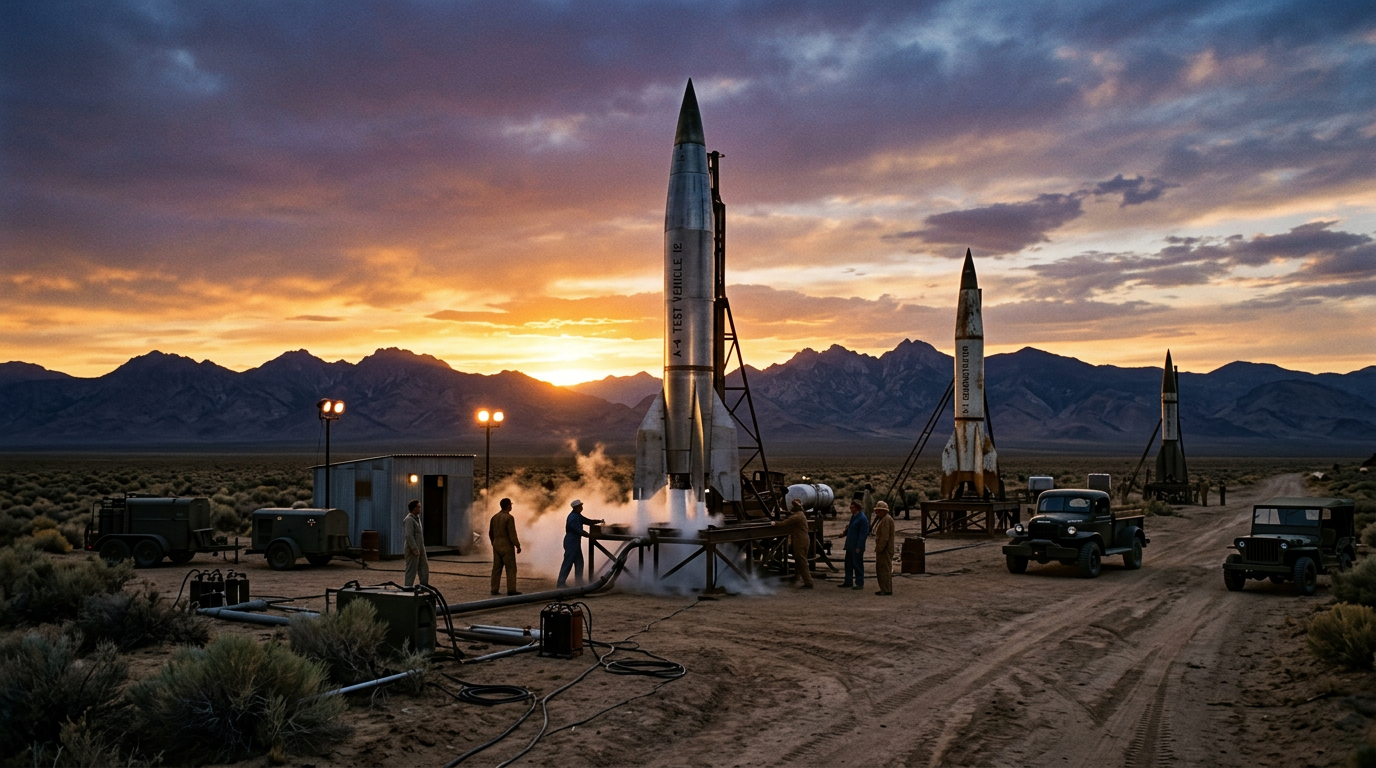
In the aftermath of World War II, global powers raced to secure scientific knowledge and technological expertise. The United States launched a covert initiative to recruit German scientists, many of whom had worked under the Nazi regime, in an effort to gain an advantage during the early Cold War. This effort, known as Operation Paperclip, remains one of the most controversial chapters in modern history.
While these scientists contributed to major advancements, their pasts have raised lasting ethical questions.
Wernher von Braun
Wernher von Braun was one of the most prominent figures brought to the United States. He had been instrumental in developing Germany’s V-2 rocket program during the war.
In the U.S., he became a leading figure in space exploration. His work played a major role in the development of NASA’s early rocket programs.
Arthur Rudolph
Arthur Rudolph worked closely with rocket production during World War II. His involvement in manufacturing operations later became a subject of scrutiny.
After the war, he contributed to U.S. missile and space programs. Decades later, his past connections led to investigations and legal consequences.
Hubertus Strughold
Hubertus Strughold was associated with aviation medicine research. His wartime work has been linked to controversial and unethical experiments.
In the United States, he became known as a pioneer in space medicine. His legacy remains highly debated.
Kurt Debus
Kurt Debus was involved in Germany’s rocket testing programs. He later joined the American space effort.
He became the first director of Kennedy Space Center. His leadership helped shape early U.S. space launches.
Georg Rickhey
Georg Rickhey oversaw industrial operations tied to wartime production. His role during the war led to legal proceedings after his arrival in the U.S.
Although acquitted in court, his case drew attention to the ethical complexities of recruiting former Nazi affiliates. His story highlights the difficult balance between justice and strategic interests.
Why the U.S. Recruited These Scientists
The decision to bring in former German scientists was driven by geopolitical competition. The emerging Cold War created urgency to secure advanced knowledge before rival nations could.
Key motivations included:
- Gaining expertise in rocket and missile technology
- Advancing aviation and space research
- Preventing rival powers from recruiting the same scientists
- Accelerating military and technological development
- Strengthening national security capabilities
These priorities shaped the direction of postwar science. They also influenced global power dynamics.
The Ethical Debate
The recruitment of these scientists sparked immediate and ongoing controversy. Critics argue that their past affiliations should have disqualified them from government roles.
Supporters, however, point to the technological advancements that resulted. This debate continues to shape how history views Operation Paperclip.
Conclusion
The story of Nazi scientists brought into the United States reflects a complex intersection of science, politics, and ethics. Their contributions helped drive major advancements, particularly in space exploration and military technology.
At the same time, their histories serve as a reminder of the moral compromises made during times of global tension. This chapter remains both significant and deeply debated.



Leave a Reply