
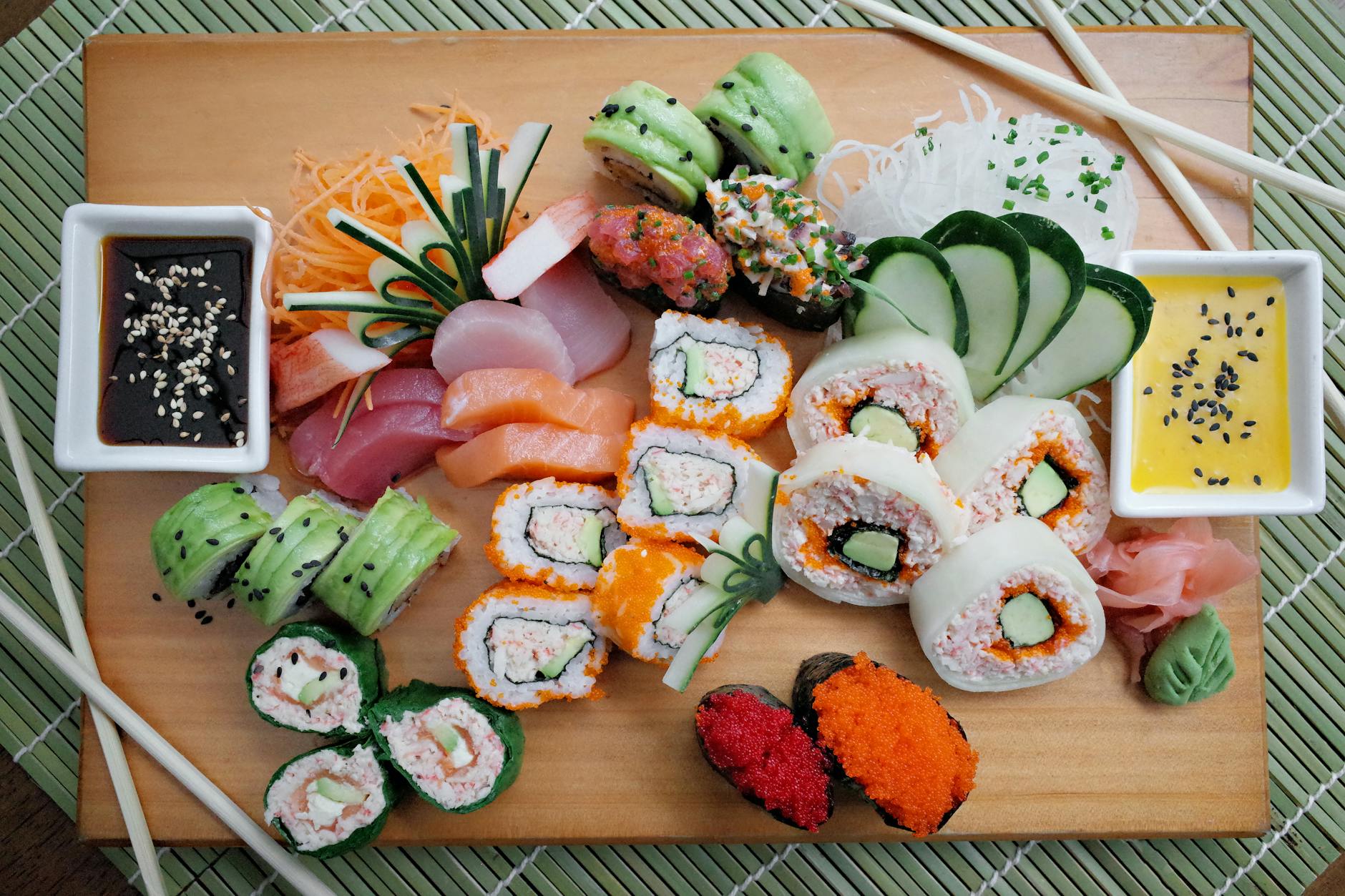
Sushi is all about balance—fresh fish, seasoned rice, and carefully chosen ingredients that complement rather than compete with each other. When done right, every bite is clean, cohesive, and satisfying. But when the wrong ingredient makes its way into a roll, it can overpower delicate flavors or throw off the texture entirely. Whether you’re ordering out or experimenting at home, here are nine ingredients that can quickly ruin a sushi roll.
Overly Sweet Sauces: Masking the Fish
Sauces like sugary eel sauce or thick sweet mayo can overwhelm a roll if used too heavily. Instead of enhancing the fish, they coat everything in a sticky sweetness that hides subtle flavors.
A light drizzle can work, but when the sauce becomes the dominant taste, the sushi loses its identity.
Cream Cheese: Too Heavy for Balance
Cream cheese is popular in fusion rolls, but it can easily overpower the rest of the ingredients. Its thick, rich texture dulls the freshness that sushi is known for.
When overused, it turns a light, refreshing bite into something dense and almost dessert-like.
Excess Tempura Crunch: Texture Overload
Crunchy tempura flakes or fried fillings can add contrast, but too much of it creates a greasy, heavy roll. Instead of balance, you get a mouthful of fried texture.
This can also mask the natural taste of the fish and rice, making everything feel one-dimensional.
Strong Raw Onion: Overpowering Sharpness
Raw onion has a sharp, pungent flavor that can easily dominate a sushi roll. Unlike milder ingredients like green onion, it doesn’t blend well with delicate fish.
Even a small amount can leave a lingering aftertaste that overwhelms everything else.
Low-Quality Imitation Crab: Artificial Taste
Imitation crab (surimi) is common in many rolls, but lower-quality versions can taste overly processed and sweet. This artificial flavor clashes with fresher ingredients.
When used as a main filling, it can make the entire roll feel cheap and less satisfying.
Too Much Wasabi Inside the Roll: Heat Imbalance
Wasabi is meant to be used sparingly, usually on the side or lightly between fish and rice. Packing it inside the roll can create an overwhelming burst of heat.
This not only masks flavor but can also make the roll unpleasant to eat, especially for those sensitive to spice.
Overripe Avocado: Mushy Texture
Avocado is a staple in many sushi rolls, but when it’s overripe, it becomes too soft and mushy. This can ruin the texture, making the roll feel sloppy.
Fresh avocado should be firm enough to hold its shape while still adding creaminess.
Too Much Rice: Throwing Off Proportions
Rice is essential, but too much of it can overwhelm the fillings. A thick layer of rice dilutes the flavor of the fish and other ingredients.
Good sushi maintains a balance where the rice supports, rather than dominates, the roll.
Unfresh Fish: The Ultimate Dealbreaker
Nothing ruins sushi faster than fish that isn’t fresh. Off smells, dull color, or a slimy texture are clear signs of poor quality.
Since sushi relies heavily on raw or lightly prepared seafood, freshness is non-negotiable. Even the best ingredients can’t save a roll if the fish isn’t right.
Conclusion
Great sushi depends on harmony—each ingredient should enhance the others without overpowering them. From heavy sauces to poor-quality fillings, the wrong additions can quickly turn a carefully crafted roll into a disappointing experience. By focusing on freshness, balance, and restraint, you can ensure every sushi roll delivers the clean, satisfying flavor it’s meant to have.



Leave a Reply