
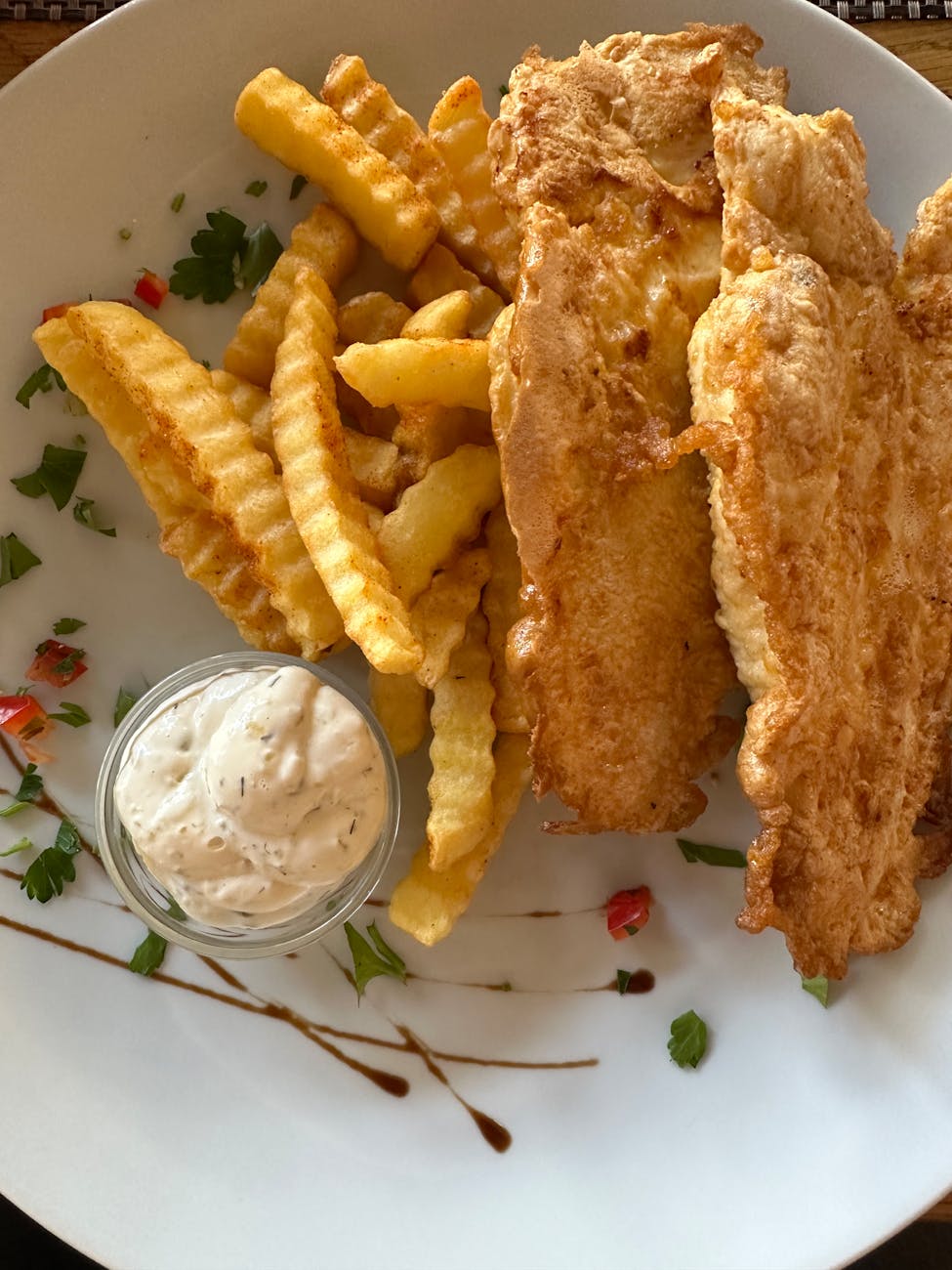
Fish and chips is a classic comfort food—crispy battered fish paired with golden fries. While many restaurants serve excellent versions of this dish, others struggle to get it right. From soggy breading to low-quality fish, some chains simply aren’t known for delivering the best fish and chips experience. If you’re craving this seaside staple, these are a few restaurants where you might want to think twice before ordering it.
Denny’s
Known for all-day breakfast and diner classics, Denny’s isn’t exactly famous for seafood. While fish and chips occasionally appear on the menu as a comfort-food option, it’s not a specialty of the kitchen. The fish is often pre-breaded and frozen, which can lead to inconsistent texture and flavor.
Another issue is frying technique. In busy diner kitchens, the fryer is used for a wide variety of foods—from hash browns to chicken tenders. This can result in fish that tastes slightly off or carries lingering flavors from other items. The fries may be decent, but the fish itself rarely achieves the crispy, flaky standard that makes fish and chips truly satisfying.
IHOP
Much like Denny’s, IHOP is beloved for pancakes and breakfast platters—not seafood. Fish and chips may appear as a lunch or dinner option, but it’s far from the restaurant’s area of expertise.
Customers often report that the batter lacks the airy crispness typical of traditional fish and chips. Instead, the coating can be thick and heavy, overwhelming the fish rather than complementing it. When the batter doesn’t fry properly, it tends to become greasy rather than crunchy.
If you’re already at IHOP, it’s usually a safer bet to stick with what the restaurant does best—breakfast foods.
Applebee’s
Applebee’s offers a wide menu designed to appeal to many tastes, but that broad approach sometimes leads to mediocre results for specialty dishes. Fish and chips at Applebee’s often fall into this category.
The fish is typically sourced frozen and prepared in large batches, which can impact both freshness and texture. When overcooked, the fish becomes dry; when undercooked, the batter may feel soggy. The fries are generally reliable, but the star of the dish—the fish—can be hit or miss.
Given the restaurant’s stronger reputation for burgers and appetizers, ordering fish and chips here may not deliver the best value for your money.
Buffalo Wild Wings
Buffalo Wild Wings is built around one thing: wings. Nearly every aspect of the menu is designed to complement that specialty. While the chain occasionally experiments with seafood offerings, fish and chips isn’t a core item.
Because the kitchen focuses heavily on wings and fried appetizers, the fish can feel like an afterthought. The batter may lack seasoning, and the fish portions sometimes feel small compared to the hefty plates you’d expect from a traditional fish and chips spot.
If you’re visiting Buffalo Wild Wings, sticking to wings, tenders, or classic bar food usually results in a better experience.
TGI Fridays
TGI Fridays is another casual dining chain with an expansive menu. While variety can be appealing, it can also mean that certain dishes don’t receive the attention they deserve. Fish and chips often falls into that category here.
The biggest complaint diners mention is oiliness. When the fryer temperature isn’t quite right, the batter absorbs excess oil, resulting in heavy, greasy fish rather than the light crunch that defines great fish and chips. Combined with average-quality fish fillets, the dish can feel underwhelming.
In Conclusion
For the best fish and chips, it’s usually better to visit a seafood-focused restaurant, British-style pub, or coastal eatery where the dish is a signature offering. When a restaurant specializes in seafood, the difference in freshness, batter quality, and frying technique is immediately noticeable.



Leave a Reply