
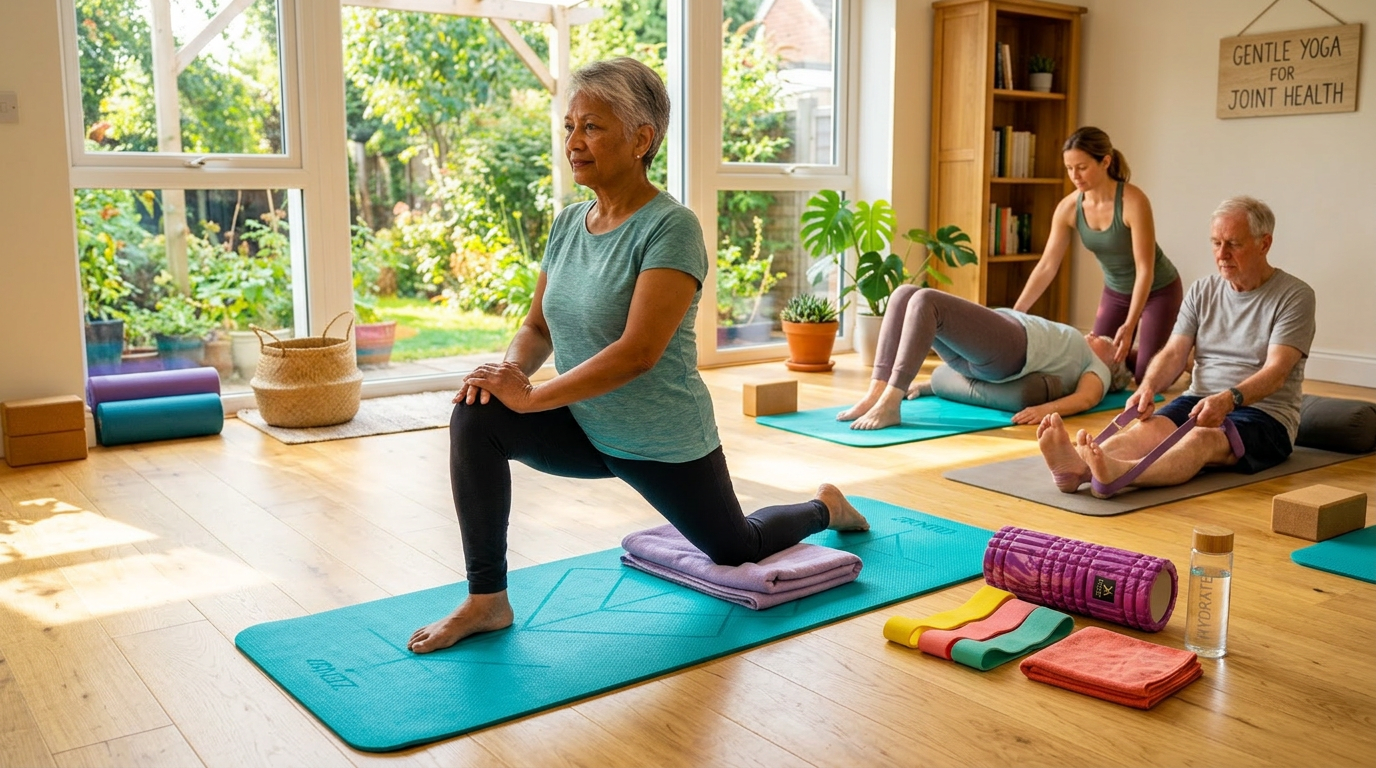
Knee pain is a common issue that can affect people of all ages, whether from aging, overuse, or injury. While strengthening exercises are important, stretching plays a key role in reducing tension around the knee joint and improving flexibility. Tight muscles in the legs—especially the quadriceps, hamstrings, and calves—can place extra strain on the knees. Incorporating targeted stretches into your routine can help relieve discomfort and support better mobility.
Quadriceps Stretch: Loosening the Front of the Thigh
The quadriceps muscles run along the front of your thigh and attach to the knee joint. When they’re tight, they can pull on the knee and increase discomfort. A simple standing quad stretch—where you gently pull your heel toward your glutes—helps release tension in this area. Keeping your knees close together and your posture upright ensures you’re targeting the muscle effectively without straining the joint.
Hamstring Stretch: Relieving Back-of-Leg Tension
Tight hamstrings can also contribute to knee pain by limiting mobility and altering how the joint moves. A seated or standing hamstring stretch helps lengthen these muscles. Slowly reaching toward your toes while keeping your back straight can improve flexibility and reduce pressure on the knees. This stretch is especially helpful for those who sit for long periods.
Calf Stretch: Supporting Lower Leg Flexibility
The calves play a supporting role in knee movement, and tightness here can affect how the joint functions. A basic calf stretch—pressing your hands against a wall while extending one leg behind you—helps lengthen the muscle and improve overall leg alignment. This can reduce strain on the knee, particularly during walking or climbing stairs.
Hip Flexor Stretch: Improving Alignment
Hip flexors connect the upper leg to the pelvis, and when they’re tight, they can pull the body out of alignment, indirectly affecting the knees. A kneeling hip flexor stretch helps open up the front of the hips, promoting better posture and reducing compensatory stress on the knee joint.
IT Band Stretch: Easing Outer Knee Pain
The iliotibial (IT) band runs along the outside of the thigh and can become tight, leading to pain on the outer part of the knee. Crossing one leg behind the other and leaning to the side creates a stretch along this band. Regularly stretching the IT band can help reduce friction and irritation near the knee.
Hamstring Stretch (Lying Variation): Gentle and Effective
For those with more severe knee pain or limited mobility, a lying hamstring stretch can be a gentler option. Lying on your back and lifting one leg while holding behind the thigh or using a strap allows for controlled stretching without putting pressure on the knee. This variation is ideal for beginners or those recovering from injury.
Why Stretching Helps Knee Pain
Stretching improves flexibility, increases blood flow, and reduces muscle tightness that can pull on the knee joint. By targeting the surrounding muscles, you create better support and alignment, which helps the knee function more smoothly. Consistent stretching can also prevent future discomfort by maintaining balanced muscle tension.
Conclusion: Small Movements, Big Relief
Incorporating simple stretches into your daily routine can make a noticeable difference in knee health. By focusing on key muscle groups like the quads, hamstrings, calves, and hips, you can reduce strain and improve mobility. With consistency and proper technique, these stretches offer a natural and effective way to manage and prevent knee pain.




Leave a Reply