
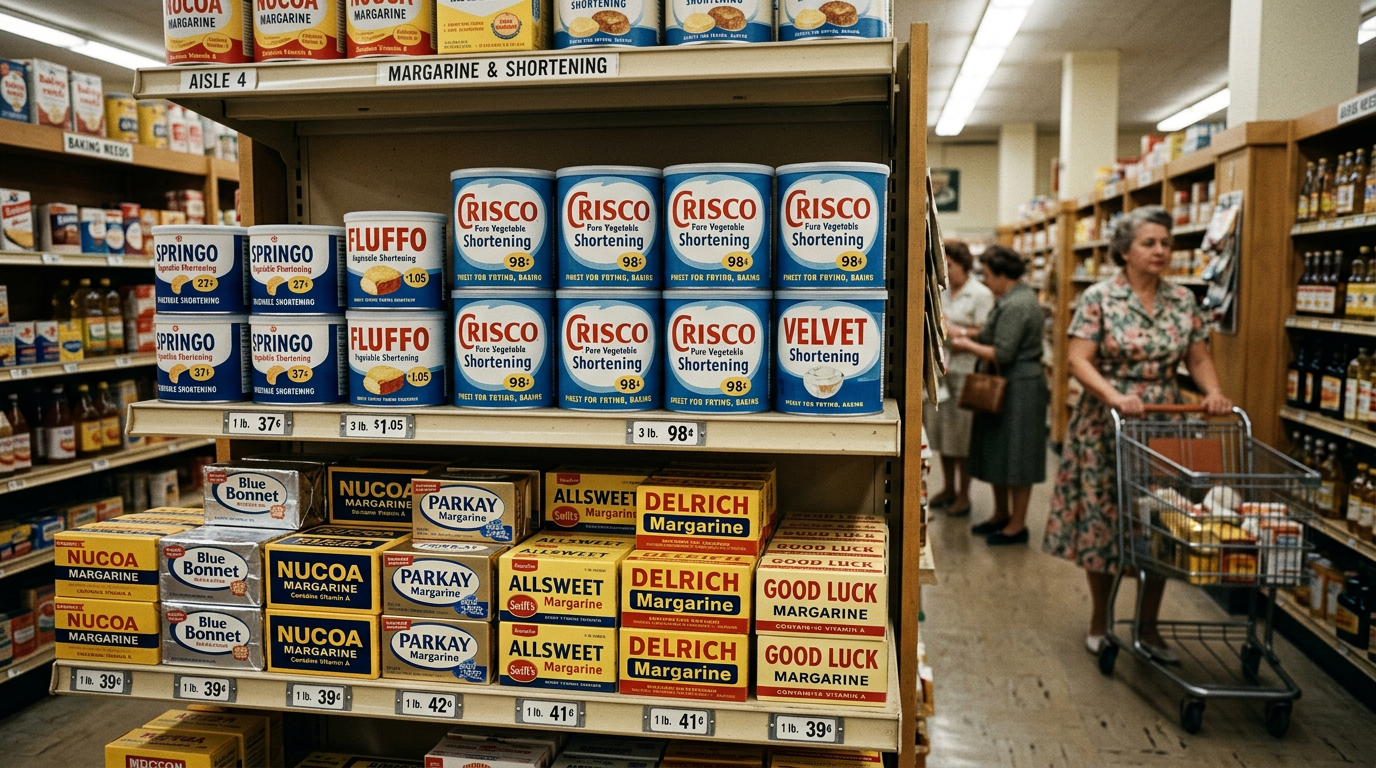
For Baby Boomers growing up in the mid-20th century, cooking fats looked very different than they do today. Before olive oil and avocado oil became trendy, kitchens relied on animal fats, hydrogenated shortenings, and other now less-common options. Many of these fats were prized for flavor, affordability, or shelf stability—but changing health research and evolving tastes have pushed them out of the spotlight. Here’s a look at some of the cooking fats that were once staples but are now rarely used.
Lard: The Original All-Purpose Fat
Lard, rendered pork fat, was once a cornerstone of American cooking. It was used for frying, baking, and even spreading on bread. Known for producing flaky pie crusts and crispy fried foods, lard was incredibly versatile. However, concerns about saturated fat and cholesterol led many households to replace it with vegetable oils in the late 20th century.
Beef Tallow: Frying With Flavor
Beef tallow was widely used for deep frying, especially in restaurants and fast food chains. It gave foods like french fries a rich, savory flavor that many people still remember fondly. Over time, it fell out of favor due to its high saturated fat content and was largely replaced by vegetable oils. Interestingly, some chefs and chains have recently revisited tallow for its taste.
Crisco Shortening: The Rise of Hydrogenated Fats
Crisco became a household name as one of the first widely available vegetable shortenings. It was praised for being shelf-stable, affordable, and easy to use in baking. However, it was made using partially hydrogenated oils, which contain trans fats. As research linked trans fats to heart disease, many consumers moved away from products like Crisco.
Bacon Grease: Saved and Reused
It was once common for families to save bacon grease in a jar for later use. This flavorful fat was used to cook eggs, vegetables, and even cornbread. While it added a distinctive taste, modern health concerns about saturated fat have made this practice far less common today.
Margarine: A Butter Alternative That Lost Favor
Margarine surged in popularity as a cheaper alternative to butter and was often marketed as a healthier option. However, many early versions contained trans fats due to hydrogenation. As awareness of these health risks grew, margarine’s reputation declined, and many people returned to butter or switched to plant-based oils.
Chicken Fat (Schmaltz): A Cultural Staple
Schmaltz, or rendered chicken fat, was widely used in certain communities for frying and flavoring dishes. It added richness to everything from potatoes to matzo ball soup. While still used in traditional cooking, it’s far less common in everyday kitchens today due to changing dietary preferences.
Why These Fats Fell Out of Favor
The decline of these fats is largely tied to evolving health research and changing consumer habits. Concerns about saturated fat, cholesterol, and trans fats led many people to switch to alternatives like olive oil and other plant-based options. Additionally, convenience and marketing played a role, with newer products positioned as healthier or more modern.
Conclusion: A Return to the Past?
While many of these fats have faded from everyday use, some are beginning to make a comeback among chefs and home cooks seeking traditional flavors. Still, they’re used more sparingly and with greater awareness of their nutritional impact. These once-common cooking fats offer a glimpse into how much food culture—and our understanding of nutrition—has changed over time.

Leave a Reply