
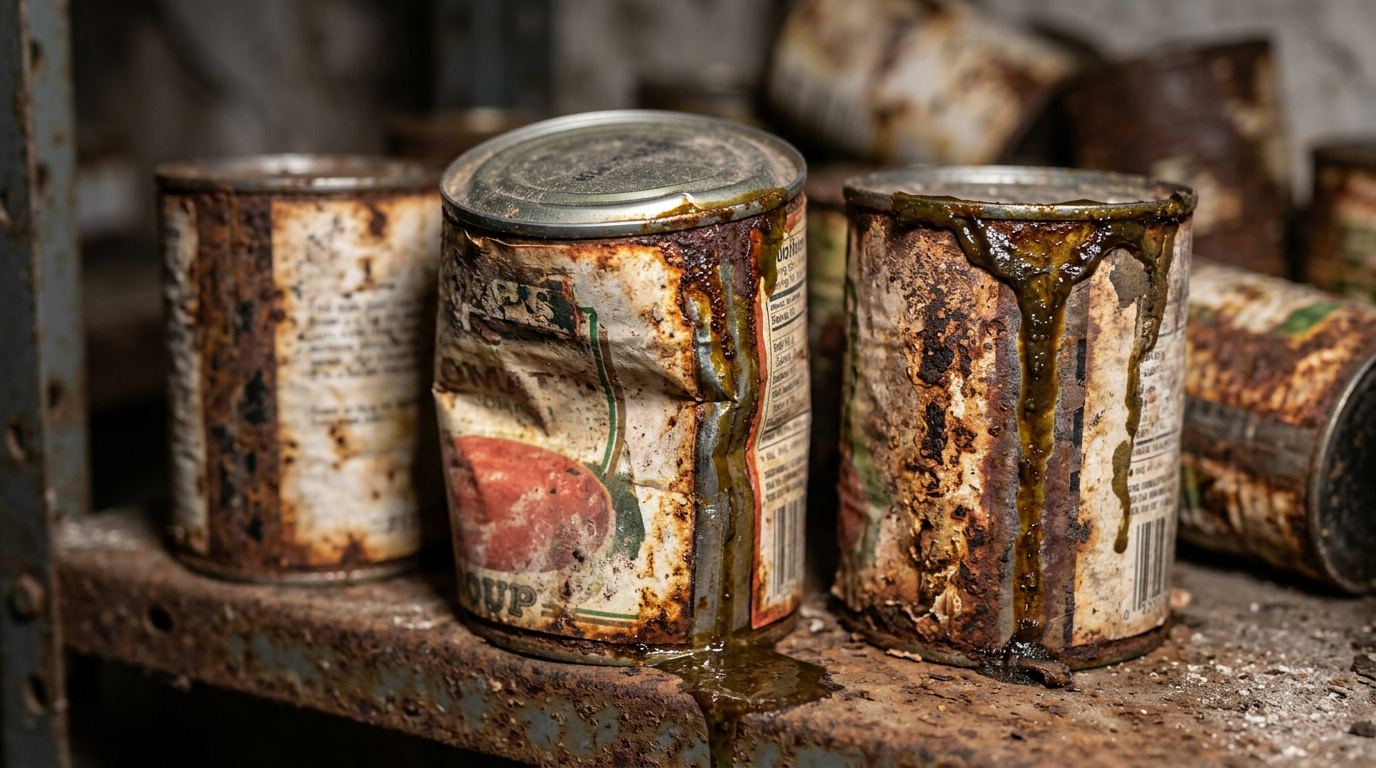
Canned foods are valued for their long shelf life and convenience, but damage to the can itself can turn a safe product into a serious health hazard. Dents, rust, swelling, or leaks may seem minor, but they can compromise the protective seal that keeps harmful bacteria out. In some cases, eating food from a damaged can can lead to severe illness. Understanding the risks can help you avoid dangerous mistakes in the kitchen.
Dented Cans: A Breach in Protection
Not all dents are dangerous, but deep dents—especially along the seams—can break the airtight seal of a can. Once that seal is compromised, bacteria can enter and contaminate the food inside. Even if the contents look and smell normal, harmful microorganisms may still be present. Consuming food from severely dented cans increases the risk of foodborne illness.
Swollen Cans: A Warning Sign of Gas Buildup
A swollen or bulging can is one of the most obvious signs that something has gone wrong. This usually indicates gas buildup caused by bacterial growth inside the can. One of the most dangerous culprits is Clostridium botulinum, which produces a toxin that can lead to botulism—a rare but potentially fatal illness. Swollen cans should never be opened or consumed.
Rusty Cans: Corrosion and Contamination
Rust may seem like a cosmetic issue, but it can weaken the metal and eventually create tiny holes. These openings allow air and bacteria to enter, compromising the safety of the food. Additionally, rust can affect the taste and quality of the contents. If rust is extensive or has penetrated the surface, the can should be discarded.
Leaking Cans: Immediate Disposal Required
If a can is leaking, it’s a clear sign that the seal has been broken. Leaks can expose the contents to bacteria and contaminants from the surrounding environment. This type of damage poses an immediate risk, and the food inside should never be tasted. Proper disposal is the safest course of action.
Botulism: The Most Serious Risk
Botulism is one of the most severe dangers associated with damaged canned foods. The toxin produced by Clostridium botulinum can attack the nervous system, leading to symptoms such as muscle weakness, difficulty breathing, and even paralysis. What makes botulism especially dangerous is that the food may not show obvious signs of spoilage, making prevention critical.
Why Damaged Cans Are So Risky
Canning works by creating a sealed, oxygen-free environment that prevents bacterial growth. When a can is damaged, that environment is disrupted. Oxygen can enter, seals can break, and bacteria can thrive. Temperature changes during storage can further accelerate spoilage, especially if the can has already been compromised.
How to Stay Safe
To reduce your risk, always inspect canned goods before purchasing or using them. Avoid cans with deep dents, bulges, rust, or leaks. Store canned foods in a cool, dry place, and follow expiration dates as a general guideline. When in doubt, it’s best to throw the item away—no amount of savings is worth risking your health.
Conclusion: Don’t Take Chances With Damaged Cans
Damaged canned foods may look harmless, but they can pose serious health risks. From bacterial contamination to life-threatening illnesses like botulism, the dangers are real and preventable. By carefully checking cans and discarding any that show signs of damage, you can protect yourself and your family from unnecessary harm.




Leave a Reply