
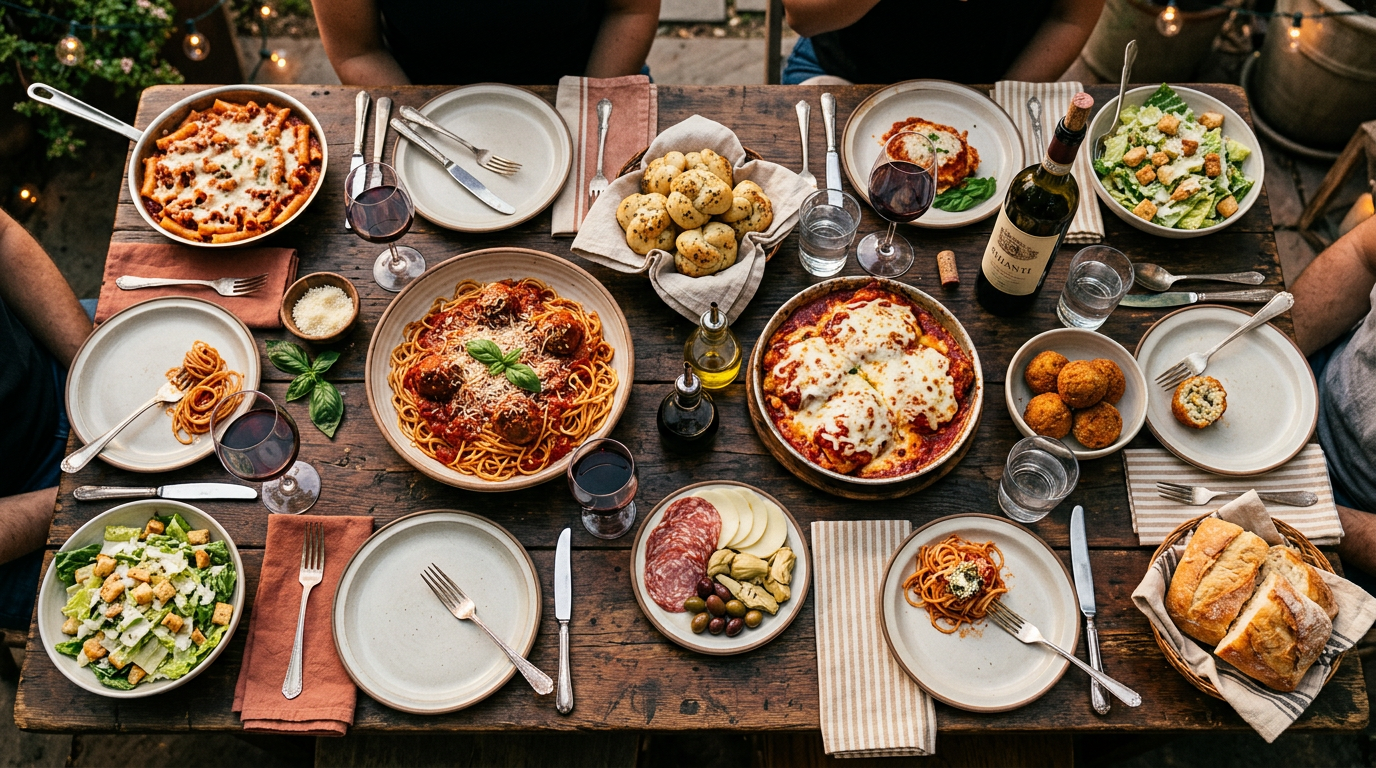
Many dishes labeled as “Italian” in American restaurants and grocery stores are beloved comfort foods—but they aren’t truly Italian. In fact, several popular “Italian” meals either originated in other countries, were invented by Italian immigrants, or have been so heavily adapted that they no longer resemble their Old World counterparts. Here’s a look at some well-known dishes that may surprise you.
Spaghetti and Meatballs
Spaghetti and meatballs is one of the most iconic “Italian” meals in the U.S., but it doesn’t exist in Italy in the way most Americans know it. While Italians do eat meatballs—called polpette—they are usually smaller, served without pasta, and often enjoyed as a standalone dish or in soup.
The American version was born from Italian immigrants who arrived in the early 20th century. With better access to meat and more affordable pasta in the U.S., they created this hearty dish as a fusion of familiar elements. It’s delicious, but not something you’d typically find on a traditional Italian menu.
Chicken Alfredo
Creamy, cheesy chicken Alfredo is a popular menu item in Italian-American restaurants, but in Italy, you won’t find it. The closest thing in Rome is fettuccine al burro, a simple pasta with butter and parmesan cheese. The American version adds heavy cream and grilled chicken, transforming it into a much richer dish.
The modern Alfredo was developed in the U.S. and gained fame thanks to Hollywood stars in the 1920s. Italians, on the other hand, usually don’t combine chicken with pasta at all—it’s considered an unusual pairing in authentic Italian cooking.
Garlic Bread
Garlic bread as we know it—a toasted baguette slathered in butter, garlic, and sometimes cheese—is another American invention. While Italians do have bruschetta, which is toasted bread topped with fresh tomato, olive oil, and garlic, it’s lighter and more focused on fresh, raw ingredients.
The buttery garlic bread found in pizzerias and pasta restaurants is a far cry from anything traditionally served in Italy, where olive oil is far more common than butter, and bread is rarely the centerpiece of a meal.
Italian Dressing
Despite the name, Italian dressing is not Italian at all. The mix of oil, vinegar, sugar, herbs, and sometimes grated cheese or bell peppers is a distinctly American creation. In Italy, salads are typically dressed simply with olive oil, vinegar or lemon juice, and maybe a pinch of salt—added at the table, not pre-mixed.
The sweet, tangy bottled dressing has become a staple in U.S. kitchens, but it’s virtually unknown across the Atlantic.
Pepperoni Pizza
Pizza is indeed Italian, but pepperoni pizza as Americans know it is not. In Italy, “peperoni” means bell peppers, not spicy cured meat. The spicy salami-style topping used in the U.S. is a product of Italian-American innovation.
Traditional Italian pizzas tend to use simpler, fresher toppings like mozzarella, prosciutto, mushrooms, anchovies, and arugula. The American version of pepperoni pizza is more heavily loaded and geared toward bold flavors.



Leave a Reply