
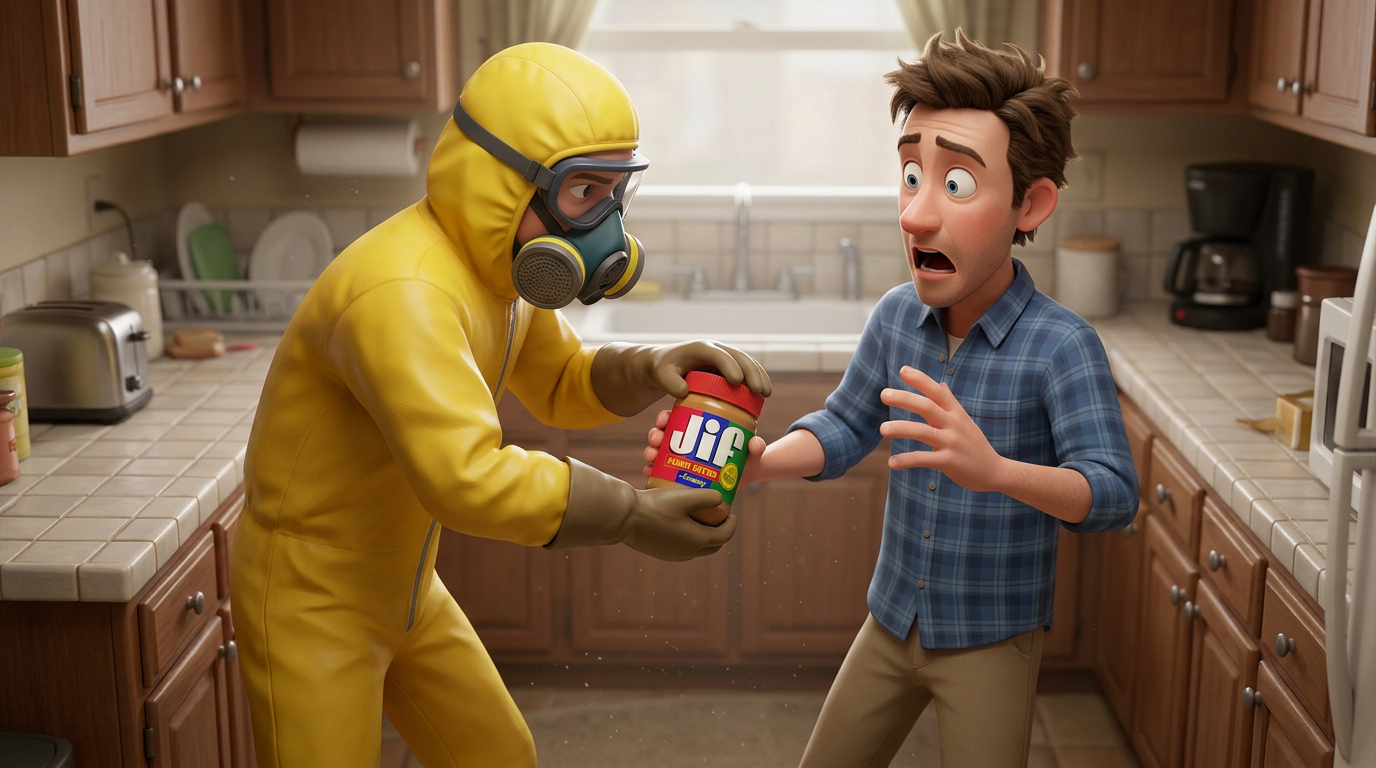
Peanut butter is a pantry staple found in millions of homes, but even this beloved spread isn’t immune to food safety problems. Over the years, several well-known brands have been pulled from store shelves after testing revealed potentially dangerous contamination. In some cases, the contamination involved harmful bacteria capable of causing severe illness, while others stemmed from manufacturing issues that threatened consumer safety. These recalls serve as important reminders that even trusted products can occasionally pose unexpected risks.
Peter Pan Peanut Butter (2007 Salmonella Outbreak)
One of the most infamous peanut butter recalls in U.S. history involved Peter Pan peanut butter in 2007. The manufacturer voluntarily recalled every variety produced since late 2004 after investigators linked the products to a nationwide outbreak of Salmonella Tennessee.
Hundreds of people across dozens of states became ill after eating contaminated peanut butter. Health officials traced the outbreak to a manufacturing facility in Georgia, where environmental conditions allowed the bacteria to contaminate finished products. Consumers were instructed to immediately discard any affected jars rather than simply scraping away the top layer because the bacteria could be present throughout the product.
The recall highlighted how dangerous Salmonella contamination can be, especially for young children, older adults, and individuals with weakened immune systems.
Great Value Peanut Butter (2022 Jif Recall Expansion)
In 2022, several Great Value peanut butter products sold at Walmart were recalled because they were manufactured using Jif peanut butter that was involved in a widespread Salmonella outbreak.
Although Great Value wasn’t the original source of the contamination, the private-label products contained the affected peanut butter, making them part of the broader recall. Consumers were advised not to eat the products regardless of whether they appeared or smelled normal.
The incident demonstrated how a single manufacturing problem can ripple throughout the food industry, affecting multiple brands that rely on the same supplier.
Jif Peanut Butter (2022 Salmonella Recall)
Jif experienced one of the largest peanut butter recalls in recent memory after health officials connected its products to a multistate outbreak of Salmonella Senftenberg.
Millions of jars were removed from store shelves, and dozens of illnesses were reported across the United States. The contamination originated at a manufacturing facility, prompting the company to issue a massive voluntary recall covering numerous varieties and sizes.
Consumers were encouraged to:
- Check lot codes on every Jif jar in their pantry.
- Throw away affected products immediately.
- Wash surfaces that may have come into contact with the peanut butter.
- Monitor for symptoms if they had recently consumed recalled products.
The recall also affected restaurants, schools, bakeries, and manufacturers that used Jif peanut butter as an ingredient.
Trader Joe’s Valencia Creamy Salted Peanut Butter (2012 Salmonella Recall)
Trader Joe’s voluntarily recalled its Valencia Creamy Salted Peanut Butter after it was linked to a Salmonella outbreak that sickened consumers in multiple states.
Unlike many commercial peanut butters made from blended peanut varieties, this product used Valencia peanuts. Investigators ultimately connected illnesses to peanut butter produced at a facility operated by Sunland Inc., which supplied numerous retailers.
The recall expanded beyond Trader Joe’s, eventually affecting dozens of peanut and almond butter products manufactured at the same plant. The incident underscored how one production facility can distribute contaminated products under many different brand names.
Sunland Inc. Peanut Butter Products (2012 Multi-Brand Recall)
Sunland Inc. issued one of the broadest nut butter recalls ever seen after routine testing detected Salmonella at its manufacturing facility.
The recall eventually covered hundreds of peanut butter, almond butter, cashew butter, and tahini products sold under numerous brand names nationwide. Because Sunland manufactured products for many companies, retailers across the country found themselves pulling jars from shelves.
Food safety experts emphasized that consumers should never taste recalled peanut butter to determine whether it’s safe. Salmonella contamination cannot be seen, smelled, or tasted, making recall notices the only reliable way to identify dangerous products.
The event also encouraged manufacturers throughout the industry to strengthen environmental testing, sanitation practices, and routine inspections to reduce the likelihood of future contamination.
Conclusion
Peanut butter remains a safe and nutritious food for the overwhelming majority of consumers, but history shows that contamination can occasionally occur despite strict manufacturing standards. High-profile recalls involving Peter Pan, Jif, Trader Joe’s, Great Value, and Sunland products illustrate how quickly contaminated foods can spread through national distribution networks. Staying informed about recalls, checking lot numbers, and following disposal instructions are simple steps that help protect your household whenever a food safety alert is issued.




Leave a Reply