
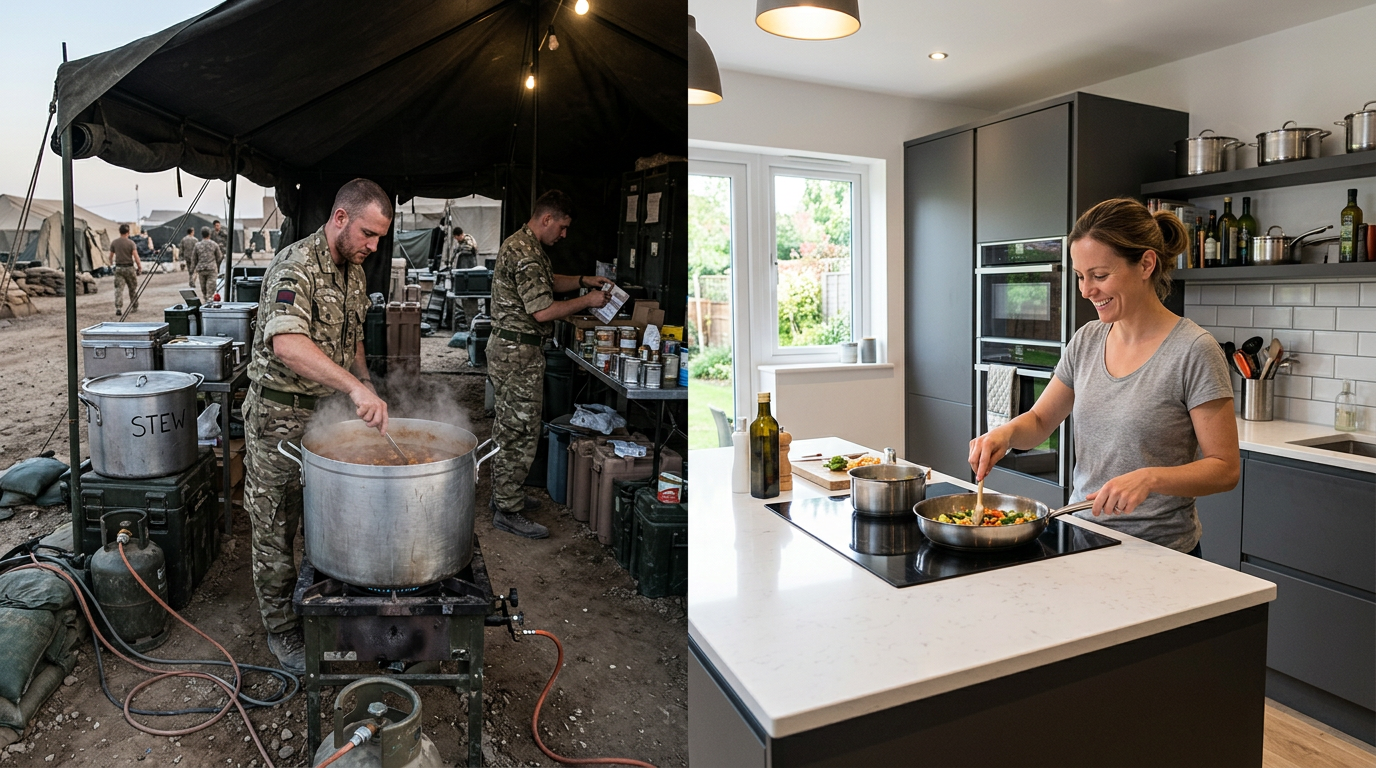
Military forces have long influenced the way people eat. Foods developed to feed troops efficiently often found their way into grocery stores after proving they were affordable, convenient, and shelf-stable. In some cases, wartime demand accelerated innovations in food preservation that later transformed the civilian marketplace. Today, many everyday pantry staples and convenience foods have roots in military kitchens or were popularized through military use.
Spam
Introduced in 1937, Spam became one of the most recognizable military foods of World War II. Because it required no refrigeration before opening and had a long shelf life, it was widely shipped to American troops and Allied forces around the world.
After the war, returning service members were already familiar with Spam, and its popularity continued to grow. Today, it’s a staple in places like Hawaii, where it’s featured in dishes ranging from fried rice to Spam musubi.
Instant Coffee
Coffee has always been essential for keeping troops alert, but brewing fresh coffee in combat wasn’t always practical.
Instant coffee became a military favorite because it was lightweight, portable, and easy to prepare with hot water. After the war, many civilians adopted the same convenience, making instant coffee a pantry staple for decades.
Powdered Eggs
Fresh eggs were difficult to transport and store during wartime, leading to the widespread use of powdered eggs.
Although most people today prefer fresh eggs, powdered eggs remain popular for emergency food storage, camping, baking, and preparedness kits because of their long shelf life.
Canned Corned Beef
Canned corned beef was another dependable ration that became widely distributed during both World Wars.
Its convenience, affordability, and long storage life helped it transition into civilian kitchens, where it remains popular in sandwiches, hash, casseroles, and traditional holiday meals.
Several military food innovations changed everyday grocery shopping by offering:
- Longer shelf life.
- Greater convenience.
- Easier transportation.
- Faster meal preparation.
- Reduced food waste.
Freeze-Dried Meals
The military invested heavily in freeze-drying technology to create lightweight meals that retained much of their flavor and nutritional value.
Today, freeze-dried foods are commonly used by campers, hikers, emergency preparedness enthusiasts, and even home cooks looking for convenient ingredients with extended shelf lives.
Peanut Butter
Although peanut butter existed before its widespread military use, it became a major component of military rations during the 20th century because it was rich in calories, protein, and healthy fats.
After generations of service members relied on it in the field, peanut butter solidified its place as one of America’s favorite sandwich spreads and snack ingredients. Today, it’s found in everything from breakfast smoothies to cookies and savory sauces.
Conclusion
Military necessity has often driven food innovation, creating products designed to last longer, travel farther, and feed large numbers of people efficiently. Many of these practical foods eventually found lasting success in civilian kitchens because they combined convenience, affordability, and versatility. From canned meats to instant coffee and freeze-dried meals, these military-inspired foods continue to play an important role in everyday life long after their original purpose.




Leave a Reply