
Automotive safety has improved dramatically over the past several decades, thanks to stricter crash-testing standards, better engineering, and the widespread adoption of airbags, anti-lock brakes, and electronic stability control. However, not every vehicle has earned a reputation for safety. Some models became infamous for design flaws, poor crash performance, or mechanical issues that ultimately contributed to their discontinuation.
It’s worth noting that most vehicles are discontinued for multiple reasons, including declining sales, changing consumer demand, or corporate restructuring. In these cases, safety concerns became a significant part of each model’s legacy.
Ford Pinto

Few cars have become as synonymous with automotive controversy as the Ford Pinto. Introduced for the 1971 model year, the compact car became the subject of widespread criticism after reports that rear-end collisions could rupture its fuel tank and lead to fires.
Ford eventually recalled more than a million Pintos to modify the fuel system. Although production ended in 1980 for several reasons, the safety controversy permanently shaped the car’s reputation.
Chevrolet Corvair

The Chevrolet Corvair featured an innovative rear-engine design that set it apart from other American cars of its era. However, questions about its handling characteristics generated significant public attention.
Publication of Ralph Nader’s book Unsafe at Any Speed made the Corvair the center of a national conversation about vehicle safety. While later investigations produced more nuanced findings, the controversy contributed to declining public confidence before production ended in 1969.
Suzuki Samurai

The Suzuki Samurai was a lightweight off-road SUV that gained popularity during the 1980s. Its reputation changed after rollover concerns emerged following testing by Consumer Reports.
Although Suzuki disputed the findings, the vehicle’s image suffered considerably. Combined with changing market conditions, production for the U.S. market eventually came to an end.
Yugo GV

Imported from the former Yugoslavia, the Yugo GV became famous for its low purchase price but earned criticism for questionable reliability and limited crash protection.
Poor build quality and weak safety performance contributed to its negative reputation, making it one of the least celebrated economy cars sold in America.
Several lessons emerged from these vehicles:
- Crash testing became more rigorous.
- Manufacturers invested heavily in safety engineering.
- Recalls became more transparent.
- Consumers began prioritizing safety ratings.
Chevrolet Vega

The Chevrolet Vega was introduced as an affordable compact car but soon developed a reputation for mechanical problems, including engine reliability issues.
Although the Vega wasn’t discontinued solely because of safety concerns, its durability problems and declining public confidence contributed to its relatively short production run.
Ford Explorer (Early Models)

The first-generation Ford Explorer became the focus of national attention following a series of rollover crashes, many involving tire failures associated with certain Firestone tires.
The controversy led to one of the largest tire recalls in history and increased scrutiny of SUV stability. Later generations of the Explorer incorporated substantial safety improvements.
DeLorean DMC-12

Best known for its starring role in Back to the Future, the DeLorean DMC-12 wasn’t discontinued because of safety concerns alone.
However, its stainless-steel body, unique gull-wing doors, financial troubles, and limited commercial success prevented long-term production. Some experts also questioned aspects of its crash performance compared with competing vehicles of the era.
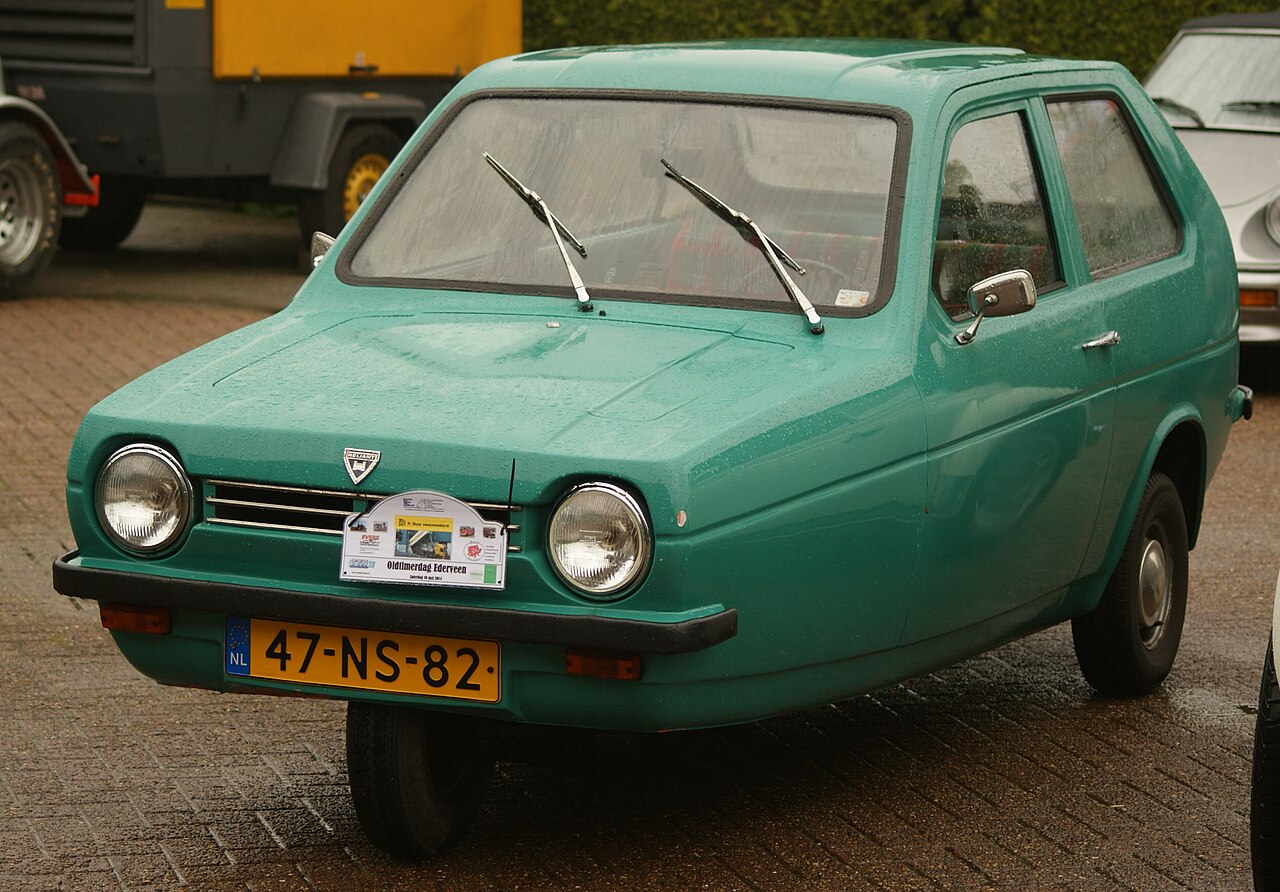
Reliant Robin

The three-wheeled Reliant Robin became famous for its unusual design and tendency to tip during aggressive cornering.
While popular in the United Kingdom for tax and licensing reasons, its unconventional layout made it the subject of jokes and television demonstrations highlighting its stability challenges.
AMC Pacer

The AMC Pacer’s distinctive wide body and futuristic styling made it instantly recognizable. However, changing fuel prices, modest performance, and aging engineering gradually reduced its popularity.
Although not discontinued solely because of safety issues, the Pacer lacked many of the crash-protection features that became standard in later vehicles, illustrating how rapidly automotive safety evolved.
Conclusion
Many of these vehicles became important lessons in automotive history, helping drive improvements in crash testing, recall procedures, and vehicle engineering. While most were discontinued for a combination of economic and market factors, the safety controversies surrounding them influenced both consumer expectations and government regulations. Today’s vehicles are generally far safer thanks to decades of innovation inspired, in part, by the shortcomings of these memorable models.




Leave a Reply