
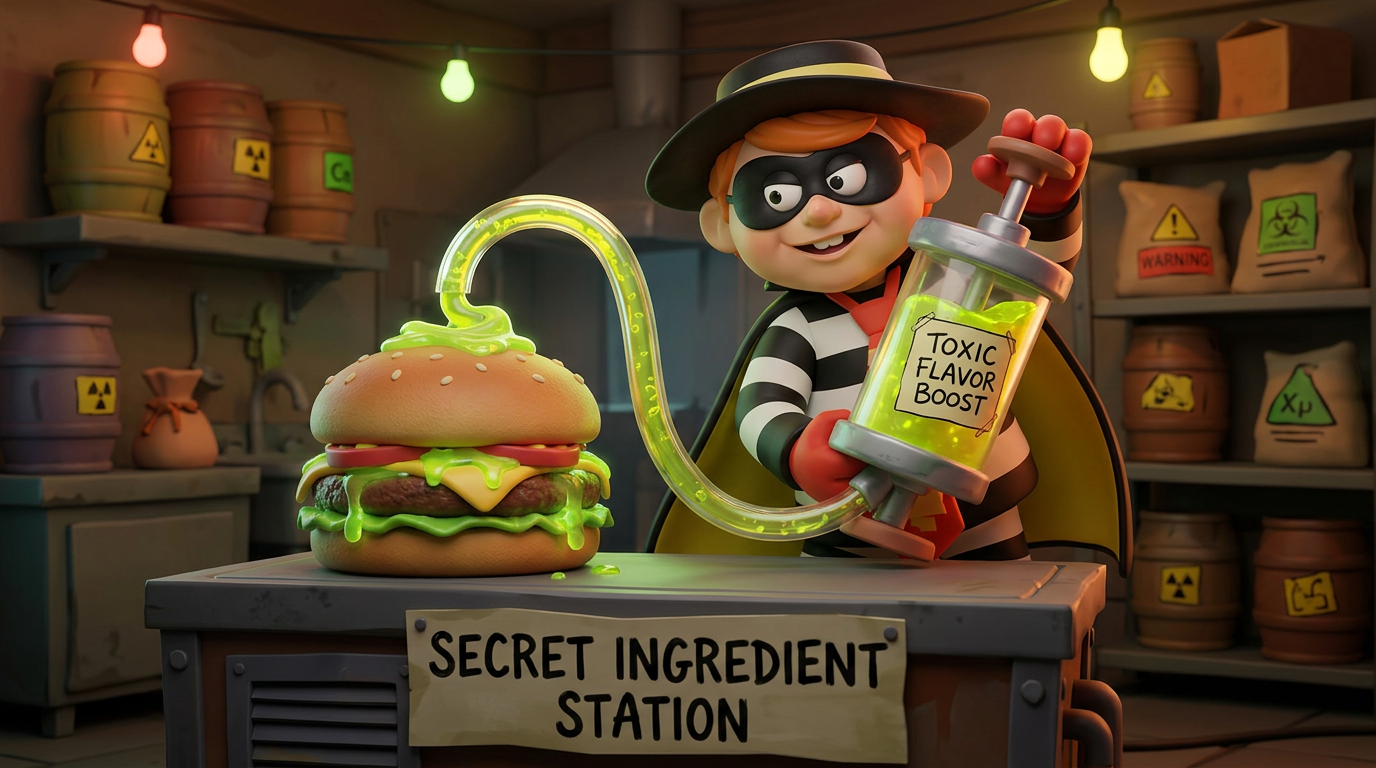
Fast food burgers may look simple—a beef patty, bun, cheese, and toppings—but there’s much more going on behind the scenes. To create consistent flavor, texture, and shelf life across thousands of restaurant locations, chains often rely on additional ingredients that many customers never notice.
Most of these ingredients are approved for use in food and serve practical purposes during preparation and storage. Still, they can be surprising if you assume your burger contains only the basics. Here are nine ingredients commonly found in various fast food burgers.
Calcium Propionate
Burger buns often contain calcium propionate as a preservative.
Its primary job is preventing mold growth, allowing buns to remain fresh longer during shipping and storage. Without preservatives, bread products would spoil much faster.
This ingredient is commonly used throughout the commercial baking industry.
Soy Lecithin
Soy lecithin frequently appears in burger buns, sauces, and processed cheese.
It acts as an emulsifier, helping oil and water blend together smoothly while improving texture and consistency.
Because it performs several functions, it’s commonly found in many packaged foods beyond fast food.
Modified Food Starch
Modified food starch helps stabilize sauces and condiments.
Whether it’s a creamy burger sauce or a cheese topping, this ingredient helps maintain the desired thickness while preventing separation during storage.
It may be derived from corn, potato, or other starch sources.
Sodium Phosphates
Processed cheese slices commonly contain sodium phosphates.
These compounds help maintain a smooth texture and prevent ingredients from separating when heated. They also contribute to the familiar melt that many people expect from cheeseburgers.
They’re widely used in processed cheese products sold in grocery stores as well.
Dextrose
Dextrose is a naturally occurring sugar used in small amounts.
Rather than making burgers noticeably sweeter, it often assists with browning and helps balance flavors in buns, sauces, and seasonings.
Its presence is common in many commercially prepared foods.
Natural Flavors
“Natural flavors” can appear in seasonings, sauces, and even burger patties.
The label refers to flavoring ingredients derived from natural sources, but manufacturers aren’t required to disclose the exact blend because recipes are considered proprietary.
Their purpose is to create a consistent taste across every location.
Xanthan Gum
Many burger sauces rely on xanthan gum.
This thickening agent keeps ingredients evenly mixed and prevents sauces from separating during storage. It also creates the creamy texture consumers expect.
Only small amounts are needed to achieve these effects.
Citric Acid
Citric acid is commonly used in pickles, sauces, and condiments.
It contributes tartness while also helping preserve freshness and stabilize ingredients. Although naturally found in citrus fruits, commercially produced citric acid is widely used throughout the food industry.
Its versatility makes it one of the most common food additives.
Yeast Extract
Yeast extract is often added to seasoning blends.
It naturally enhances savory flavor, giving burgers a richer umami taste without dramatically changing the overall recipe.
You’ll also find yeast extract in soups, snack foods, sauces, and frozen meals.
Understanding Ingredient Lists
Long ingredient lists don’t automatically mean a burger is unhealthy.
Many ingredients perform technical roles such as preserving freshness, improving texture, or ensuring consistent preparation. Reading ingredient labels simply helps consumers understand what goes into the foods they enjoy.
Being informed makes it easier to choose meals that align with personal preferences and dietary goals.
Conclusion
Calcium propionate, soy lecithin, modified food starch, sodium phosphates, dextrose, natural flavors, xanthan gum, citric acid, and yeast extract are nine ingredients commonly found in fast food burgers. While they often serve practical manufacturing purposes, knowing why they’re included offers a better understanding of how today’s fast food is made.



Leave a Reply