
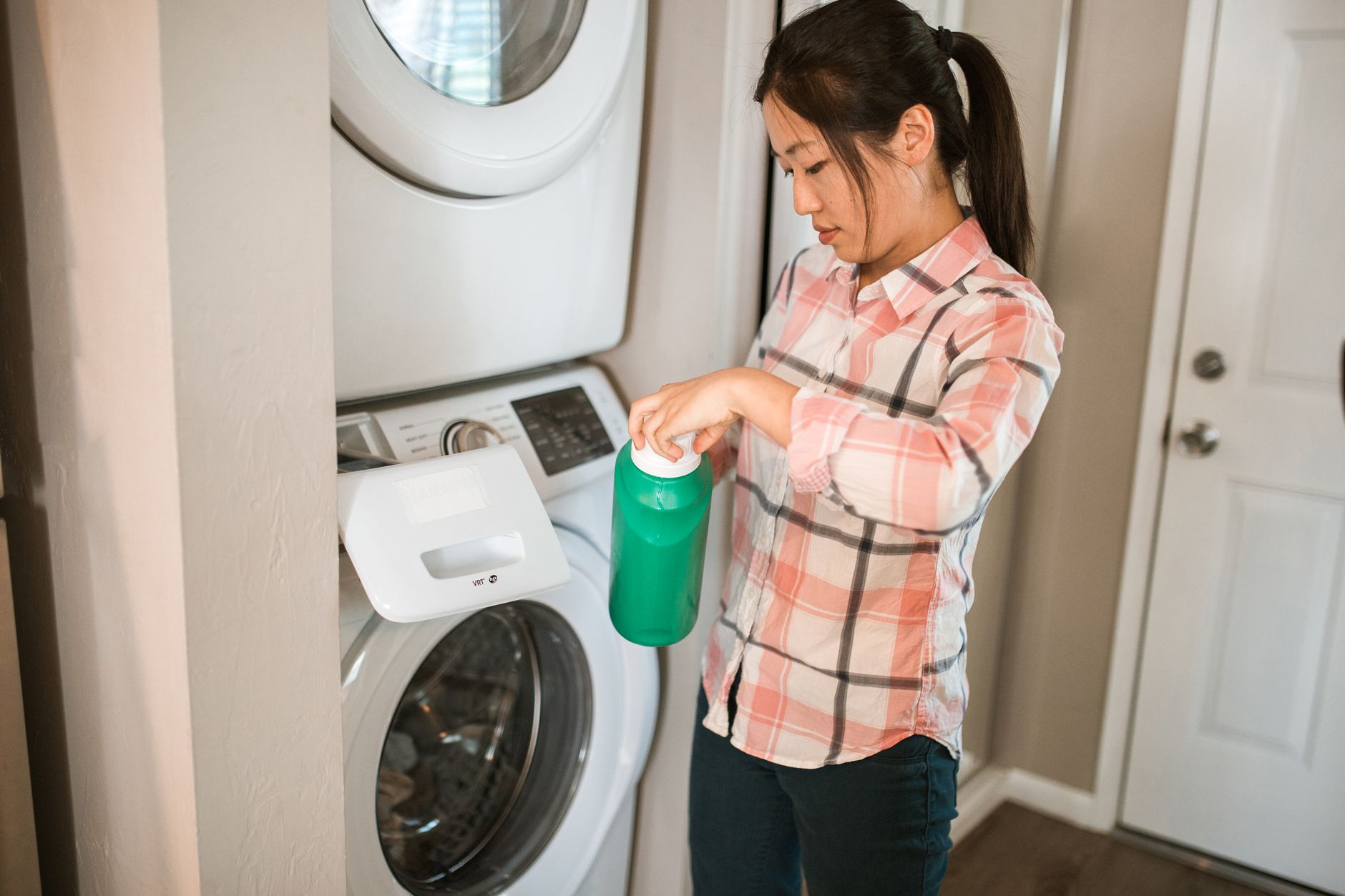
Laundry detergents are designed to remove dirt, stains, and odors, but some have also contained ingredients or manufacturing byproducts that have drawn attention from scientists, consumer advocacy groups, and regulators. It’s important to note that the presence of a potentially hazardous substance does not necessarily mean a product causes cancer when used as directed. Risk depends on factors such as concentration, frequency of exposure, and the specific chemical involved. Still, consumers who want to minimize exposure often choose products with simpler ingredient lists or certifications that limit certain substances.
Tide Original
Tide Original has occasionally been included in discussions about 1,4-dioxane, a manufacturing byproduct that can form during the production of ethoxylated surfactants. The International Agency for Research on Cancer (IARC) classifies 1,4-dioxane as possibly carcinogenic to humans, although trace amounts in consumer products are generally much lower than levels used in laboratory studies.
Procter & Gamble has stated that it works to reduce 1,4-dioxane levels in its products and complies with applicable safety regulations. Even so, some consumers prefer detergents specifically marketed as minimizing this byproduct.
Gain Original
Gain Original uses cleaning agents similar to those found in many mainstream detergents, meaning trace amounts of 1,4-dioxane may be present if formed during manufacturing. The concern centers on the contaminant rather than the detergent itself.
Gain also contains fragrance ingredients that some consumers choose to avoid, although fragrance use is not itself evidence of cancer risk.
Arm & Hammer Clean Burst
Arm & Hammer detergents have generally earned favorable safety reviews, but certain formulations contain ethoxylated surfactants that can produce trace 1,4-dioxane unless carefully removed during manufacturing.
The concern is not unique to Arm & Hammer and applies broadly across many conventional detergents using similar ingredients.
Persil ProClean
Persil ProClean is known for its stain-fighting performance, but like many premium detergents, it contains surfactants that have prompted questions about potential manufacturing contaminants.
Consumers concerned about cancer-related chemical exposure often compare ingredient disclosures before choosing between conventional and plant-based alternatives.
All Free Clear
Despite being marketed for sensitive skin and free of dyes and perfumes, All Free Clear has still been mentioned in discussions surrounding possible trace levels of 1,4-dioxane because of some cleaning ingredients used in production.
Removing fragrances reduces irritation concerns but does not automatically eliminate every manufacturing byproduct.
Purex Mountain Breeze
Purex formulations have historically included conventional surfactants and fragrances that consumer advocacy organizations have encouraged manufacturers to continue improving.
Like many mainstream detergents, the primary discussion involves contaminants that may arise during manufacturing rather than intentionally added cancer-causing ingredients.
Xtra Tropical Passion
Xtra is positioned as a budget-friendly detergent, and some formulations contain ingredient types similar to those used by larger competitors.
Consumers seeking to reduce chemical exposure often compare lower-cost products with brands carrying third-party environmental certifications.
Era Laundry Detergent
Era has relied on conventional detergent chemistry for many years. While effective at stain removal, some ingredients have been scrutinized because ethoxylation processes can produce trace 1,4-dioxane.
Regulatory oversight has encouraged manufacturers to reduce these contaminants wherever practical.
Ajax Laundry Detergent
Ajax laundry detergent has used traditional surfactant systems comparable to many other detergents sold in North America.
Cancer-related discussions surrounding Ajax generally focus on manufacturing byproducts rather than evidence that the detergent itself causes cancer.
Fab Laundry Detergent
Fab remains available in some markets as an affordable detergent option.
As with numerous conventional detergents, ingredient transparency has become increasingly important to consumers looking to limit unnecessary chemical exposure.
Cheer Laundry Detergent
Cheer has historically contained synthetic cleaning agents common throughout the detergent industry.
Consumer organizations often encourage manufacturers to further reduce trace contaminants even when products comply with existing regulations.
Woolite Everyday
Woolite is formulated for delicate fabrics, yet some versions still use conventional surfactants that have prompted discussion regarding possible manufacturing byproducts.
Its gentler cleaning performance does not necessarily mean every ingredient is free from consumer scrutiny.
Dreft Stage 1
Because Dreft is marketed for baby clothing, many parents closely examine its ingredient list.
Although manufacturers formulate these products with safety in mind, advocacy groups frequently encourage continued reductions in trace contaminants wherever feasible.
Seventh Generation EasyDose
Seventh Generation emphasizes plant-based ingredients and ingredient disclosure, but even naturally derived ingredients can undergo processing that consumers may wish to research.
The company has generally positioned itself as reducing chemicals that concern environmentally conscious shoppers.
ECOS Laundry Detergent
ECOS has earned popularity among consumers seeking plant-based cleaning products and has worked to reduce controversial ingredients.
While no detergent is entirely free from scrutiny, brands emphasizing ingredient transparency often appeal to shoppers focused on minimizing potential long-term chemical exposure.
Conclusion
No major health authority has concluded that using these laundry detergents as directed causes cancer. Instead, the discussion centers on certain ingredients or manufacturing byproducts—particularly trace 1,4-dioxane—that have raised cancer-related concerns in scientific research. Consumers interested in reducing potential exposure can compare ingredient labels, choose fragrance-free options when appropriate, and look for products certified by independent environmental organizations that set stricter standards for chemical content.



Leave a Reply