
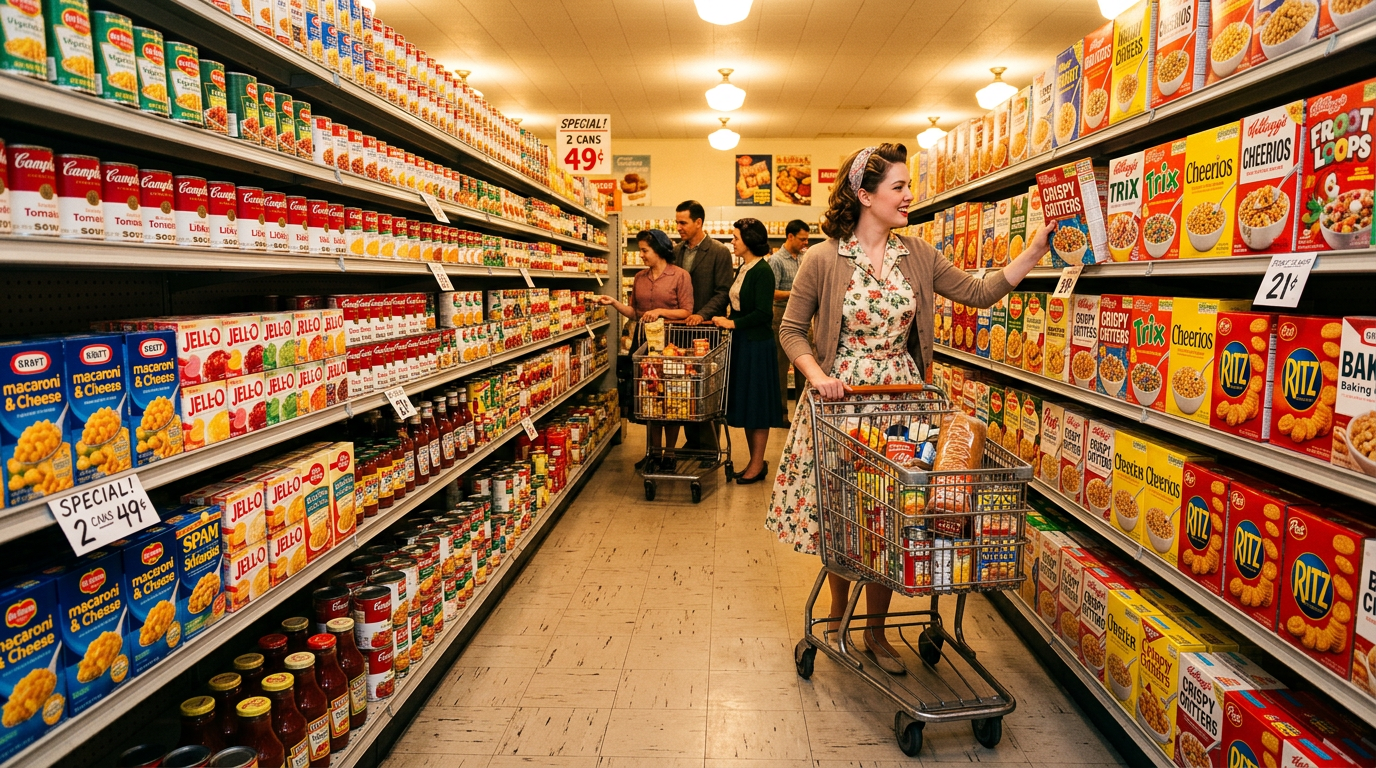
Walk through a grocery store in the 1950s, 1960s, or 1970s, and you’d find plenty of products that were considered modern marvels. Convenience was king, and food manufacturers proudly promoted shelf stability, artificial ingredients, and highly processed formulations as signs of progress.
Today, however, nutrition science has evolved considerably. Many foods that were once pantry staples for Baby Boomers would face intense scrutiny from health-conscious consumers. While some remain available in modified forms, their original recipes often contained ingredients that would raise eyebrows today.
Canned Spaghetti With Heavy Sodium Loads
Canned pasta meals were a household favorite for busy families.
Products such as canned spaghetti and meatballs offered convenience at a time when quick meal preparation was becoming increasingly important. Parents appreciated the ease, and kids loved the taste.
The downside was the extraordinary amount of sodium packed into a single serving. Many varieties also contained significant amounts of added sugar and preservatives. Today’s dietary guidelines generally encourage consumers to limit excessive sodium intake, making these original formulations less appealing.
Powdered Drink Mixes Loaded With Sugar
Brightly colored powdered drink mixes became hugely popular among Baby Boomer families.
They were inexpensive, easy to prepare, and heavily marketed to children. Many parents viewed them as a fun alternative to plain water.
However, these products often contained large amounts of sugar along with artificial colors and flavors. Modern nutrition experts typically recommend reducing sugary beverage consumption, causing many consumers to rethink these nostalgic drinks.
Frozen TV Dinners
TV dinners revolutionized home dining.
Families could enjoy complete meals from a single tray while watching their favorite television programs. The convenience factor helped these products become a grocery-store sensation.
Unfortunately, many early TV dinners contained high levels of sodium, saturated fat, and preservatives. While modern frozen meals have improved considerably, the original versions would struggle to satisfy many of today’s health-conscious shoppers.
Processed Cheese Spreads
Processed cheese spreads were once considered cutting-edge food technology.
Their long shelf life, smooth texture, and convenience made them common additions to sandwiches, crackers, and snacks. Advertising campaigns emphasized practicality and consistency.
Many versions contained substantial amounts of sodium, artificial ingredients, and stabilizers. Today’s consumers often seek foods with simpler ingredient lists and fewer additives.
Several characteristics of older grocery products would receive greater attention today:
- High sodium content
- Excess added sugars
- Artificial colors
- Artificial flavors
- Extensive processing
These factors have become increasingly important to modern shoppers.
Sugary Breakfast Cereals
Breakfast cereal has long been a staple of the American diet.
Many cereals marketed during the Baby Boomer era contained significant amounts of sugar while emphasizing cartoon mascots and prizes rather than nutritional value. Children often consumed them daily.
Although sugary cereals remain available, current consumers are more likely to examine nutrition labels and seek options with higher fiber content and less added sugar.
Hydrogenated Shortening
Hydrogenated shortening was once a kitchen essential.
Used in baking and frying, it provided desirable texture and stability while extending shelf life. Many cooks relied on it for pie crusts, cookies, and other baked goods.
The problem is that partially hydrogenated oils became a major source of artificial trans fats. Research eventually linked trans fats to increased cardiovascular risk, leading to regulatory changes and widespread reformulation of food products.
How Nutrition Standards Have Changed
Nutrition science has advanced dramatically over the past several decades.
Researchers now understand far more about the effects of sodium, added sugars, trans fats, and ultra-processed foods. As a result, both consumers and manufacturers have adapted their approaches to food production and purchasing.
Many grocery products have been reformulated to align with modern health recommendations.
Nostalgia Versus Nutrition
Many Baby Boomers remember these foods fondly because they were associated with childhood, convenience, and family meals.
Nostalgia doesn’t necessarily mean the products were nutritionally ideal. Instead, it reflects how food culture evolves over time as new information becomes available.
The foods people choose today will likely be evaluated differently by future generations as nutritional understanding continues to develop.
Conclusion
Canned spaghetti meals, sugary drink mixes, frozen TV dinners, processed cheese spreads, sugary cereals, and hydrogenated shortening were once common grocery staples for Baby Boomers. While they represented convenience and innovation in their era, many contained levels of sodium, sugar, additives, or trans fats that would receive much greater scrutiny today. Their stories highlight how dramatically food standards and consumer expectations have changed over the years.




Leave a Reply