
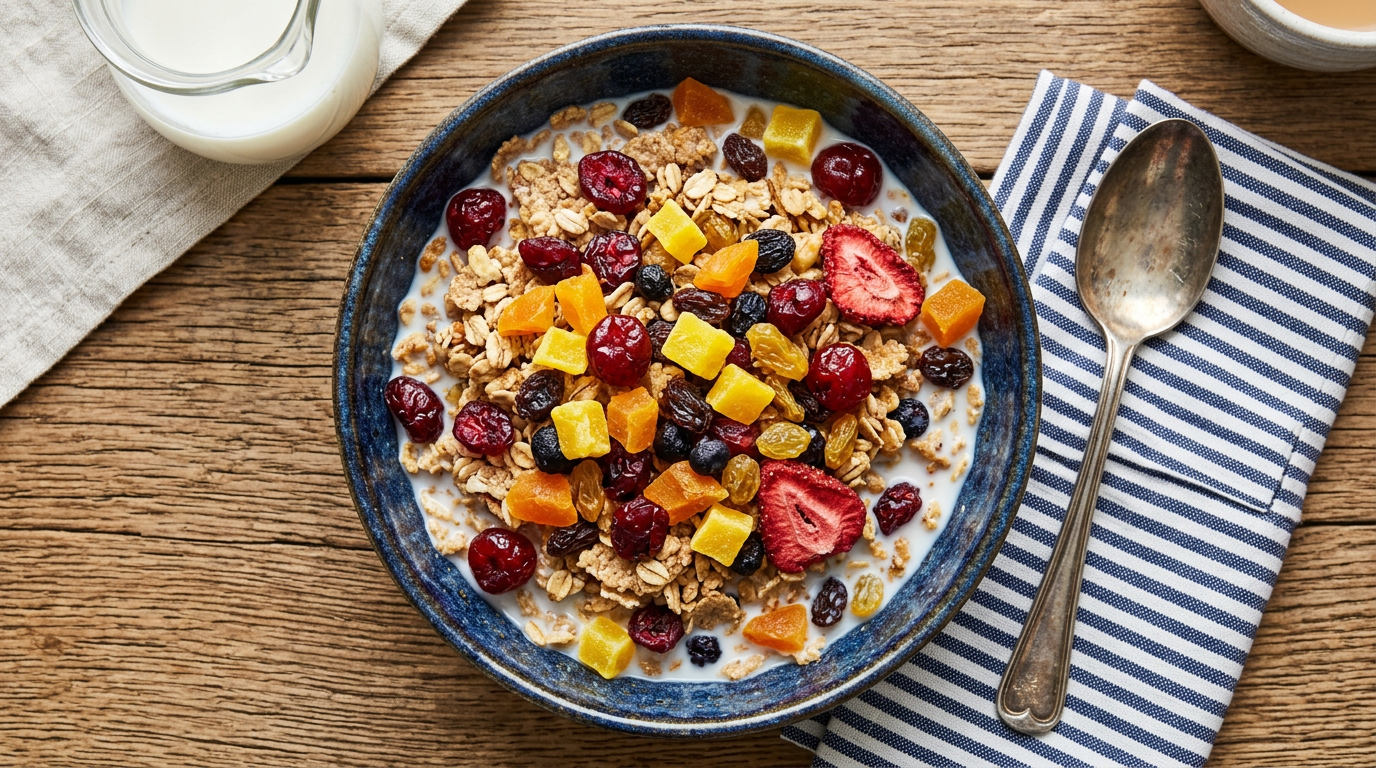
Dried fruit is often marketed as a healthy addition to breakfast cereal. It can add sweetness, texture, and a perception of wholesomeness that appeals to health-conscious shoppers. However, not all dried fruits are created equal. Some contribute excessive sugar, unpleasant textures, or flavors that overpower the rest of the cereal.
While dried fruit can certainly be part of a balanced diet, certain varieties tend to create more problems than benefits when mixed into cereal. Here are six dried fruits that often disappoint breakfast lovers.
Dried Raisins
Raisins are probably the most common dried fruit found in breakfast cereals.
While some people enjoy them, others find that raisins quickly become overly chewy when mixed with milk. Their texture can clash with crunchy cereal pieces, creating an inconsistent eating experience.
Raisins are also naturally high in sugar. In cereals that already contain sweetened flakes or clusters, they can push the sweetness level beyond what many consumers prefer.
Dried Cranberries
Cranberries are naturally tart, which is why many dried versions contain added sugar.
When included in cereal, sweetened dried cranberries can create sugar levels that rival some dessert foods. The sugary coating often masks the fruit’s natural flavor.
Texture can also be an issue. Some dried cranberries become sticky and clump together, making it difficult to distribute them evenly throughout the cereal.
Dried Bananas
Banana chips may seem like a natural breakfast companion, but they often fall short.
Many commercially produced banana chips are fried before drying, adding extra fat and altering the fruit’s natural flavor. The resulting pieces can be excessively hard and difficult to chew.
Once milk is added, banana chips sometimes become oddly tough rather than pleasantly soft, creating an awkward texture contrast.
Dried Pineapple
Pineapple has a bold flavor that can easily dominate an entire bowl of cereal.
The fruit is frequently sweetened during processing, resulting in a candy-like taste that overwhelms more subtle cereal flavors. Instead of complementing the grains, it often becomes the only thing you notice.
Several factors can make certain dried fruits less appealing in cereal:
- Excessive added sugar
- Sticky textures
- Artificial flavorings
- Uneven moisture levels
- Overpowering sweetness
These characteristics can negatively affect both flavor and texture.
Dried Papaya
Dried papaya is commonly found in tropical-themed cereal blends and granolas.
Unfortunately, many versions are heavily processed and contain added sweeteners, preservatives, and colorings. The fruit often loses much of its natural character during production.
Its chewy, almost gummy texture can feel out of place among crunchy cereal pieces, leading some consumers to pick it out rather than eat it.
Dried Cherries
Cherries are delicious when fresh, but dried versions can be problematic in cereal.
Because cherries are naturally tart, manufacturers frequently add substantial amounts of sugar during the drying process. The result can be a fruit that tastes more like candy than a healthy breakfast ingredient.
Dried cherries can also become quite dense and chewy, requiring more effort to eat than many people expect from a quick morning meal.
What Makes A Better Cereal Addition?
Not every fruit belongs in every cereal.
Fresh berries, sliced bananas, and lightly sweetened dried fruits often provide better flavor balance and texture. Choosing cereals with minimal added sugars can also help prevent breakfast from becoming overly sweet.
Reading ingredient labels carefully is one of the best ways to determine whether dried fruit is contributing genuine nutritional value or simply acting as another source of sugar.
Conclusion
Dried fruit can add variety to breakfast cereal, but some options work better than others. Raisins, dried cranberries, dried bananas, dried pineapple, dried papaya, and dried cherries often create issues related to sweetness, texture, or processing. While personal preferences vary, consumers seeking a more balanced breakfast may want to pay close attention to the types of dried fruit included in their favorite cereal blends.


Leave a Reply