
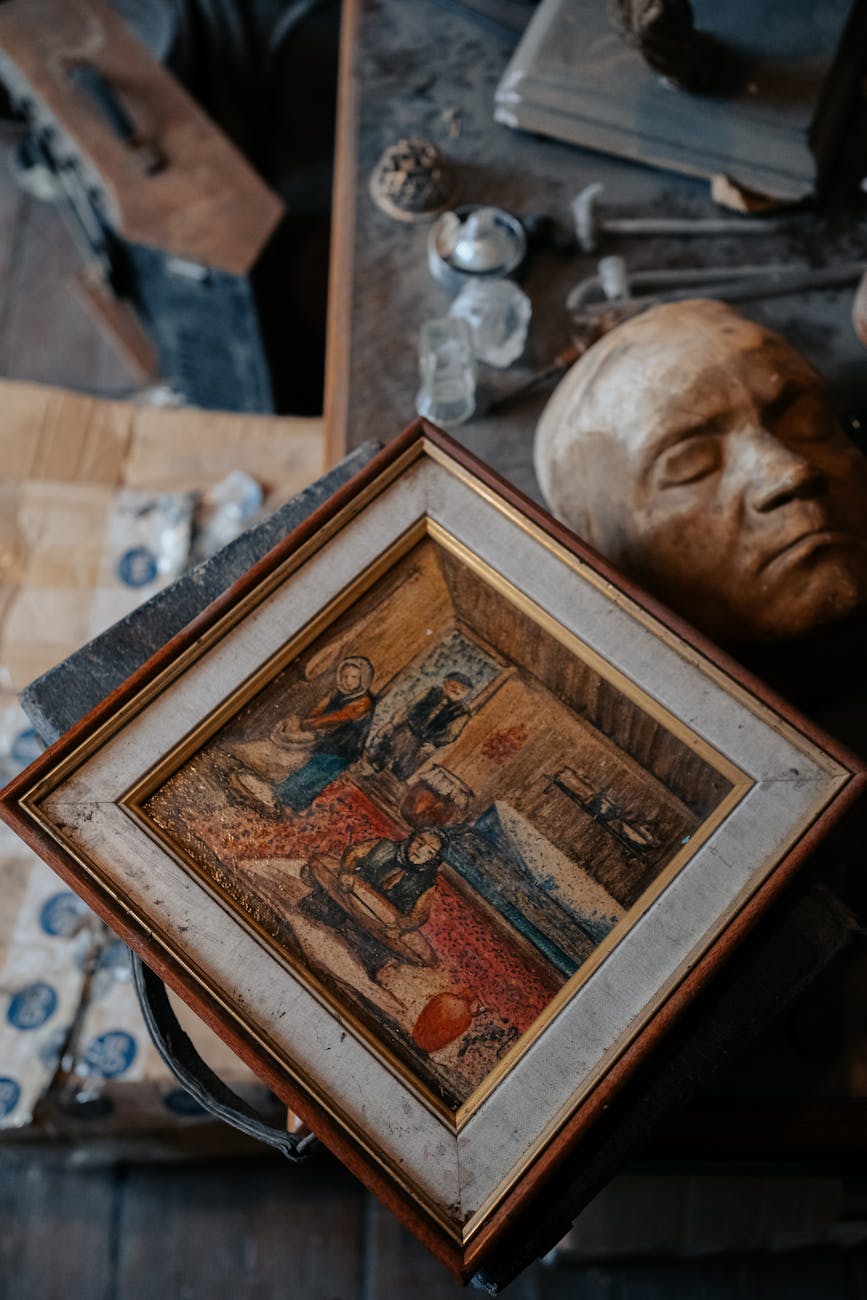
Every year, bargain hunters discover valuable artwork hiding in thrift stores, estate sales, and flea markets. While most secondhand paintings are decorative pieces with modest value, some turn out to be antiques, works by listed artists, or even forgotten treasures worth thousands of dollars.
Knowing what to look for can dramatically improve your odds of spotting a valuable painting before someone else does. While professional appraisal is always necessary for confirmation, certain clues frequently appear in older and more valuable artworks.
Here are six signs that the thrift store painting you found may be older and more valuable than its price tag suggests.
Original Canvas Construction
Original Canvas construction is often one of the first clues that a painting may be old.
Older paintings typically use stretched canvas attached to wooden stretcher bars rather than modern cardboard backing.
When examining the back, look for hand-cut wood, aged nails, wooden keys in the corners, or signs of traditional craftsmanship.
Machine-made materials and staples usually indicate newer production.
A canvas showing natural aging without obvious damage may suggest significant age.
Collectors often inspect the back of a painting before even looking closely at the front.
Visible Craquelure
Visible Craquelure refers to the fine network of cracks that naturally develops in paint over time.
These tiny cracks occur as paint layers age and respond to environmental changes over decades.
Authentic craquelure generally appears irregular and subtle rather than artificially created.
While cracks alone do not guarantee value, they often indicate age.
Professional appraisers frequently use craquelure patterns to help estimate when a painting was created.
Artificial reproductions sometimes attempt to mimic this effect, but genuine aging usually looks more natural.
Artist Signature Or Label
Artist Signature or Label information can dramatically increase a painting’s potential value.
Many valuable paintings include signatures, gallery labels, exhibition stickers, or artist information on the back.
Even unfamiliar names can sometimes belong to regional artists with dedicated collector markets.
Researching signatures through auction databases or artist registries may reveal surprising results.
Handwritten labels and old gallery tags can provide important clues about a painting’s history.
Never assume an unknown signature lacks value without investigating further.
Several features often attract the attention of experienced collectors:
- Original wood stretcher bars
- Old gallery labels
- Handwritten provenance notes
- Natural paint aging
- Quality framing materials
Finding multiple indicators together generally increases the likelihood of significance.
High-Quality Frame Construction
High-Quality Frame Construction can sometimes be worth more than the artwork itself.
Older frames frequently feature hand-carved wood, genuine gilding, and traditional joinery techniques.
Mass-produced modern frames typically lack these details.
If the frame appears unusually well-made compared to the painting’s thrift-store price, it deserves closer inspection.
Some antique frames survive long after the original artwork has been forgotten.
Collectors often purchase paintings primarily because of the valuable frame.
Provenance Documentation
Provenance Documentation refers to records showing a work’s ownership history.
Old receipts, exhibition labels, auction stickers, and gallery paperwork can add significant value.
A documented chain of ownership helps establish authenticity and historical importance.
Even partial provenance can increase collector interest.
Sometimes valuable clues are hidden beneath backing paper or attached to the rear of the frame.
Carefully examining these details can uncover information overlooked by thrift store staff.
Exceptional Artistic Skill
Exceptional Artistic Skill is often the most obvious sign that a painting deserves further investigation.
Strong composition, advanced brushwork, realistic lighting, and confident technique can distinguish original art from decorative reproductions.
Many valuable paintings stand out because the quality feels noticeably different from surrounding thrift store inventory.
Experienced collectors often trust their instincts when a painting immediately appears more sophisticated than its peers.
Even unsigned works can have substantial value if the artistic quality is unusually high.
Professional appraisal becomes especially important when exceptional craftsmanship is present.
Why Valuable Paintings End Up In Thrift Stores
Surprisingly, valuable artwork sometimes reaches thrift stores because:
- Families are unaware of its significance
- Estate contents are donated quickly
- Labels and documentation are overlooked
- Artists fall out of public recognition temporarily
These situations occasionally create opportunities for lucky buyers.
Conclusion
Original canvas construction, visible craquelure, artist signatures, quality frames, provenance documentation, and exceptional artistic skill are all signs that a thrift store painting may be old and valuable. While most secondhand artwork remains decorative, careful observation can sometimes reveal hidden treasures that are worth far more than their purchase price.




Leave a Reply