
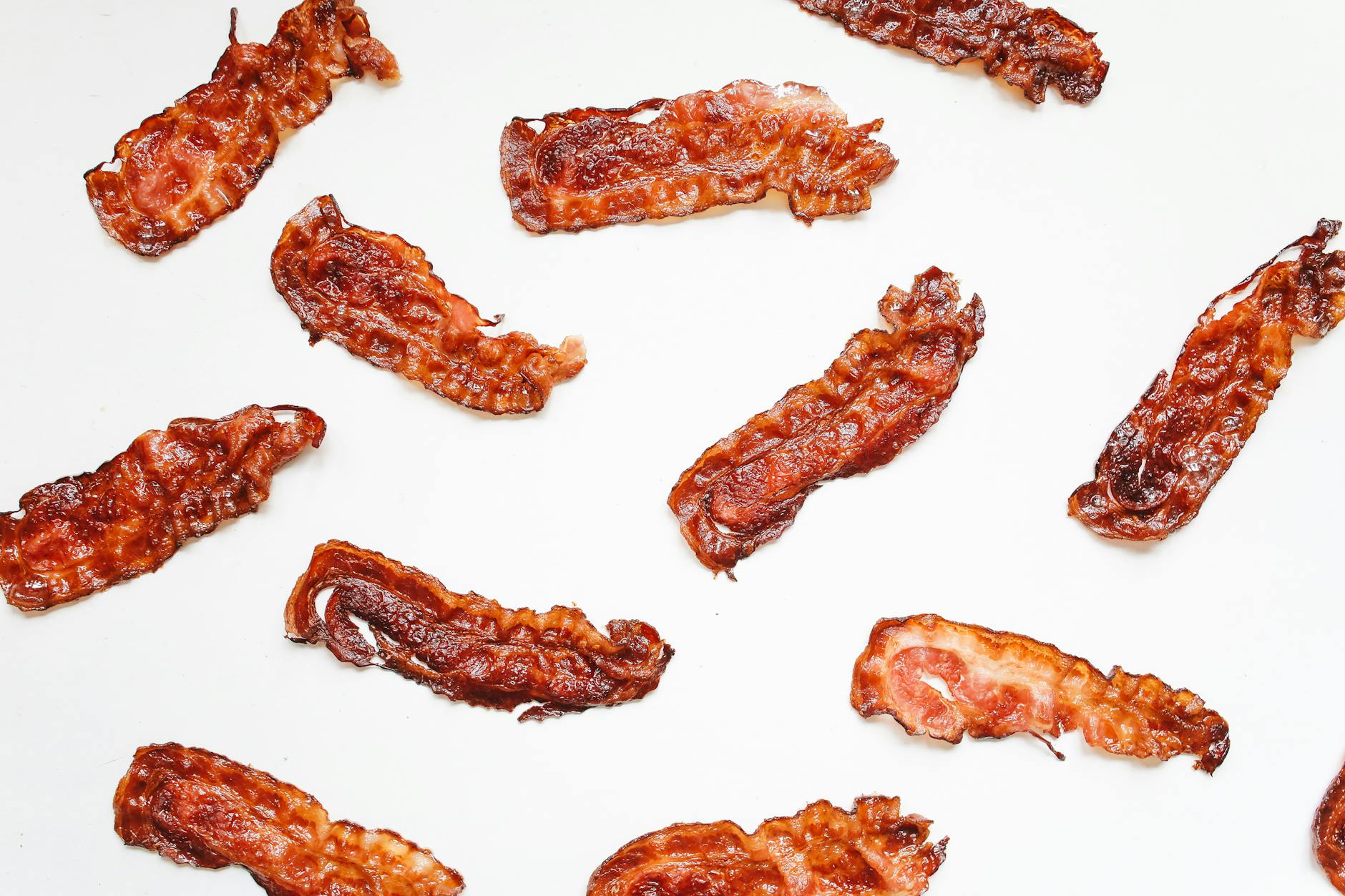
Bacon is one of the most popular breakfast foods in the world, but it is also one of the most heavily studied processed meats in nutrition research. Many health organizations caution that frequent consumption of processed pork products may be linked to higher risks of certain diseases, including colorectal cancer.
The concern is not about bacon alone, but about how it is processed. Smoking, curing, and the addition of nitrates or nitrites can create compounds such as nitrosamines when exposed to high heat. These compounds are the reason processed meats are often recommended only in moderation.
Traditional Cured Pork Bacon
bacon is the most widely consumed type of bacon and the one most frequently discussed in nutrition research.
Traditional cured pork bacon is typically preserved using sodium nitrite, salt, and smoke flavoring. During high-heat cooking, these ingredients can form potentially harmful compounds.
When eaten frequently, processed meats like this have been associated in multiple studies with increased colorectal cancer risk.
While occasional consumption is common in many diets, health experts generally recommend limiting intake.
The high sodium and saturated fat content also contribute to other long-term health concerns when consumed regularly.
Maple Cured Bacon
Maple cured bacon is often perceived as a “sweet” alternative, but it is still fundamentally a processed pork product.
bacon labeled as maple cured typically contains added sugars along with traditional curing agents.
The combination of sugar and nitrites can increase the formation of harmful compounds when cooked at high temperatures.
Many consumers mistakenly believe flavored bacon is healthier, when in reality it often contains similar or even higher levels of additives.
Frequent consumption may contribute to the same long-term risks associated with processed meats in general.
Thick-Cut Smoked Bacon
Thick-cut smoked bacon is popular in diners and breakfast restaurants because of its hearty texture and strong flavor.
bacon that is heavily smoked often contains higher levels of polycyclic aromatic hydrocarbons (PAHs), compounds that can form during smoking processes.
The thicker cut also means longer cooking times, which can further increase exposure to high-temperature byproducts.
While many people prefer its texture, it remains a heavily processed meat product.
Health concerns are not necessarily about a single serving, but rather frequent long-term intake.
Pre-Cooked Microwave Bacon
Pre-cooked bacon is designed for convenience, but it often contains additional preservatives and stabilizers to extend shelf life.
bacon in pre-cooked form may also include added sodium and flavor enhancers to maintain taste after reheating.
Because it is typically reheated quickly in microwaves, uneven heating can sometimes intensify the formation of certain compounds.
While convenient, it is still classified as a processed meat and carries similar nutritional concerns as traditional bacon.
Many consumers rely on it for speed rather than health benefits.
Several concerns often associated with processed bacon include:
- High sodium levels
- Nitrite and nitrate preservatives
- Smoke-related compounds
- High saturated fat content
These factors contribute to long-term dietary risks when consumption is frequent.
Healthier Alternative Turkey Bacon
turkey bacon is often chosen as a lower-fat alternative to traditional pork bacon.
It generally contains less saturated fat and fewer calories per serving.
However, it can still be processed and may contain similar preservatives depending on the brand.
Many consumers use it as a substitute in breakfast sandwiches or salads.
While not perfect, it is often considered a slightly lighter option.
Plant-Based Bacon Alternatives
plant-based bacon products are made from ingredients like soy, tempeh, coconut, or wheat gluten.
These alternatives avoid pork and typically eliminate nitrite-based curing agents.
Some versions are designed to replicate smoky flavor using natural seasonings instead of traditional smoking methods.
Nutritionally, they vary widely but often contain less saturated fat.
They have become increasingly popular among vegetarians and flexitarians.
Canadian Bacon
Canadian bacon is made from lean pork loin rather than fatty belly cuts.
Because it is leaner, it generally contains less fat than traditional bacon strips.
It is also often less heavily smoked or cured, depending on preparation methods.
Many people use it as a lower-fat protein option in breakfast dishes or sandwiches.
While still a processed meat, it is often viewed as a comparatively lighter choice.
Why Processed Meats Are a Concern
Processed meats are linked to health risks primarily due to:
- Chemical preservatives used in curing
- High-temperature cooking byproducts
- High sodium intake
- Long-term dietary patterns
Moderation is key in dietary recommendations.
Conclusion
Traditional pork bacon, maple cured bacon, thick-cut smoked bacon, and pre-cooked microwave bacon all fall into categories of processed meats that health experts recommend limiting due to potential long-term risks. Meanwhile, turkey bacon, plant-based alternatives, and Canadian bacon offer comparatively lighter options that many consumers choose when trying to reduce fat, sodium, or processed meat intake. Balanced consumption remains the most important factor for long-term dietary health.



Leave a Reply