
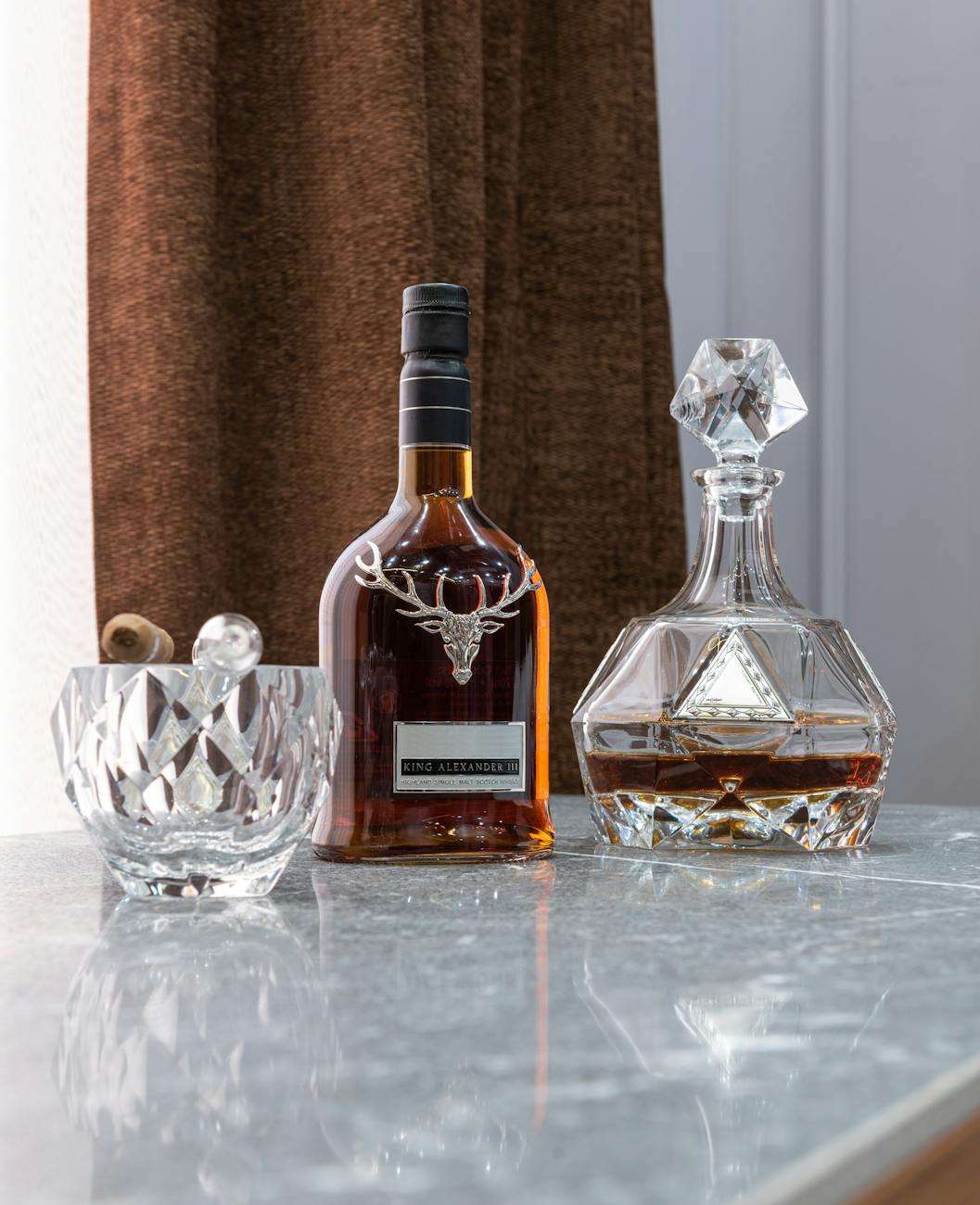
Whiskey varies widely in quality, from carefully crafted small-batch spirits to mass-produced bottles designed primarily for mixing. While personal taste plays a big role, some widely available whiskeys are often criticized by enthusiasts for harsh flavor profiles, heavy artificial sweetness, or lack of depth.
It’s also worth noting that “low quality” doesn’t always mean undrinkable—it often means the spirit is better suited for mixing rather than sipping neat. For those exploring better options, there are also non-alcoholic alternatives that aim to replicate whiskey-like flavor without the alcohol.
Seagram’s 7 Crown
Seagram’s 7 Crown is a widely available blended whiskey known for its affordability and smooth marketing appeal, but it is often described by whiskey enthusiasts as thin in flavor. It tends to be light-bodied with minimal complexity.
Much of its use is in mixed drinks, where stronger ingredients like cola or soda mask its simplicity. On its own, it can come across as one-dimensional, with a muted grain profile and short finish.
For those looking for more depth, reviewers often suggest upgrading to small-batch bourbons or exploring non-alcoholic whiskey-style spirits that focus on flavor complexity without alcohol.
Canadian Mist
Canadian Mist is a budget-friendly Canadian whisky that is frequently criticized for its light and somewhat watery profile. It is designed for easy mixing rather than sipping experience.
While smooth, it often lacks the oak depth and spice notes associated with higher-end Canadian whiskies. As a result, it tends to disappear in cocktails without contributing much character.
Many enthusiasts recommend stepping up to richer Canadian blends or exploring alcohol-free alternatives that mimic barrel-aged flavors using botanical extracts.
Fireball Cinnamon Whisky
Fireball Cinnamon Whisky is one of the most recognizable flavored whiskey products, known for its intense cinnamon sweetness. While popular in party settings, it is often criticized by traditional whiskey drinkers.
The strong artificial spice profile tends to overpower any natural whiskey character. It is more accurately described as a flavored spirit than a traditional whiskey experience.
For those who enjoy cinnamon flavors, non-alcoholic spiced beverages or craft sodas can offer similar warmth without the intensity of added alcohol.
Early Times Bourbon
Early Times Bourbon has a long history, but modern versions are often described as inconsistent in quality compared to premium bourbons. It is typically positioned at an entry-level price point.
Flavor notes are often reported as sharp or overly simple, with limited complexity in aging character. While usable in cocktails, it is less favored for neat sipping.
Consumers seeking more refined experiences often look toward higher-aged bourbons or non-alcoholic whiskey alternatives that emphasize barrel-inspired flavor without harshness.
Alberta Premium
Alberta Premium is a rye whisky that has gained attention for its affordability, but opinions on its quality vary. Some describe it as sharp or overly grain-forward, especially when consumed without mixers.
Its bold rye spice can feel unbalanced compared to more polished rye whiskies, particularly for those expecting smoother finishes. However, it is often used in cocktails where other ingredients soften its edges.
For a more balanced experience, some drinkers prefer higher-aged rye whiskies or alcohol-free spirits designed to replicate oak and spice complexity.
Common critiques of lower-tier whiskey options include:
- Limited flavor depth or aging character
- Overly sweet or artificial flavoring
- Harsh alcohol burn in neat servings
- Designed primarily for mixing rather than sipping
CONCLUSION
Not all whiskeys are designed for premium sipping experiences, and many widely available bottles prioritize affordability and mixing versatility over complexity. Understanding these differences can help consumers set expectations and choose products that better match their preferences.
For those seeking alternatives, both higher-quality spirits and non-alcoholic whiskey-style beverages offer more nuanced flavor experiences without relying on lower-tier options.



Leave a Reply