
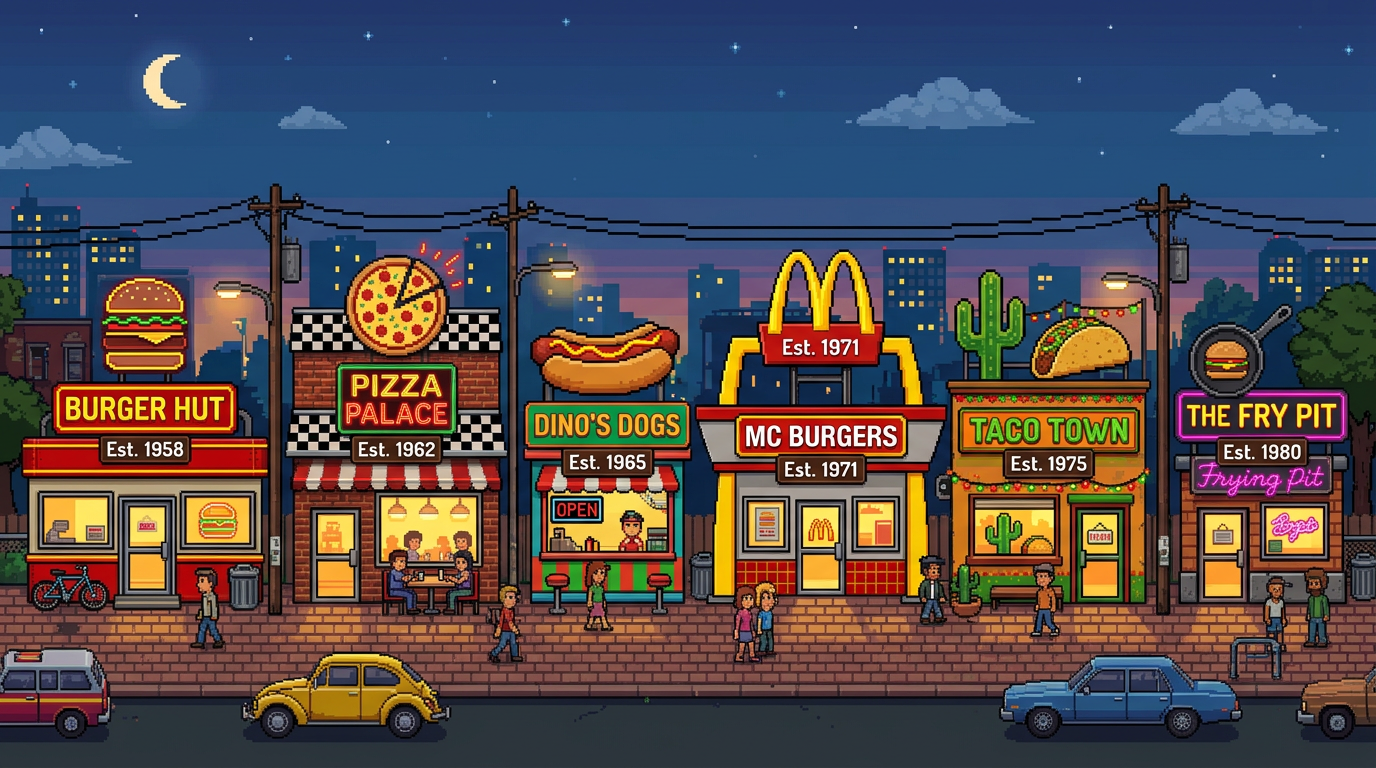
McDonald’s is often viewed as the company that defined modern fast food. Its global reach, recognizable branding, and efficient service model helped transform the restaurant industry forever.
However, McDonald’s was not the first major fast food chain in America. Several restaurants were already serving quick, affordable meals decades before the Golden Arches became famous.
Many of these older chains helped pioneer concepts like counter service, standardized menus, and franchising. Some still operate today, while others exist mostly as regional favorites or nostalgic brands.
WHITE CASTLE
White Castle was founded in 1921, making it one of the oldest fast food hamburger chains in the United States. Long before McDonald’s expanded nationally, White Castle was already serving inexpensive burgers through a streamlined system.
The chain became famous for its small square sliders and efficient production methods. It also helped improve public perception of hamburgers during a time when ground beef quality worried many consumers.
White Castle emphasized cleanliness and consistency decades before those ideas became standard in fast food. Many historians consider it one of the true pioneers of the industry.
A&W RESTAURANTS
A&W Restaurants began in 1919 and originally became known for its root beer stands. Customers could drive up, order quickly, and enjoy food without formal restaurant service.
Over time, the chain expanded into burgers, hot dogs, and fries. Its drive-in service model heavily influenced later fast food concepts.
A&W also became one of the first restaurant franchises in America. That business approach would later become central to the success of chains like McDonald’s.
KRYSTAL
Krystal was founded in 1932 and developed a strong following throughout the American South. Like White Castle, it became known for small square burgers served quickly and cheaply.
The chain focused on affordability during the Great Depression, which helped it grow rapidly. Its simple menu and efficient kitchen setup mirrored many strategies later adopted across the fast food industry.
Krystal’s branding and burger style often draw comparisons to White Castle. Despite regional competition, it has maintained loyal customers for generations.
KFC
KFC traces its origins to the 1930s when Colonel Harland Sanders began serving fried chicken from a roadside restaurant. The company predates McDonald’s national rise by many years.
KFC became revolutionary because it standardized fried chicken preparation across franchise locations. This allowed customers to expect similar flavor no matter where they ordered.
The chain also helped prove that fast food could expand beyond hamburgers. Its success opened the door for more specialized restaurant concepts nationwide.
CARL’S JR.
Carl’s Jr. started in 1941 as a hot dog cart before expanding into burgers and larger restaurant locations. The chain quickly embraced automobile culture and roadside convenience.
Its growth reflected changing American dining habits during the rise of suburban car travel. Fast, portable meals became increasingly popular with drivers and commuters.
Carl’s Jr. also adopted aggressive franchising and advertising strategies early on. These approaches helped it compete during the explosive growth of postwar fast food culture.
WHAT MADE THESE CHAINS IMPORTANT
Several early fast food chains helped establish practices still used today:
- Standardized menus and recipes
- Fast counter service
- Drive-in or drive-thru ordering
- Franchising business models
- Consistent branding across locations
These innovations shaped the modern restaurant industry long before McDonald’s became dominant.
CONCLUSION
While McDonald’s became the most globally recognizable fast food chain, it was far from the first. Older companies like White Castle, A&W, and KFC helped establish the systems and ideas that transformed quick-service dining in America.
Their influence can still be seen in modern restaurants today. From franchising to standardized menus, these early chains laid the groundwork for the fast food industry as it exists now.




Leave a Reply