
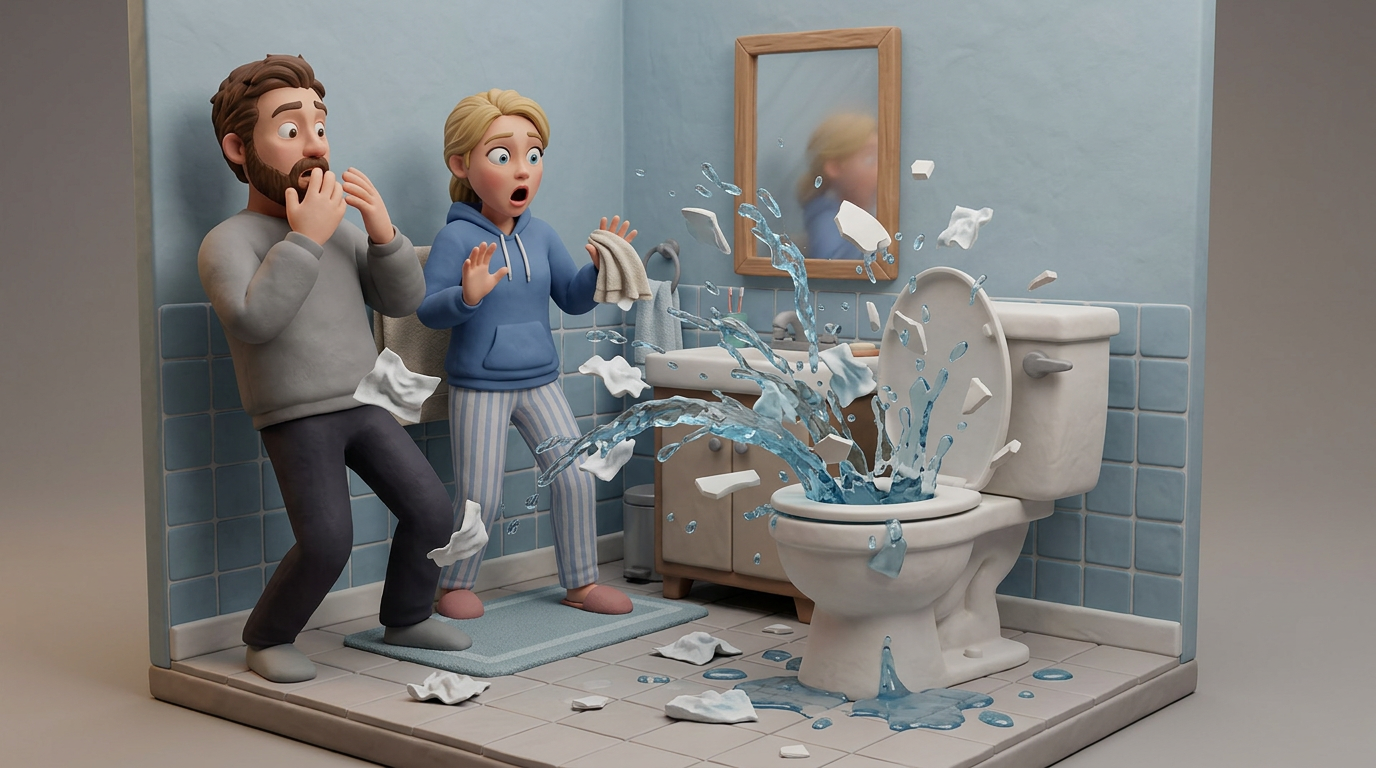
Many products labeled as “flushable” are marketed as safe for toilets and sewer systems. However, plumbers and wastewater experts frequently warn that these wipes do not break down nearly as fast as standard toilet paper.
Over time, these materials can collect in pipes, trap grease, and contribute to expensive plumbing repairs. Even newer plumbing systems can struggle when wipes are flushed regularly.
Baby Wipes Labeled As Flushable
Some baby wipes are advertised as safe for flushing, but they are often much thicker and stronger than toilet paper. Their durability makes them useful for cleaning, but it also means they resist breaking apart in water.
Instead of dissolving quickly, the wipes may bunch together inside pipes. Over time, they can create clogs that slow drainage and increase pressure within plumbing systems.
These wipes are especially problematic in older homes with narrower pipes. Even a few flushed wipes each week can gradually contribute to buildup.
Disinfecting Bathroom Wipes
Disinfecting wipes are designed to stay intact while scrubbing surfaces, which makes them particularly dangerous for plumbing systems. Their fibers are usually much tougher than materials meant to dissolve in water.
Many people mistakenly flush them after cleaning toilets or bathroom surfaces. Once inside pipes, the wipes can snag on rough areas or tree roots and begin collecting debris.
Common plumbing warning signs include:
- Slow draining toilets
- Frequent backups
- Gurgling sounds in pipes
- Unpleasant sewer odors
Ignoring these signs can lead to larger blockages that require professional removal.
Personal Hygiene Wipes
Personal hygiene wipes are commonly marketed as gentler alternatives to toilet paper. While some carry “flushable” labels, many still take far too long to break down properly.
The problem becomes worse when multiple wipes are flushed at once. Unlike toilet paper, they often stay mostly intact as they travel through household pipes.
In septic systems, these wipes can also interfere with proper waste breakdown. This may increase maintenance needs and shorten the lifespan of the system.
Makeup Removal Wipes
Makeup wipes contain fibers and cleansing ingredients that are not designed for sewer systems. They may appear thin, but they are surprisingly resistant to tearing apart in water.
Many makeup wipes also contain oils and chemical residues that can combine with grease inside pipes. This sticky mixture may contribute to stubborn blockages over time.
Some of the biggest risks from flushing wipes include:
- Pipe clogs
- Sewer line backups
- Septic tank problems
- Expensive plumbing repairs
Even occasional flushing can gradually create buildup in household plumbing systems.
Cleaning Wipes For Floors And Surfaces
Heavy-duty cleaning wipes are among the worst items to flush. These products are engineered for strength and moisture retention, making them extremely slow to disintegrate.
When flushed, they can become tangled with hair, grease, and other waste materials. Large clumps may eventually form blockages that affect not only homes but municipal sewer systems as well.
In some cities, massive sewer obstructions known as “fatbergs” have been linked to flushed wipes and grease accumulation. These blockages can damage infrastructure and increase wastewater maintenance costs.
Disposing of cleaning wipes in the trash instead of the toilet is generally the safest option. It helps reduce stress on both household plumbing and public sewer systems.
Conclusion
Many so-called flushable wipes are far more durable than toilet paper, which makes them risky for home plumbing systems. Their slow breakdown rate can lead to clogs, backups, and costly repairs over time.
Paying attention to product materials and disposal instructions can help prevent unnecessary plumbing issues. In most cases, throwing wipes in the trash is the safer and more reliable choice.




Leave a Reply