
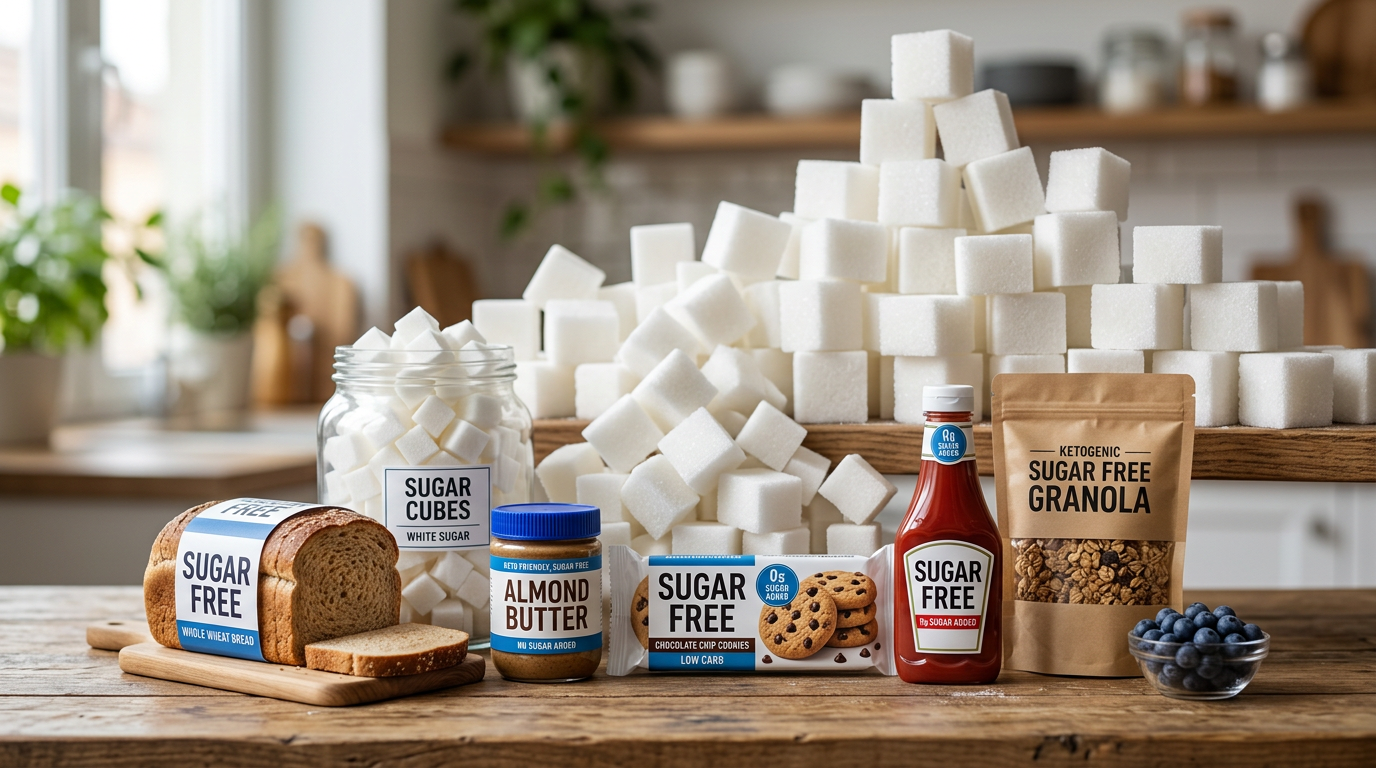
Many products marketed as “sugar-free” can give a misleading sense of safety when it comes to blood sugar control. While they may contain no added table sugar, they often include refined carbohydrates, sugar alcohols, or starches that still break down into glucose. That means your body can experience a blood sugar spike even when the label looks reassuring.
Understanding these hidden effects is especially important for people trying to manage energy levels, cravings, or metabolic health. The following foods are common examples of “sugar-free” or “no sugar added” items that may still cause noticeable blood sugar changes.
Sugar-Free Flavored Yogurt
Sugar-free flavored yogurt is often sweetened with artificial sweeteners or sugar alcohols, but it still contains lactose, a natural milk sugar. Depending on the brand, it may also include thickeners and fruit purees that increase carbohydrate content.
Even though it seems like a smart snack choice, the protein-to-carb ratio can still lead to a glucose rise. Many people are surprised when their blood sugar responds similarly to regular yogurt.
Some versions also include:
- Modified starches for texture
- Fruit concentrates for flavor
- “Light” sweeteners that still impact digestion
These additions can collectively raise the glycemic impact more than expected.
Rice Cakes
Rice cakes are often labeled as healthy, low-calorie, and sometimes even sugar-free. However, they are made almost entirely from refined rice, which is rapidly digested into glucose.
Because they lack fiber, fat, or protein, rice cakes can cause a quick spike followed by a drop in energy. This makes them less stable for blood sugar than many people assume.
Even when topped with “healthy” spreads like nut butter, the base food itself remains highly processed. Eating them alone is especially likely to cause a sharp response.
Sugar-Free Protein Bars
Sugar-free protein bars are heavily marketed as fitness-friendly snacks, but their ingredients can still affect blood sugar. Many use sugar alcohols like maltitol, which can partially convert into glucose.
Others rely on refined starches or fiber blends that don’t behave like whole-food fiber in the body. This means the label can be misleading.
Common ingredients in these bars include:
- Maltitol or sorbitol
- Processed whey protein isolates
- Tapioca or rice syrups disguised as “fiber blends”
- Low-glycemic sweeteners that still affect insulin response
Despite the “sugar-free” label, the overall carbohydrate load can still trigger a rise in blood sugar.
Instant Oatmeal Packets
Instant oatmeal packets often appear wholesome, especially when labeled sugar-free or low sugar. However, they are typically made from finely processed oats that digest faster than steel-cut or whole oats.
The processing increases their glycemic impact, even without added sugar. Some flavored versions also include maltodextrin or dried fruit pieces that add extra fast-digesting carbs.
A simple bowl of instant oats can therefore behave more like a refined carbohydrate snack than a slow-release breakfast.
No Sugar Added Fruit Juice
“No sugar added” fruit juice can be one of the most deceptive items in the grocery store. While it avoids added sweeteners, it still contains concentrated natural fruit sugars with very little fiber.
Without fiber to slow absorption, the sugars enter the bloodstream quickly. This can lead to a spike similar to soda in some cases.
Common examples include:
- Apple juice
- Grape juice
- Orange juice concentrates
- Blended fruit juice cocktails
Even though it sounds healthy, the lack of whole fruit structure makes it metabolically closer to a fast-absorbing sugar source.



Leave a Reply