
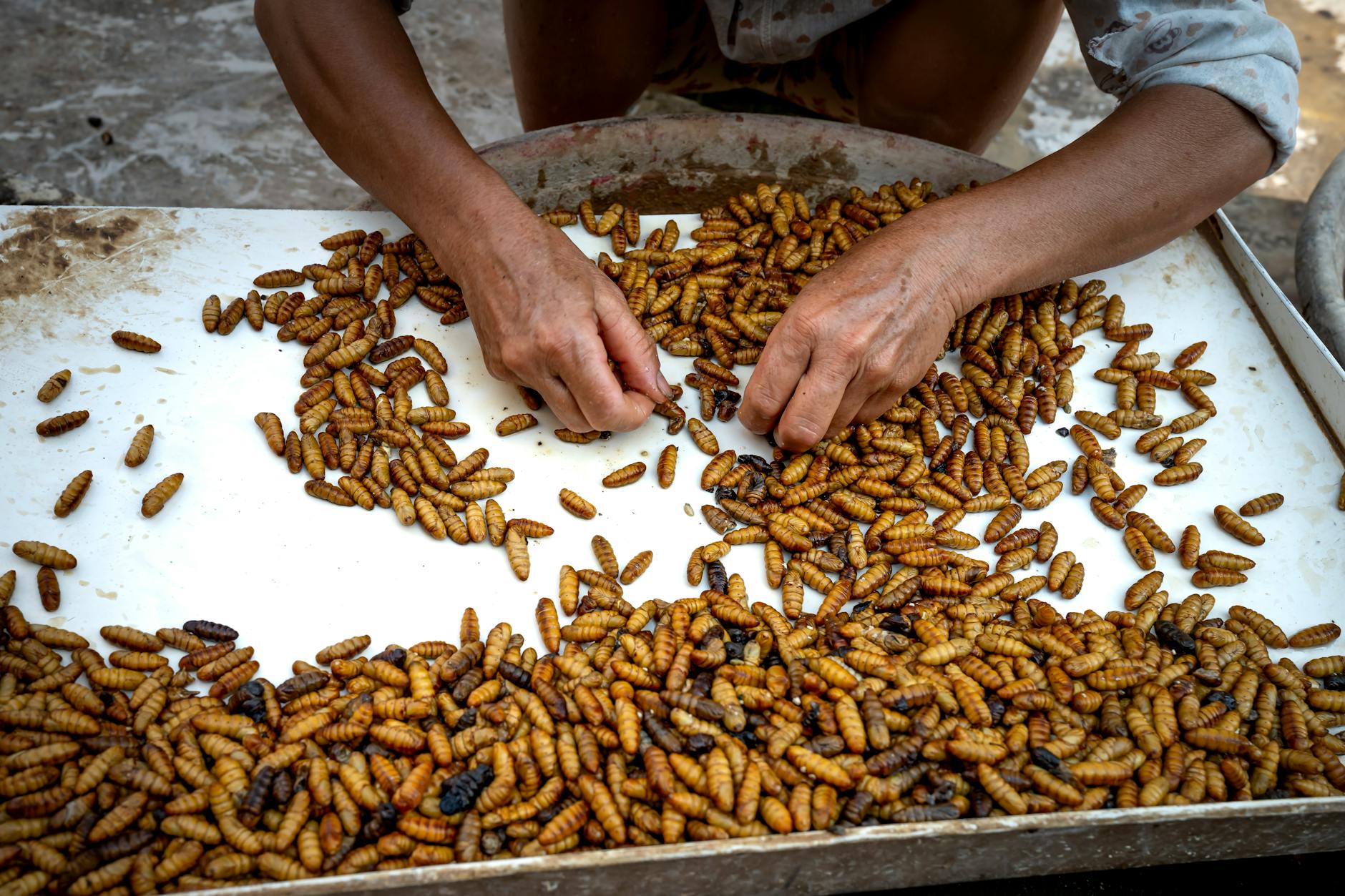
It may sound surprising, but insects and insect-derived ingredients are more common in everyday foods than most people realize. In many cases, these ingredients are approved for use and fall within safety guidelines set by agencies like the U.S. Food and Drug Administration.
In the world of food science, small amounts of insect material can enter food naturally during harvesting or be intentionally used for coloring or processing. While this might seem unusual, it’s considered safe and even normal in many global food systems.
Chocolate
Chocolate products can legally contain small amounts of insect fragments. This typically happens during the harvesting and processing of cacao beans.
Because cacao is grown outdoors, complete elimination of natural contaminants is nearly impossible. Regulatory agencies set acceptable limits to ensure safety.
Peanut Butter
Peanut butter is another product where trace insect fragments may be present. This is due to the way peanuts are grown and processed in large quantities.
Strict guidelines ensure that these levels remain safe for consumption. Most people consume these products regularly without any awareness of it.
Canned Tomatoes
Canned and processed tomatoes may contain tiny amounts of insect material. This can occur during harvesting when insects are present on the plants.
The processing system removes most contaminants, but trace levels can remain. These are regulated to remain within safe limits.
Coffee
Coffee beans are grown in open environments where insects are naturally present. During processing, small fragments can occasionally make their way into the final product.
This is considered a normal part of agricultural production. It does not affect the safety or quality of the coffee when within regulated limits.
Broccoli
Broccoli and other leafy vegetables can harbor tiny insects in their florets. Even with thorough washing, some may remain.
This is not unique to broccoli but common across many fresh vegetables. Proper cooking and cleaning reduce exposure further.
Spinach
Spinach is another leafy green that may contain small insects from the field. These are often removed during washing and packaging.
However, trace amounts can still be present. This is considered acceptable within food safety standards.
Fig Products
Figs have a unique pollination process involving tiny wasps. During development, these wasps break down naturally within the fruit.
The result is a completely edible product, but the origin surprises many people. This is a natural biological process rather than contamination.
Red Food Coloring (Carmine)
Some red food colorings are made from crushed cochineal insects. This ingredient is known as carmine and is used in candies, drinks, and desserts.
It provides a vibrant red hue that is difficult to replicate naturally. It must be labeled clearly on ingredient lists in many countries.
Mushrooms
Mushrooms are grown in controlled environments but can still include small insect presence. Their organic growing conditions make this possible.
Processing removes most of these elements, but trace levels can remain. This is part of normal agricultural variation.
Wheat Flour
Wheat flour may contain tiny insect fragments from grain storage and processing. Grains are stored in large silos where insects can occasionally be present.
Modern milling processes reduce contamination significantly. Still, trace amounts are considered unavoidable and safe.
Frozen Berries
Frozen berries can sometimes include small insects that were present during harvesting. Washing and freezing remove most, but not all, of these elements.
This is especially true for berries grown in open fields. Food safety standards regulate acceptable levels.
Apple Juice
Apple juice production involves crushing large quantities of fruit. During this process, small insects on the fruit may be included.
Filtration removes most impurities, but trace remnants can remain. These are monitored to ensure safety.
Pasta
Dry pasta made from wheat can also contain trace insect fragments. This is linked to the grain supply chain rather than the pasta-making process itself.
As with flour, these levels are tightly controlled. They are considered safe and unavoidable in large-scale production.
- Trace insect presence is common in agricultural products
- Regulatory agencies set strict safety limits
- Most contamination occurs during harvesting and storage
- Processing removes the vast majority of insect material
- These traces are considered safe for consumption
Why This Happens in Food Production
Modern agriculture involves growing, harvesting, and processing massive quantities of food in natural environments. Because insects are part of these ecosystems, complete removal is nearly impossible.
That’s why food safety systems focus on acceptable limits rather than total elimination. These standards are based on scientific research and long-standing industry practices.
Conclusion
The idea of insects in food may seem surprising at first, but it’s a normal part of large-scale food production. In most cases, the amounts are so small that they go unnoticed and pose no health risk.
Understanding how food is grown and processed helps put these facts into perspective. It’s another reminder that “natural” foods often come with elements we don’t always see.



Leave a Reply