
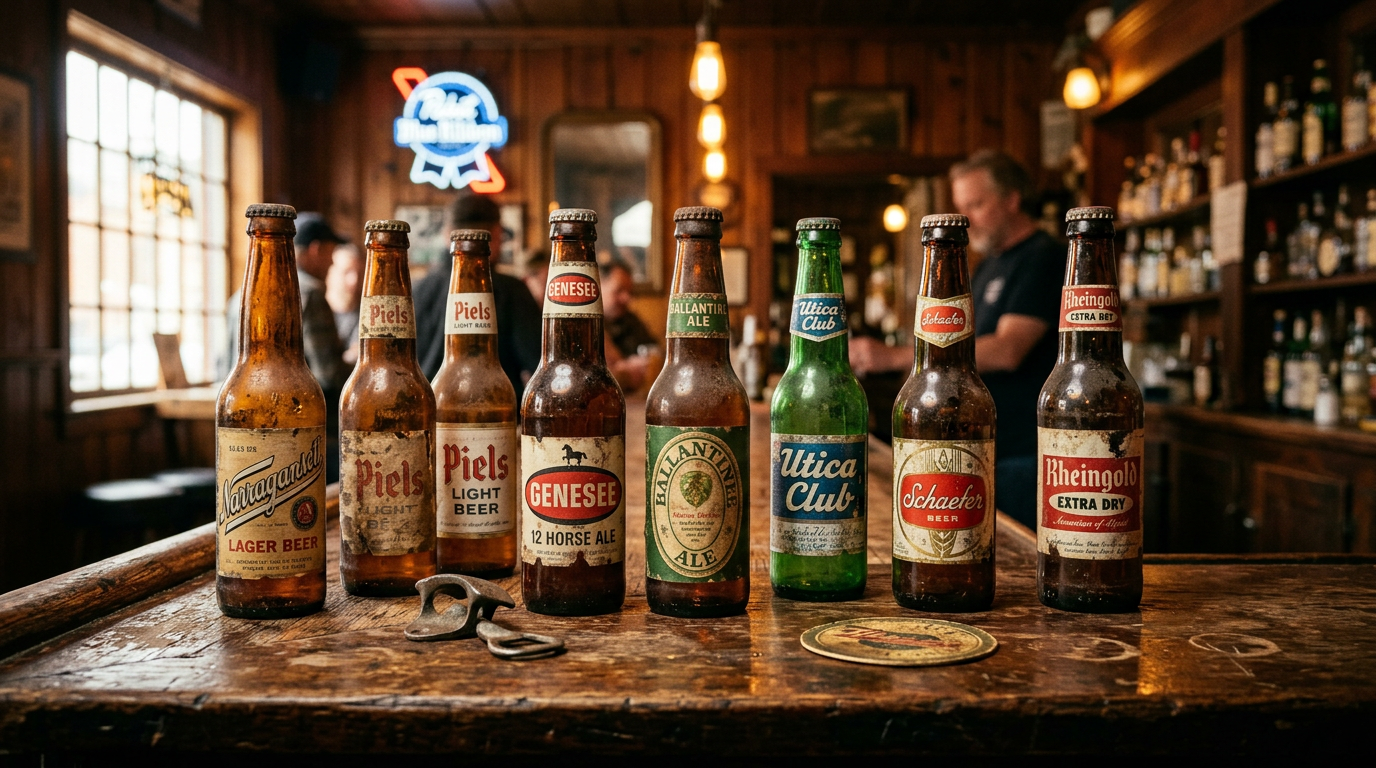
There’s something nostalgic about old beer brands—especially the ones your dad or grandfather might mention in stories from decades past. Many of these beers were once household names, tied to working-class culture, neighborhood bars, and Friday night dinners.
Over time, changing ownership, shifting tastes, and industry consolidation pushed many of these labels out of existence. Some were absorbed into larger companies, while others disappeared entirely from shelves.
Falstaff Beer
Falstaff Beer was once one of the largest independent breweries in the United States. It built a strong reputation in the mid-20th century for being affordable and widely available.
Despite its popularity, the brand gradually declined as national competitors expanded. Today, Falstaff exists more as a memory than a mainstream beer option, even though small revival attempts have surfaced.
Meister Brau
Meister Brau played a surprisingly important role in beer history, especially as a precursor to modern light beer. It was a regional Chicago favorite before undergoing major corporate changes.
The brand was eventually phased out after its assets were used to create Miller Lite. While its influence remains, Meister Brau itself disappeared from store shelves decades ago.
Ballantine IPA
Ballantine IPA was once a bold, hop-forward beer that stood out in an era dominated by lighter lagers. It was produced by the historic P. Ballantine and Sons Brewing Company.
Although the brand name has seen limited revivals, the original formulation your dad might remember is long gone. Its disappearance marked the end of a distinctive American IPA tradition.
Rheingold Beer
Rheingold Beer was especially popular in New York City during the mid-1900s. It became a cultural staple, heavily advertised and widely consumed across the Northeast.
The brand struggled to survive industry consolidation and eventually faded from regular production. While it has appeared in small revival runs, it no longer holds the market presence it once did.
Gablinger’s Beer
Gablinger’s Beer is often credited as one of the earliest attempts at a low-calorie beer in the United States. It was developed during a time when drinkers were beginning to look for lighter options.
The brand itself never achieved lasting commercial success and eventually disappeared. However, its recipe and concept influenced later successful light beers.
Burgermeister Beer
Burgermeister Beer was once a well-known West Coast brand, especially popular in California bars and households. It had a strong regional identity and memorable advertising campaigns.
Over time, corporate consolidation led to its decline and eventual discontinuation. Today, it survives mostly in vintage signage and nostalgic recollections.
- Many legacy beers were absorbed into larger brewing corporations
- Regional favorites often disappeared during national expansion
- Early light beer experiments shaped modern beer categories
- Advertising played a major role in mid-century beer popularity
- Some discontinued brands still appear in limited revival runs
These forgotten beers reflect a very different era of American drinking culture, when local breweries defined regional identity. While they may no longer fill store shelves, their influence still lingers in today’s beer landscape.
For many, they represent more than just drinks—they’re part of family memories, old stories, and a changing industry that never stands still.

Leave a Reply