
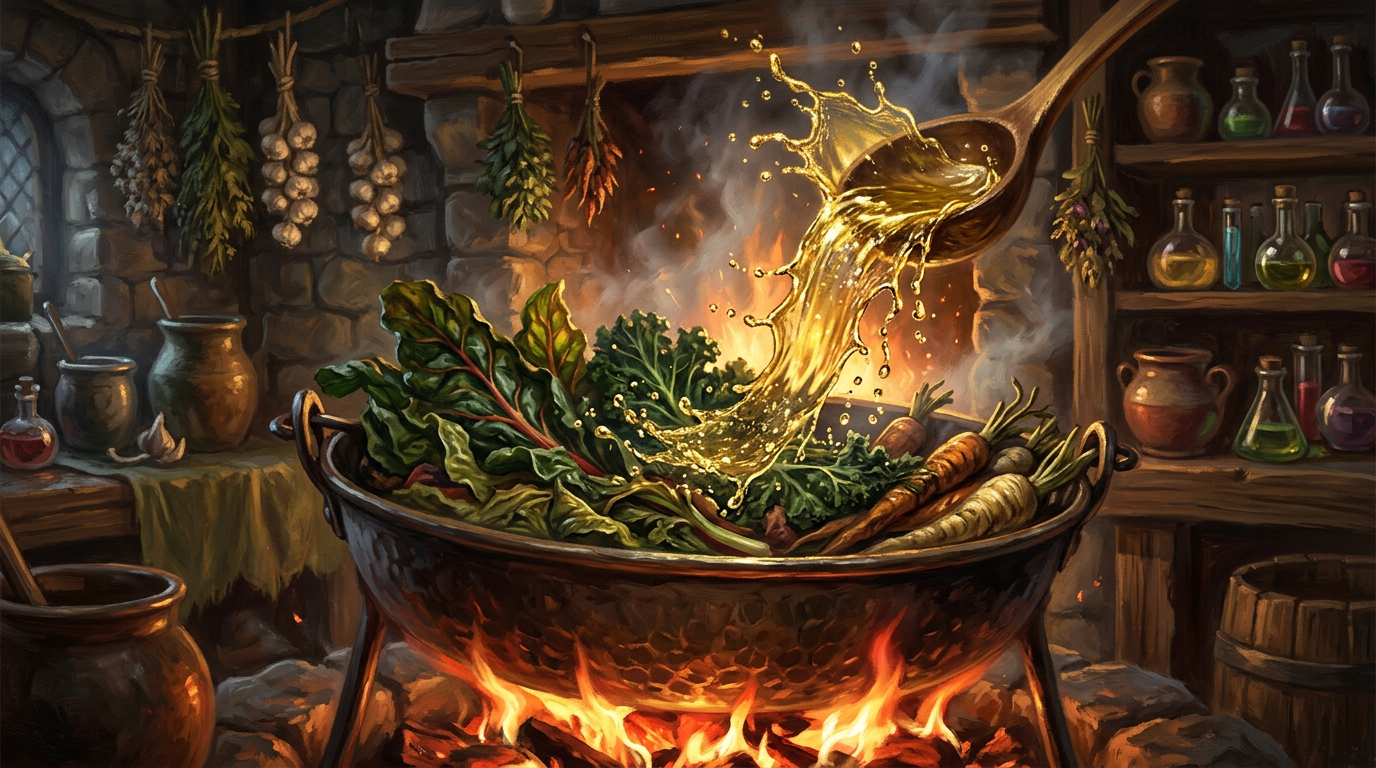
Cooking vegetables seems simple, but the oil you choose can significantly impact both flavor and nutrition. Some oils break down under heat, while others overpower delicate vegetables or create undesirable textures. Choosing the wrong oil can turn a healthy dish into something less enjoyable or less beneficial.
Understanding which oils don’t pair well with vegetables can help you get better results in the kitchen.
Flaxseed oil
Flaxseed oil is often praised for its nutritional benefits, but it is not suitable for cooking. It has an extremely low smoke point and can degrade quickly when exposed to heat.
Using it on hot vegetables can lead to a bitter taste and loss of nutrients. It’s better reserved for cold applications like dressings.
Extra virgin olive oil at High Heat
Extra virgin olive oil is a kitchen staple, but it’s not ideal for very high-heat cooking. When overheated, it can begin to break down and produce off flavors.
While excellent for sautéing at moderate temperatures or finishing dishes, it may not perform well for roasting at very high heat. Choosing a higher smoke point oil can yield better results.
Butter
Butter is commonly used for flavor, but it burns quickly due to its low smoke point. When used alone on vegetables at high heat, it can scorch easily.
This can create a bitter taste and uneven cooking. Combining it with a more stable oil is often a better approach.
Unrefined coconut oil
Unrefined coconut oil has a distinct flavor that doesn’t always complement vegetables. Its strong coconut taste can overpower more subtle ingredients.
Additionally, it has a moderate smoke point that may not suit all cooking methods. This makes it less versatile for vegetable dishes.
Sesame oil (Toasted)
Sesame oil, especially the toasted variety, is highly flavorful but not ideal for primary cooking. Its intense taste can dominate a dish if used in large amounts.
It also has a relatively low smoke point compared to neutral oils. It’s best used as a finishing oil rather than for cooking vegetables from start to finish.
Walnut oil
Walnut oil is delicate and prone to going rancid when exposed to heat. Its low smoke point makes it unsuitable for roasting or frying vegetables.
When heated, it can develop a bitter flavor. Like flaxseed oil, it’s better used in cold dishes.
Why Oil Choice Matters When Cooking Vegetables
Vegetables often have subtle flavors that can be easily overwhelmed or altered by the wrong oil. The cooking process itself also affects how oils behave.
Key factors to consider include:
- Smoke point and heat stability
- Flavor intensity and compatibility
- Nutrient preservation during cooking
- Risk of burning or bitterness
- Overall texture of the finished dish
Choosing the right oil enhances both taste and nutrition. The wrong one can do the opposite.
Better Alternatives for Cooking Vegetables
If you want consistent results, selecting oils suited for your cooking method is essential. Neutral and heat-stable options often work best.
Good choices include:
- Avocado oil for high-heat roasting
- Refined olive oil for sautéing
- Grapeseed oil for neutral flavor
- Canola oil for versatility
- Light vegetable oil for even cooking
These oils provide stability and balance. They allow vegetables to shine without interference.
Conclusion
Not all oils are created equal when it comes to cooking vegetables. Some break down under heat, while others overpower or distort natural flavors.
By understanding which oils to avoid and which to use instead, you can improve both the taste and quality of your dishes. A simple change in oil can make a noticeable difference.6 Oils You Shouldn’t Use On Vegetables



Leave a Reply