
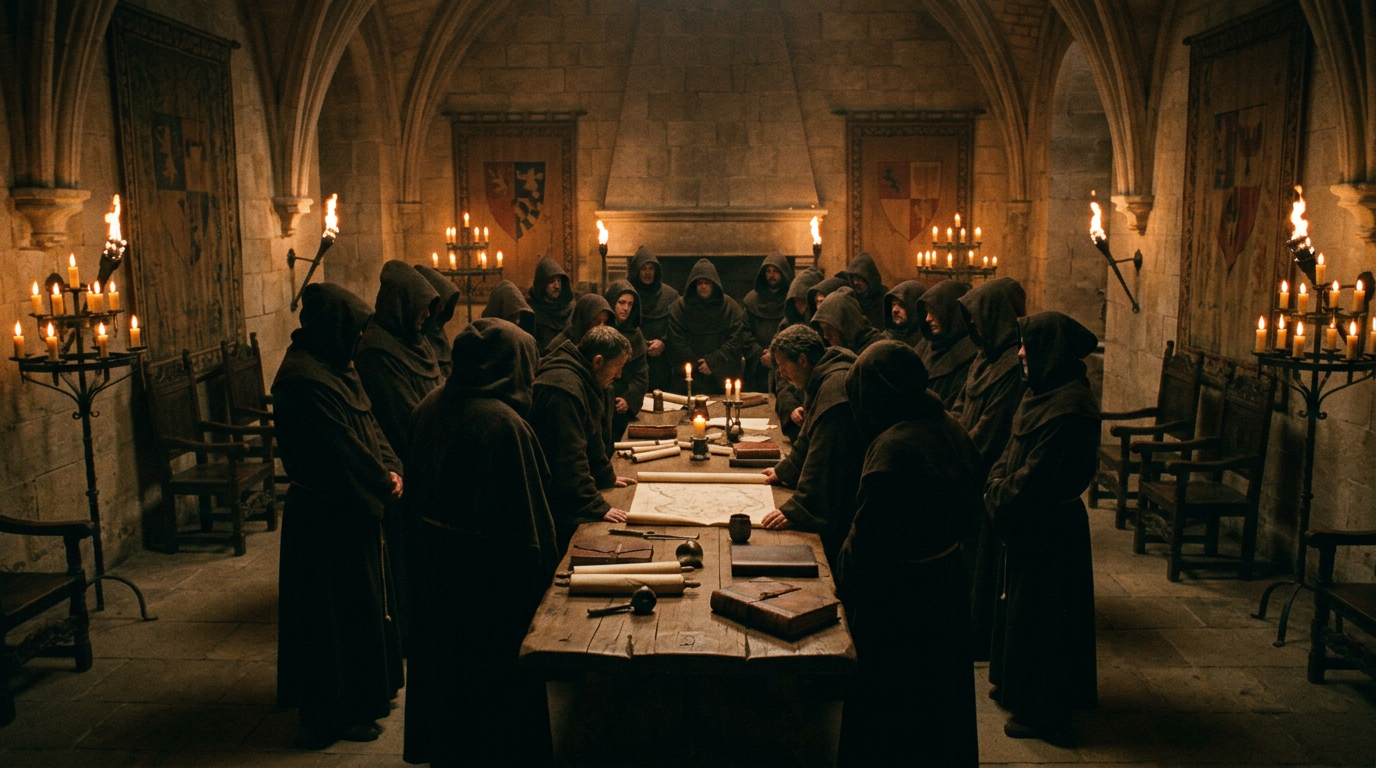
Secret societies have long captured public imagination, blending history, ritual, and mystery. While many groups are exaggerated in popular culture, several long-standing fraternal and initiatory organizations still exist today in various forms. Some operate openly as social or philosophical societies, while others maintain a level of privacy around their traditions and membership.
What makes these groups interesting is not necessarily secrecy itself, but their longevity and continued cultural influence across centuries.
Freemasonry
Freemasonry is one of the oldest and most widely recognized fraternal organizations in the world. Its modern form developed in the early 17th and 18th centuries, though it draws on earlier guild traditions.
It is known for symbolic rituals, moral teachings, and lodge-based membership. While not truly “secret,” many of its ceremonies and practices are reserved for members.
Freemasonry has influenced architecture, politics, and philanthropy throughout history. Despite speculation, it operates as a structured fraternal organization in most countries.
Rosicrucian Order
Rosicrucian Order is an esoteric movement that emerged in Europe in the early 17th century. It is associated with mystical philosophy, symbolism, and spiritual enlightenment teachings.
The group’s origins are partly rooted in symbolic writings rather than a single founding organization. Over time, various branches and societies have claimed Rosicrucian inspiration.
Today, modern Rosicrucian organizations continue to promote philosophical and metaphysical study. Their structure varies widely depending on the branch.
Ordo Templi Orientis
Ordo Templi Orientis (O.T.O.) is a fraternal and occult-influenced organization founded in the early 20th century. It became closely associated with the teachings of Aleister Crowley and Thelema philosophy.
The group uses ritual initiation and graded membership levels. Its practices are symbolic and focused on spiritual development.
Although often labeled “secret,” the organization publicly exists with active membership. Its teachings are more accessible today than in earlier decades.
Skull and Bones
Skull and Bones is a collegiate secret society founded at Yale University in the 19th century. It is known for its exclusive membership and private traditions.
Members typically include students selected during their senior year. The society has been associated with influential figures in politics and business.
While much of its activity is private, it is not an ancient organization in historical terms. Its secrecy has contributed heavily to public fascination.
Odd Fellows
Odd Fellows, formally known as the Independent Order of Odd Fellows, is a fraternal organization with roots in 18th-century England. It focuses on friendship, charity, and mutual aid.
Like Freemasonry, it uses rituals and symbolic teachings. However, its primary mission emphasizes community service and social support.
The organization expanded internationally over time and still maintains active lodges today. It is less secretive than its historical reputation suggests.
Key Traits Shared by Long-Standing Societies
Despite their differences, many of these organizations share structural and cultural similarities. Their longevity often comes from strong traditions and adaptable frameworks.
Common characteristics include:
- Ritual-based initiation systems
- Emphasis on moral or philosophical teachings
- Hierarchical membership structures
- Symbolic language and imagery
- Strong historical continuity
These elements help maintain identity across generations. They also contribute to their enduring mystique.
Why These Groups Remain Fascinating
Public interest in secret societies is often driven by mystery rather than reality. In many cases, these organizations are more social or philosophical than secretive in practice.
Their longevity and symbolic traditions make them culturally significant. Over time, they have become embedded in historical narratives, literature, and popular culture.
Conclusion
Long-standing fraternal and initiatory organizations continue to exist in various forms today, often blending tradition, symbolism, and community. While their level of secrecy varies, their historical roots and cultural influence remain significant.
Understanding them in context helps separate myth from reality. These groups are less about hidden power and more about enduring traditions that have evolved over centuries.




Leave a Reply